Notes on the Writing Life: writing

Notes on the Writing Life

Notes on the Writing Life
Showing posts with label writing. Show all posts

Monday, April 12, 2010

Donald Maass on The Elements of Awe

.
.
Agent Donald Maass is always worth reading. These two essays on Writer Unboxed are thought-provoking:

The Elements of Awe ...
"What is the strongest emotion you want your reader to feel? Search and delete that word everywhere it occurs in your manuscript. Now, how will you provoke that emotion through action alone? Got it? Good. Next write down three ways to heighten that action." 
And The Elements of Awe, Part II:
"High story impact does not come from length alone. It occurs when every character in a novel embarks on a profound journey and every plot layer and sub-plot becomes a novel unto itself."

Sunday, February 1, 2009

Big questions

.
.
I mentioned earlier that I would answer reader letters today. (I've been lax!) It's a chore — but invariably a pleasure.

One young reader wrote with these questions:
I have always had a vague interest in writing historical fiction. How did you get into it? Do you have another job besides writing? How did you find a publisher?
I answered:
I got into writing novels because I love books and I wanted to write. I was a book editor at the time. I found an agent before I found a publisher, but it took many, many, many years. My advice is to persevere and just do it. Create a novel that you would want to read. Don't even think about trying to publish it until you have written five drafts, and all the readers you recruit to read it love it. It's rare to be able to publish a first novel, so think of yourself as being a student of writing. Writing is enough of a reward in itself.

Monday, November 10, 2008

Letter to an aspiring writer

.
.
I got an email today from a young woman who passionately wishes to be a writer. Here was my advice to her:
I urge you to follow your dream. Everyone feels insecure about writing, even the greatest.

I advise you to read books on writing. It's also important to read — constantly — for pleasure: this should be the writing you aspire to, and by reading, you develop an "inner ear."

I also advise you to write every day, even if for only for 15-30 minutes. Novels can be written in this way. Writing never really pays, and it's best not to put that burden on it. Find a way, rather, to work it into your normal life.

But whatever you do, persevere. Understand that there is an important difference between being a writer, and being published. You can be a writer now. It often takes decades to be published. Do it for the love of it.

Monday, June 30, 2008

Holding up the lightening rod

.
.
I met with Dan Smetanka last night in LA, a brilliant editor who worked with me (along with my other editors) on Mistress of the Sun. Dan is the type of editor who reaches into your bowels and yanks out your stuff. Sorry to be so graphic, but he's not a polish type of guy (although he does that, too). He's the big picture, the gritty picture, a guts-of-the-matter guy. Working with him was like working with a master.

We talked about The Next Novel. I confessed I was at a loss. For both Mistress and Josephine B., I felt I'd been hit by lightening: the message was clear. Now, I have interests, certainly, but I haven't exactly been zapped. He advised me to give myself time, to rest, dream, hold up that lightening rod. Yes.

So this morning, Caroline Leavitte's blog post on her own Next Book spoke to me clearly: What's that novel about again? She writes:
It's hard to know what your new novel is about until after you've finished it, at least it is for me.

I feel like I'm treading water and there are sharks all around. And they're hungry.
It's possible to just wade in, but Mistress took eight years, and this time I'd like more of an idea of what the novel is about before I begin writing it. In the meantime, I'm treading water, holding up that lightening rod with a wary eye on the circling sharks.

Wednesday, May 21, 2008

What next?

.
.
James Macgowan has published an article in the Ottawa Citizen, "After the End," asking writers what they do after a novel is finished. I'm in that space now (and starting to feel a bit too much at home in it). I was somewhat pained by Alan Cumyn's claim that the novel is never really over, reassured by Andrew Pyper's "cut adrift" feeling, and totally related to Scott Gardiner's getting onto all the chores that were ignored in that all-consuming last push to finish. Gail Anderson-Dargatz's answer was romantic and charming:
I have a confession to make: I have an "affair" with my next project before I finish the first, just so I avoid many of the feelings of separation that come when I "divorce" my main novel project and move on. And I do go through real separation at the end of a project, with many of the accompanying feelings of grief, anger, exhaustion and general stress, before finally coming to an acceptance that yes, the relationship is over and it's time to move on. After all, I've spent the better part of five years with this novel. Moving on to that new project before the old "marriage" is over means I have something exciting to look forward to, a place to redirect my focus, so I don't stay in the doldrums as long. So a little fling is a good thing. I think those feelings of separation as we move out of a project are necessary in giving us distance from it, so we can move into the editing process with a new perspective. It's very much like that moment when you see your old love on the street (after the divorce is over) and you can see the guy for who he really is, and can judge him accordingly, without the fuzz of love to distort your perceptions.
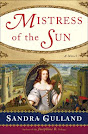
It took me a moment to realize that this is exactly what had happened with Mistress of the Sun. I'd finished The Many Lives & Secret Sorrows of Josephine B., and decided to have "an affair" with Louise de la Vallière's story before returning to the very long marriage of the Trilogy. After finishing the Trilogy and writing an early draft of Mistress, I took a detour into the life of La Grande Mademoiselle -- whose story I may well write about now. It reminds me that writing is more of a meandering journey where nothing really is wasted.

Monday, April 7, 2008

On dream-storming


At a certain point, one must begin...again. Looking back, writing a novel seems an impossible thing to have done, and an even more impossible thing to do again. Frankly, it's hard on life and on the body. One must forsake things — pleasures often. "Write novel" is a space- and time-sucking up thing to have on the To Do list, and it will park itself at the top of that list for years. So reluctance and its sister resistance sets in. However, as pointed out by Susan Shaughnessy in Walking on Alligators (a wonderful book of meditations for writers), resistance is the first stage. In other words: I'm already writing.

About two years ago I read a book on writing that included a card technique for this initial process that appealed to me: From Where you Dream, by Robert Olen Butler.

It's Chapter 5 that interests me, "A Writer Prepares": which is exactly what I need to do. The technique is "dream-storming": investing 6 to 12 weeks or so (i.e. serious time) just dreaming up scenes, a good 200 or so. The next step is put them on cards, spread them out and begin to find the shape of the story.

What I like about this approach is that as you write, and when the story begins not to work (like immediately), you stop and re-dream it, so the plot is not a fixture, but an organic thing that keeps changing. Which, of course, it does anyway, but I'd like not to spend eight years trying to sort it out this time. What I'd like is to dream the story this year and write it the next, second and third drafts the year following.

But first, I must actually begin.

Friday, March 7, 2008

With voltage


.
I sent out a newsletter this morning, and was taken aback to discover that the lion's share of the clicks went to this blog. I wasn't sure that my house was in order.


Truth is, my house is in profound disorder! Having a book published is rather like having a baby--suddenly there is so much to do, and so little time. Suddenly there are waves of emotions, and cherished moments with so many readers.

Once upon a time (surely I should begin a book that way one day), a German fan posted a review to Amazon in Germany. Through the wonders of the internet, I could have it translated. Basically what I learned was that she was chained to her chair and experiencing reading my book with voltage. Once I got past the fear that she had electrocuted herself, once I understood that what she had said, in her native language, was that she was enraptured, I began to see the term "with voltage" not as a mistranslation, but as the true thing. The ideal reading experience is one that happens "with voltage." And writing, as well.

And now, meeting the readers, I see it as yet another form of voltage. Writing a novel is an intimate act; reading a novel is likewise intimate. There is a very special connection between the writer and the reader — and meeting with readers this week, and hearing of their profound connection to something I had created: this, surely, is voltage.
image