Notes on the Writing Life: October 2009

Notes on the Writing Life

Notes on the Writing Life

Saturday, October 31, 2009

In transit: the world's edge

. .
.
On Halloween we hit the road, in transit for several days, heading south. I've chosen Wolf Hall by Hilary Mantel (winner of the Booker prize) for my travel book, and I'm well pleased with my choice.

Before I say something about the novel, I'd like to say something about the production. This is the Canadian HarperCollins edition, and it's gorgeous. The cover is textured and lush — I prefer it to both the U.K. and U.S. editions. It has French flaps, a lovely flexible binding, rough-cut pages. Sumptuous — as befits this story.

This is a very absorbing novel, and quite interesting from a craft perspective, as well. It's written in a very close third person point of view (sometimes slipping into first, which can be a bit curious). It's also written in the present tense, which I usually find annoying, but Mantel is a master and it succeeds beautifully. I love how the story skips along without very much explanation, leaving me curious. The details are spare, fresh, stunning.

This introduction to the Duke of Norfolk is simply brilliant:
The duke is now approaching sixty years old, but concedes nothing to the calendar. Flint-faced and keen-eyed, he is lean as a gnawed bone and as cold as an axe head; his joints seem knitted together of supple chain links, and indeed he rattles a little as he moves, for his clothes conceal relics: in tiny jewelled cases he has shavings of skin and snippets of hair, and set into medallions he wears splinters of martyrs' bones.
The dialogue is straightforward, without historic flourishes. Overall, one feels very present in a time and place. This is historical fiction at its best.

Here's a lovely Halloween passage:
Halloween: the world's edge seeps and bleeds. This is the time when the tally-keepers of Purgatory, its clerks and gaolers, listen in to the living, who are praying for the dead.
Thomas Cromwell, the main character, has recently lost a wife and two daughters to the plague.
All Hallows Day: grief comes in waves. Now it threatens to capsize him. He doesn't believe that the dead come back; but that doesn't stop him from feeling the brush of their fingertips, wing-tips, against his shoulder.
All Hallows Day is November 1st. We will arrive in San Miguel de Allende, Mexico, on the 2nd: El Día de los Muertos, the Day of the Dead. It's a beautiful tradition — not grim at all — honoring those who are no longer with us. I'll be thinking of many loved ones, but especially of my mother, who shared a passion for reading and who would have loved this novel.

Friday, October 30, 2009

Why we write

.
.
I've mentioned Lauren B. Davis's wonderful blog on writing here before. Her post today — From this broken hill... — is especially moving. The video clip she includes of a performance of Leonard Cohen's "If it be your will" could be every writer's anthem.

Thursday, October 29, 2009

French edition cover news, and ... and ... !

.
. .
As readers of this blog know, I've been distressed over the cover of my French edition, La maîtress du soleil, which shows my blonde French character with jet black hair.

Now, after several sallies back and forth through my agent, the publisher has agreed to give the novel a new cover next spring, when it will be reissued: a heroine with blonde hair, as well as a more literary design. I'm relieved!

I'm also in the final signing stage for a film contract for a mini-series for the Josephine B. Trilogy (this has been in the works for some time), and on the verge of signing an option for a feature film of Mistress of the Sun. Sing ye!

As well, I've had an offer to translate all my books — both the Trilogy and Mistress of the Sun — into Turkish. Yay!

Now, back to packing ... !

Saturday, October 24, 2009

A question to internationally-published authors

.
.
What can be done to avoid bad covers? What do you do?

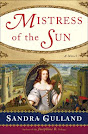
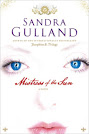
I'm still in shock from the arrival, yesterday, of a box of the French edition of my novel, Mistress of the Sun. My heroine, Petite (based on the real-life and blonde Lousie de La Vallière), is portrayed as a woman with jet black hair.

Forget all the historical inaccuracies: that her head is uncovered and her hair loose over her shoulders; that she's wearing what appears to be a ball gown on horseback. Forget that the ugly horse looks half-dead. Forget the fact that the cover screams: This is not a novel to be taken seriously! And that it seems to be aimed at young adults.

Forget the pages and the footnotes added.

Forget all that and just concentrate on her heroine's glaring black hair!

What can one do? (In the contract I was given approval of the cover, but this was overlooked.)

Here are some thoughts for the future:
1) Ask to see the publisher's catalogue before agreeing to sell the foreign rights.

2) Get some understanding of how this publisher "sees" my book, how they intend to position it.

3) Make a personal connection with the editor who will be seeing it though.

4) Provide a brief crib-sheet (in basic English) to the art department on possible approaches to a cover, including a basic description of the main character.

5) Ask when the cover will be ready. Remind them that you are to see it.

In short, get involved.
Not that there's ever time! Does one just sign, let it go and pray for the best? This is not my first bad experience, but it's a dilly.

Thursday, October 22, 2009

Post-finishing doubts

.
.
Now that I have finished the first draft of The Next Novel, I'm awash with doubts. I don't think I've gotten to the heart of the story.

What about ... ?


And shouldn't she have ... ?


Etc. etc. etc.

I shouldn't actually question this: of course I haven't gotten to the heart of it!

I've read two excellent on-line accounts recently by authors who went through painfully long revision processes. The first is Junot Díaz's account of writing The Brief Wondrous Life of Oscar Wao. He struggled with this novel for five years, then gave up ... gave up writing entirely. Then ...
"One night in August, unable to sleep, sickened that I was giving up, but even more frightened by the thought of having to return to the writing, I dug out the manuscript. I figured if I could find one good thing in the pages I would go back to it. Just one good thing. Like flipping a coin, I'd let the pages decide. Spent the whole night reading everything I had written, and guess what? It was still terrible."
And then five more years of revisions ... to overnight success.

The second is a wonderful blog entry by writer Gail Carson Levine on finding the right point-of-view for a story she was writing on Snow White. Three hundred pages from the POV of a dwarf. Scratch. Three hundred more from the POV of the prince. Scratch. Three hundred in omniscient. Scratch. And finally: success, from the POV of Snow White in her coma.
"The point is that POV can be hard to figure out and may not be possible to decide on in advance. You may have to try telling your story one way and another (and another and another) until you find out. There may be no shortcut for a particular book."
Point taken.

Saturday, October 17, 2009

The End Zone

.
.
I remember reading in Kenneth Atchity's fine book, A Writer's Time, that if you're wondering if you're coming to the end of a writing project, you aren't. That approaching the end is so all-consuming, there can be no doubt.

Somehow, I always forget this, and then bam, there I am, in the wind-tunnel, waking at 3:00 in the night, and heading for the computer. Typing fifteen hours at a stretch. And then, after days and days of this, somewhat stunned, I look at a paragraph and think: this is the end.

I stagger away from the computer, take a few deep breaths. I come back: is it? Yes.

I go have a nap. I rise, and look at the clutter that has arisen around me, the nest of my obsession. I have a bath, blog, breathe. I feel just a little bit lost, but I'll recover, no doubt: 125,490 words in 16 weeks, nearly 8000 words a week.

Well. That's a bit too intense, I think, looking back. I'm not sure I would set this pace again. But it's done, for now, and I'm pleased.

Monday, October 12, 2009

All of the Above

.
.
I do love Margaret Atwood interviews. She is invariably entertaining. For this one today on the L.A. Times blog:
Interviewer: Your book "The Handmaid's Tale" has become a seminal feminist work taught in universities all over.

Atwood: You know you've really made it when people start dressing up like that on Halloween.
I'm in post-Thanksgiving-dinner recovery: bloated and tired. The dishes are almost done, the furniture almost all back in place. My husband is simmering the turkey carcass for stock. A bit of left-over pumpkin pie with whipped cream was perhaps not exactly what I needed ... but impossible to resist.

I'm on my last two chapters (which may expand to three or four). I didn't expect too much of myself this holiday weekend, but I did manage to write each morning. And now, with the coast clear, I could dive back in, but I don't feel ready. I had hoped to be finished by this weekend, and although that didn't happen, I do feel that I can finish over the coming two weeks ... weeks which will get progressively busier as we prepare to move to Mexico for the winter months.

So — for today: research, catalogue books, read Atwood's The Year of the Flood, nap?

Answer: all of the above, or rather ...
To PO’THER. v.a. To make a blustering ineffectual effort.
He that loves reading and writing, yet finds certain seasons
wherein those things have no relish, only pothers and wearies
himself to no purpose. Locke.

Tuesday, October 6, 2009

Burning-at-the-stake scenes aren't easy

.
.
I'm getting through some big, tough scenes as I near the end of this first draft. Galloping toward the finish is gripping in the same way as when reading a novel. This draft will no doubt be a mess when I read it through -- it will need major surgery -- but overall, I'm pleased. I think I will have something to work with.

In my off-time, I check Twitter, the blogs I follow, Facebook. I just read a fascinating on-line conversation Karen Essex posted to Facebook, a conversation between Karen (author of, among other novels, Stealing Athena) and Andrew Davidson (author of The Gargoyle). There's a lot in this conversation about the writing process, and, most interestingly, about experiences of talking with (dead) historical characters: read — or listen — to it here.
I especially liked this quote from Essex:
So the challenge in writing historically based fiction is to take what really happened and without sacrificing history, and without just making things up, or ill-using history or historical characters, you have to figure out how to tell a story with a narrative out of a life that didn’t really unfold as one.
No truer words ... .

Thursday, October 1, 2009

The teleconference was fun...and you can listen to it here

.
.
The Cathy Marie Buchanan's teleconference, the culmination of her blog tour for The Day the Falls Stood Still, was lots of fun. A number of wonderful book bloggers were present, plus, of course, Cathy and I (briefly), and master of ceremonies, Diane.

You can listen to the conversation here.

Now that I can see how it works, I can see a lot of potential for this type of life author meet (without the airfare).
image