.
I love the research required to write a fact-based novel, but there are times when it becomes overwhelming ... like this morning. Not only does my heroine possibly have the heart of a murderer, but the convoluted relationships between two of my other characters — Corneille and Molière — have suddenly become far more complex than I ever imagined. Corneille and Molière were in competition for the king's favour — and my current plot dramatizes this competition — but now there appears to be evidence to suggest that Corneille was in fact writing a number of Molière's plays. In short, that they were collaborators, not competitors. Groan.
All of this will require more study and digestion (and, no doubt, indigestion) -- and no doubt, as well, an hysterical call or two to academics who have offered to help. But right now I feel that this subject is impossibly big.

Saturday, January 24, 2009


Friday, January 23, 2009
Strange Revelations
.
.
 We arrived back from the beach yesterday afternoon. I'm almost unpacked -- although not quite. We returned to piles of magazines, mail (bills), Christmas cards, plus several books I'd ordered before we left. Two of these are on the Affair of the Poisons, which features in The Next Novel. One, Strange Revelations, is a scholarly work, and recently published, so I am eager to read it.
Immediately I skimmed the index and skimmed the bits about Claude des Oeillets, the main character of my novel. I was rather disturbed to descover that the author of this book, Lynn Wood Mollenauer, states that Claude "probably" plotted to kill the king.
Well! Strange revelations indeed. This would put a rather different cast on my character and a bomb in my plot. First, I have to be convinced myself.
Nous verrons!
.
We arrived back from the beach yesterday afternoon. I'm almost unpacked -- although not quite. We returned to piles of magazines, mail (bills), Christmas cards, plus several books I'd ordered before we left. Two of these are on the Affair of the Poisons, which features in The Next Novel. One, Strange Revelations, is a scholarly work, and recently published, so I am eager to read it.Immediately I skimmed the index and skimmed the bits about Claude des Oeillets, the main character of my novel. I was rather disturbed to descover that the author of this book, Lynn Wood Mollenauer, states that Claude "probably" plotted to kill the king.
Well! Strange revelations indeed. This would put a rather different cast on my character and a bomb in my plot. First, I have to be convinced myself.
Nous verrons!
Sunday, January 18, 2009
The writer as athlete
book. .
 I finished, yesterday, Haruki Murakami's What I Talk About When I Talk About Running. Murakami is the astonishing Japanese author (of Kafka on the Shore and many other titles). This is a book is a memoir of sorts, a reflection on running and writing, and the relationship between them. (He runs to keep fit for writing.) Of course it was the writing parts I found the most interesting, although I enjoyed learning about running as well.
Here are some lines that I found noteworthy:
Sometimes Murakami refers to writing as a toxin.
I finished, yesterday, Haruki Murakami's What I Talk About When I Talk About Running. Murakami is the astonishing Japanese author (of Kafka on the Shore and many other titles). This is a book is a memoir of sorts, a reflection on running and writing, and the relationship between them. (He runs to keep fit for writing.) Of course it was the writing parts I found the most interesting, although I enjoyed learning about running as well.Here are some lines that I found noteworthy:
"Writers who are blessed with inborn talent can freely write novels no matter what they do—or don't do. Like water from a natural spring, the sentences just well up, and with little or no effort these writers can complete a work. ... Unfortunately, that category wouldn't include me. ... I have to pound the rock with a chisel and dig out a deep hole before I can locate the source of creativity. To write a novel I have to drive myself hard physically and use a lot of time and effort. Every time I begin a new novel, I have to dredge out another new, deep hole." [page 43]That's what I'm doing now: dredging.
"Writing novels, to me, is basically a kind of manual labor. Writing itself is mental labor, but finishing an entire book is closer to manual labor. ... The whole process—sitting at your desk, focusing your mind like a Lazar beam, imagining something out of a blank horizon, creating a story, selecting the right words, one by one, keeping the whole flow of the story on track—requires far more energy, over a period of time, that most people ever imagine." [page 79]This is one reason it gets harder to write a novel as one ages. It's simply hard work!
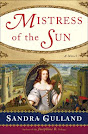
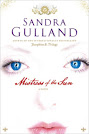
"You might not move your body around, but there's grueling, dynamic labor going on inside you. Everybody uses their mind when they think. But a writer puts on an outfit called narrative and thinks with his entire being; and for the novelist that process requires putting into play all your physical reserve, often to the point of overexertion." [page 80]The last four months of working on Mistress of the Sun I watched my diet, avoided staying out late, and abstained from all alcohol. I felt like an athlete in training. I suspect that the depression that follows the high of finishing has to do with an extreme fatigue.
Sometimes Murakami refers to writing as a toxin.
"Basically I agree with the view that writing novels is an unhealthy type of work. When we set off to write a novel, when we use writing to create a story, like it or not a like of toxin that lies deep down in all humanity rises to the surface. All writers have to come face-to-face with this toxin and, aware of the danger involved, discover a way to deal with it, because otherwise no creative activity in the real sense can take place. (Please excuse the strange analogy: with a fugu fish, the tastiest part is the portion near the poison—this might be something similar to what I'm getting at.) No matter how you spin it, this isn't a healthy activity." [page 96]I first read this passage with resistance, but I think there is truth in it. Inevitably, writing a novel entails digging deep, and often into septic layers. I think a writer must be prepared for this, and have a plan in place for self-protection.
Friday, January 16, 2009
The hammock life
.
.
The loveliest day today: I awoke at 4:00, after a solid six hours sleep. I lingered until 5:00, and then got up. I felt rested. I tip-toed out onto our porch with my laptop and settled into a chair facing the dark surf. The world is mine at that hour.
I worked on the plot outline for several hours, until the day dawned — a beautiful thing to see anywhere, but especially on an isolated beach. I scolded myself a bit for spending much of this time fooling with format, but then I realized that this is the natural thing to do before something gets sent out. It's the ribbons and bows stage. Not that I'm truly there!
By 8:00, I had done a great deal of work and was content. It was a gorgeous morning, clear and calm. We ate melon, walked the beach, chatted with acquaintances. I studied my French language tape (yes, in Mexico! go figure), read from my book on 17th century French theater, and then we swam in the warm ocean and went for abalone and shrimp in the palapas down at the village end of the beach.
Everything had a movie glow: "summer at the beach." Bathers bobbing, a fishing boat blaring rock 'n roll, couples hitting a ball back and forth, women in bikinis lying in the sun reading. But all so wonderfully Mexico: vendors cruising, singers playing — and intoxicated lovers getting tattoos. (Oh dear!)
Now, as I write this, the sun is setting, a golden ball reflected in the water. I do love this reflective life. A reader of this blog asked if I felt more creative here, and I believe the answer is yes.
.
The loveliest day today: I awoke at 4:00, after a solid six hours sleep. I lingered until 5:00, and then got up. I felt rested. I tip-toed out onto our porch with my laptop and settled into a chair facing the dark surf. The world is mine at that hour.
I worked on the plot outline for several hours, until the day dawned — a beautiful thing to see anywhere, but especially on an isolated beach. I scolded myself a bit for spending much of this time fooling with format, but then I realized that this is the natural thing to do before something gets sent out. It's the ribbons and bows stage. Not that I'm truly there!
By 8:00, I had done a great deal of work and was content. It was a gorgeous morning, clear and calm. We ate melon, walked the beach, chatted with acquaintances. I studied my French language tape (yes, in Mexico! go figure), read from my book on 17th century French theater, and then we swam in the warm ocean and went for abalone and shrimp in the palapas down at the village end of the beach.
Everything had a movie glow: "summer at the beach." Bathers bobbing, a fishing boat blaring rock 'n roll, couples hitting a ball back and forth, women in bikinis lying in the sun reading. But all so wonderfully Mexico: vendors cruising, singers playing — and intoxicated lovers getting tattoos. (Oh dear!)
Now, as I write this, the sun is setting, a golden ball reflected in the water. I do love this reflective life. A reader of this blog asked if I felt more creative here, and I believe the answer is yes.
Thursday, January 15, 2009
Biographical fiction 101
. .
An important part of writing is reading and I've been reading biographical fiction of late, one title after another, observing how other authors take on "a life". Two I started and abandoned: they were set in the Court of the Sun King. One had too many factual errors for me to enjoy it. The other I began with joy — the language was bawdy and the spirit zestful — but I found the portraits of the characters too one-dimensional, and, again, there were also errors of fact (without apparent reason). It began to feel like an all-too-English portrayal of "those terrible French" (as if the English are so innocent!).

The next novel was a gem: November 22, 1963, by Adam Braver, a novel about Jackie Kennedy, primarily, and that fateful day. I'll have more to say about this novel later (I'm at the beach, and the book is back home), but for now, I'll make these general observations:
A highly dramatic and sympathetic subject is a serious leg-up when it comes to biographical novels, and this novel rates five stars on both counts. It held me breathless from the first sentence to the last, but in the hands of another writer, I could easily have set such a novel down, in spite of the compelling subject. But Braver is a fantastic writer. He handles this subject with perfect authority, elegance, but most of all: heart. This is a very spare novel: the author cuts between different points of view with great ease. We're given slices of the various events of that day from the perspective of a police escort, a coffin manufacturer, the man whose life work was care for the presidential limousine, the various White House staff.
I followed this spare novel with one of vast proportions (728 pages of small type!): Blonde, by Joyce Carol Oates. I finished this last night and in a word: wow. I've not read Oates before — I find her style generally too gothic for my taste — but I respect her greatly as a writer, and I'd read that this novel, a novel about Marilyn Monroe, was her best.
It is a stunning — stunning — experience. Oates' gothic, feverish, hallucinatory style is perfectly suited to the subject of Monroe. As a writer, Oates is fearless: there is nothing that she shrinks from. I wouldn't have had the courage, personally, to write certain (awful!) scenes — especially those involving JFK (thinking of Caroline).
The characters are never named, interestingly: "the Ex-Athlete" is Joe DeMaggio, "the Playwright" is Arthur Miller, "the President" is JFK, for example. This was possibly a legal consideration, but, more importantly, it lent itself to the mythic feel of the novel.
It's hard to create sympathy for an addict — drunks are notoriously impossible for the writer of fiction to portray sympathetically, for example — but I've come away from this novel with a great sympathy and respect for Monroe.
As always, I'm curious about what was not included: this is always key. Nothing about the Mafia lovers, nothing about her secretary. Certainly there were lovers enough, and a staff would have interfered with the image of Marilyn so very alone.
I believe that Author's Notes are very important with respect to a fact-baced fiction. The reader needs to know: Where do we stand? What's fact? What's fiction? Can I trust you (the author)? Oates states:
Oates makes it clear that instead of many lovers, abortions, medical crisis, she will focus on a select few. With any biographical fiction, one must cut away, cut away, cut away to get at the essence, in order to bring a life to life.
An important part of writing is reading and I've been reading biographical fiction of late, one title after another, observing how other authors take on "a life". Two I started and abandoned: they were set in the Court of the Sun King. One had too many factual errors for me to enjoy it. The other I began with joy — the language was bawdy and the spirit zestful — but I found the portraits of the characters too one-dimensional, and, again, there were also errors of fact (without apparent reason). It began to feel like an all-too-English portrayal of "those terrible French" (as if the English are so innocent!).

The next novel was a gem: November 22, 1963, by Adam Braver, a novel about Jackie Kennedy, primarily, and that fateful day. I'll have more to say about this novel later (I'm at the beach, and the book is back home), but for now, I'll make these general observations:
A highly dramatic and sympathetic subject is a serious leg-up when it comes to biographical novels, and this novel rates five stars on both counts. It held me breathless from the first sentence to the last, but in the hands of another writer, I could easily have set such a novel down, in spite of the compelling subject. But Braver is a fantastic writer. He handles this subject with perfect authority, elegance, but most of all: heart. This is a very spare novel: the author cuts between different points of view with great ease. We're given slices of the various events of that day from the perspective of a police escort, a coffin manufacturer, the man whose life work was care for the presidential limousine, the various White House staff.
I followed this spare novel with one of vast proportions (728 pages of small type!): Blonde, by Joyce Carol Oates. I finished this last night and in a word: wow. I've not read Oates before — I find her style generally too gothic for my taste — but I respect her greatly as a writer, and I'd read that this novel, a novel about Marilyn Monroe, was her best.
It is a stunning — stunning — experience. Oates' gothic, feverish, hallucinatory style is perfectly suited to the subject of Monroe. As a writer, Oates is fearless: there is nothing that she shrinks from. I wouldn't have had the courage, personally, to write certain (awful!) scenes — especially those involving JFK (thinking of Caroline).
The characters are never named, interestingly: "the Ex-Athlete" is Joe DeMaggio, "the Playwright" is Arthur Miller, "the President" is JFK, for example. This was possibly a legal consideration, but, more importantly, it lent itself to the mythic feel of the novel.
It's hard to create sympathy for an addict — drunks are notoriously impossible for the writer of fiction to portray sympathetically, for example — but I've come away from this novel with a great sympathy and respect for Monroe.
As always, I'm curious about what was not included: this is always key. Nothing about the Mafia lovers, nothing about her secretary. Certainly there were lovers enough, and a staff would have interfered with the image of Marilyn so very alone.
I believe that Author's Notes are very important with respect to a fact-baced fiction. The reader needs to know: Where do we stand? What's fact? What's fiction? Can I trust you (the author)? Oates states:
Blonde is a radically distilled "life" in the form of fiction, and, for all it's length, synecdoche is the principle of appropriation.(Okay, I had to look up synecdoche: a figure of speech in which the part is made to represent the whole or vice-versa.)
Oates makes it clear that instead of many lovers, abortions, medical crisis, she will focus on a select few. With any biographical fiction, one must cut away, cut away, cut away to get at the essence, in order to bring a life to life.
Biographical facts regarding Marilyn Monroe should be sought not in Blonde, which is not intended as a historic document, but in biographies of the subject.I appreciate her clarity, but what Oates has done, I'm quite convinced, is recreate Monroe's spirit. An amazing work.
Wednesday, January 14, 2009
Friday, January 9, 2009
Slow net!
.
.
I'm at the beach (wonderful!), which slows by nature — but the Net connection is painfully slow here, so I'm going to blame my absence on that. It's certainly part of it.
I have been working, although in a lazy way: Q&A for the P.S. section of the Canadian hardcover, another Q&A for the French film-maker, emails from my agent, my L.A. editor.
This morning I started the next draft of the plot, but was flummoxed by software. Grrr! Word 2008 is missing some critical features that it used to have: the capacity to print out comments, for example. Then suddenly -- something I did, no doubt -- caused the formatting toolbar to disappear. I could no longer even increase the size of the type. I spent way too much time trying to figure it out. Then I tried Mac's iWork Pages programme. This software has a lovely feel, and seemed easy to master -- but for one thing: how to split the screen?!
It seemed to me that both these programmes had loads of bells and whistles, but were lacking in some basic word processing tools. I ended up going back to Word 2004: I'm so glad I kept the old programme.
With all this, I actually did manage to get some plotting work done.
But now ... back to the beach! (May my friends and family in the North forgive me.)
.
I'm at the beach (wonderful!), which slows by nature — but the Net connection is painfully slow here, so I'm going to blame my absence on that. It's certainly part of it.
I have been working, although in a lazy way: Q&A for the P.S. section of the Canadian hardcover, another Q&A for the French film-maker, emails from my agent, my L.A. editor.
This morning I started the next draft of the plot, but was flummoxed by software. Grrr! Word 2008 is missing some critical features that it used to have: the capacity to print out comments, for example. Then suddenly -- something I did, no doubt -- caused the formatting toolbar to disappear. I could no longer even increase the size of the type. I spent way too much time trying to figure it out. Then I tried Mac's iWork Pages programme. This software has a lovely feel, and seemed easy to master -- but for one thing: how to split the screen?!
It seemed to me that both these programmes had loads of bells and whistles, but were lacking in some basic word processing tools. I ended up going back to Word 2004: I'm so glad I kept the old programme.
With all this, I actually did manage to get some plotting work done.
But now ... back to the beach! (May my friends and family in the North forgive me.)
Subscribe to:
Posts (Atom)


 Posts
Posts