Notes on the Writing Life: January 2010

Notes on the Writing Life

Notes on the Writing Life

Tuesday, January 26, 2010

Dear Reader: a letter

.
.
I've been organizing my computer files, and in the process found a letter I sent to the two book clubs that critiqued the "final" draft of The Last Great Dance on Earth. I was surprised to learn that I cut 100 pages from Tales of Passion, Tales of Woe after a book club critique.

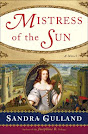
That's a lot, but it seems to be what I do. I cut so much from The Last Great Dance on Earth I sent it back to my publisher in a larger type size, hoping my editor wouldn't notice. I cut quite a bit from Mistress of the Sun -- an entire chapter and then some -- at the last minute.

Here is the letter, should it be of interest. (Warning: it's long.)

Dear Readers,

First, thank you for doing this. This is the second draft of The Last Great Dance on Earth;  there will be two more before it goes to my publisher, and then it will be edited and revised yet again. What you see here will no doubt change greatly—as many as 100 pages are apt to be cut, as many likely to be added.

The manuscript has not been edited for spelling and punctuation, so expect errors. However, at this stage, the true problems are much, much bigger, and much more difficult to remedy. Let's call it a reluctance to fly, to get off the ground. Let's call it a plane without wings. With each draft, I try to get that plane up in the air more often—and to get it to stay up longer. By the final draft, I want it to be a jet that takes the reader not only to France, but to the 18th century. No crashes!

Symptoms: You look at the clock. You put the book down. You sigh and thumb to the back: how many more pages? Then oh oh, you're up in the air: it could be midnight, but you don't care! The story has swept you away. And then … woops, another crash.

Why? And where? What parts carried you along and what parts were a bit of a trudge? That's what I need to know. What breaks the momentum? Plot structure (or a lack of it)? Characters you either don't believe or don't like (or both)? No narrative drive? ("Where is this going? What's the point?") Lots of things.

Before you begin, I should warn you that I think the opening chapters are not yet right. (And much more, of course—but especially the opening.) I think most novelists spend half their time on those opening chapters and even then, few are successful. Does this opening work, for you? If it did, what did you like? If not, how could it be better? Was it confusing? Is there another place you think the story could open?

Another problem, too, is that often it lacks a sense of place: this is one of the reasons for my research trip to Europe in September. Also, I've not put a great deal of thought into the details that make a story come to life: I want to have the storyline right before I do this.

Some general questions:

Which characters failed to hold your interest? Which ones came to life for you? What actions seemed suspect, unbelievable.

When did the story fail to convince you? When did you stop believing it? And what parts did you believe? Did it make you cry? Laugh? Forget about dinner? Knowing what works is as important to me as knowing what does not.

Again, thank you VERY much.  I want this novel to be wonderful—but before that can "happen," I need to find out its strengths and, most especially, its weaknesses. Be sure to tape your conversation. If you write down your thoughts, I would very much appreciate it. If you mark up the manuscript (please do!), it would be helpful to me to see it. (I could return it to you, if you wish.)

In closing, please don't be concerned if you only have negative things to say about this book. The book club that reviewed Tales of Passion, Tales of Woe hated it. I took out 100 pages, reworked it feverishly, and as a result it was short-listed for the Trillium. Criticism at this stage helps very much. (But a little praise helps too!)

Sincerely, 
Sandra Gulland
*****
Website: http://www.sandragulland.com/
Blog: http://sandragulland.blogspot.com/
Facebook: http://tinyurl.com/3xzbgv
Twitter: http://twitter.com/Sandra_Gulland

Sunday, January 24, 2010

On figuring out characters: What's Wig-Girl doing here?!

.
.
My husband and I have been at the beach for a week. Every morning I have been reading and editing the first draft of The Next Novel. Some days I was pleased, other days the verdict was more "Hummm." The last pages, which I read yesterday, made me shed a few tears (always a good sign). All in all, I think it's a good first draft, and I'm ready to roll up my sleeves and dig in.

There is one character (Wig-Girl) who puzzles me, an invented character I haven't figured out yet. (Most of the other characters in the novel are based in history.) She popped into the story early on. I like her, but I'm not sure what she's doing there. While writing the first draft, I kept trying her out in various roles: as a maid to the dying mother, as a romantic interest of the heroine's brother. None of these really worked, and so I'll cut those scenes, but it was amusing (and surprising!) to see her pop up and then disappear, only to pop up yet again in another guise entirely. It's as if I was auditioning her, trying her out.

Today I'll have another look at my character notes, and especially at the notes I took from Christopher Vogler's wonderful book, The Writer's Journey, on the basic characters that are typically part of any story. (I've put my notes on Docs, here — or here, at: http://bit.ly/5uqIA7.)

How does Wig-Girl fit in? What's her role? I've never followed Vogler's template closely, but I do love it, and I find it helps clarify characters and their purpose, their function in the story. It's one of my favorite books on writing.

*****
Website: http://www.sandragulland.com/
Blog: http://sandragulland.blogspot.com/
Facebook: http://tinyurl.com/3xzbgv
Twitter: http://twitter.com/Sandra_Gulland

Friday, January 15, 2010

How to promote your book (without giving up writing)

.
.
Stephanie Cowell, a wonderful novelist (click here to see her titles), wrote to me this morning:
I keep up my website and blog there, keep up my art web site, keep up my Amazon page, twitter, Facebook, reconstructing mailing list (!), answering many lovely e-mails….  What else do you do? I am afraid if I try much more I will not be able to submit my next book for hopefully a contract late winter. I’d appreciate advice. I also have not scheduled many in person signings. This is all so much more complicated than publishing a book several years ago!
This is such a big problem now. Writers have to invest both time and money in self-promotion, which robs time away from what's truly important: writing

How does one juggle so many balls? I suggesed to Stephanie that she try to get as much mileage out of what she was already doing (which is a lot). This is what I wrote to her:
Do you use Ping.fm or HootSuite.com? You set these up to automatically post your blogs to Twitter, Amazon and Facebook. (Note: my current favorite is HootSuite.)
Google Alerts are good for finding out whenever your book is mentioned on-line. Then you can leave a personal note, if it seems appropriate. The same for Twitter. Through a TweetDeck search, for example, I know whenever my novels are mentioned, and can respond. 
I’ve been making a point of including my on-line connections whenever I post to a blog or list. (See below. I don’t usually include a picture unless it’s an email — HMTL can be tricky on some sites.)
For answering fan mail, save time by creating a form-letter answer in signatures that’s easy to make personal. (A note on answering fan mail — some authors create an assistant identity to answer their mail. There’s an advantage to this: you can toot your own horn.)
Ultimately, a newsletter is important, so building up a database is crucial.


If you have a Facebook page (“fan page”), you can send out ads really, really cheap. It’s a lot of exposure for very little time and money.

Signings/readings do very little, in fact. So few people come! The main advantage is that it gets promotion. (I used to work this very hard, sending out posters, contacting the local media, etc.) Also, every reading you give is practice for the next one — every writer is an entertainer in training. And face-to-face reader contacts are wonderful, of course (the best).

There’s YouTube, as well — I use a little Flip video to record a reading or interview. These are good to put on your website and blog.

Book clubs are wonderful but hard to get to. I’ve been looking into Skype chats. (I still can’t figure out how best to reach book clubs, however.)

Book trailers are either time-consuming or expensive, but seem to be more and more important. (Are we to become film-makers, as well?)
I'd love to hear from readers of this blog: any other ideas? 

*****
Website: http://www.sandragulland.com/
Blog: http://sandragulland.blogspot.com/
Facebook: http://tinyurl.com/3xzbgv
Twitter: http://twitter.com/Sandra_Gulland

Tuesday, January 12, 2010

Letters from readers

.
.
The New Year has been a bit challenging so far, but my angels must be looking over me because I've been getting some of the most moving emails and comments from readers. I quote snippets from two of the emails here (without names):

 I am 12 years old. When I was 11, I read your Josephine Bonaparte series, and it changed my life.
I devour your writing and I am sad when I finish one of your books. I need more! ... Thank you for sharing your gift.
Humbly, I thank you. So much! A writer works in isolation; it means a lot to hear from readers.


*****
Website: http://www.sandragulland.com/
Blog: http://sandragulland.blogspot.com/
Facebook: http://tinyurl.com/3xzbgv
Twitter: http://twitter.com/Sandra_Gulland/

Monday, January 11, 2010

Editing sings the blues

.
.
For writers in the throes of revision, this is a wonderful You Tube author video.

(Thanks to the Twitter suggestion of writer Ami McKay.)

Sunday, January 10, 2010

On rust and viral attacks, virtual and otherwise

.
.
It's amazing how quickly writing gears rust: over-night! I've been on holiday, sick (for weeks!), dealing with serious computer problems, and now only gradually emerging out of the I-will-never-be-able-to-write-again-despair that so quickly sets in.

I begin by making visible piles: the manuscript to be read, the untouched notebook in which to record daily progress, files of notes, my favorite pencils.

I also begin by getting things fixed: me, first (yet a work in progress). My computer glasses, limping along on one leg, were finally repaired yesterday. My email database program ... well, we might — might — be getting there.

The biggest disadvantage with using Microsoft Entourage is that everything — everything! — is stored in one huge database: all contacts with notes and categories attached, all calendar items, all email, past and present. (A life in letters!) When that database gets damaged, game over. And mine is damaged.

(And, I now discover, wading through impossible-to-understand papers written by techs: twice the size Entourage is prepared to handle. Could the program not have informed me?)

Fortnately, I'm a back-up fanatic: I use TimeMachine, plus an on-line automatic back-up (CrashPlan), plus SuperDuper, a back-up to a separate drive. (Plus, when I'm writing, I email myself the draft I'm working on every day. But that's another story — and possibly one reason the database is fat?)

Sound extreme? Consider this: the TimeMachine back-up of my database is not really any good (why I don't know). CrashPlan's on-line back-up is current, and so its copy of the file I need is of the damaged database. Don't want that, thank you very much! And so, my hopes lie with back-up #3: SuperDuper.

Through Google I found Entourage help on-line. The first issue seems to be an over-crowded hard drive. I used Disk Inventory X to find out what the disk-hogs were, and tossed them out. Right now I'm using iDefrag to defragment the drive. I feel leaner and meaner already. If only I could Defrag my brain.

Friday, January 1, 2010

Jane Austen: "I must keep to my own style"

.
.
This is a charming letter, written by Jane Austen, April 1, 1816:
You are very, very kind in your hints as to the sort of Composition which might recommend me at present, & I am fully sensible than an Historical Romance, founded on the House of Saxe Coburg might be much more to the purpose of Profit or Popularity, than such pictures of domestic Life in Country Villages as I deal in--but I could no more write a Romance than an Epic Poem.--I could not sit seriously down to write a serious Romance under any other motive than to save my Life, & if it were indispensable for me to keep it up & never relax into laughing at myself or other people, I am sure I should be hung before I had finished the first Chapter.--No--I must keep to my own style & go on in my own Way ...
Which confirms, to me, that Jane Austen was a comic writer above all else.

(The quote is from Jane Austin Today.)
image