.
.
Tuscany is a long way to go to sleep well, and perhaps it's the late-night dinners, but I seem to dream well here, too. Last night I dreamt that I asked a woman what she would not want to ever give up. Her teeth, she said. For me, it was my office.
My writing life began, I think, with my first winter in Canada, in Nain, Labrador, the sub-artic. I read a lot that winter -- all of Lessing's Children of Violence series, Anais Nin's diaries, Virginia Wolf's A Room of One's Own. And it was in reading Wolf's book that I began to dream of just that, a room of my own.
I've had desks in dark and crowded basements, desks in the corner of utility rooms. In reading Cameron's The Artist's Way I began to seriously dream of an office I could call my own. I put it on my wish list. For a long time I was considering a tent and then a house-trailer. Then came my first foreign sale and lo -- the means to consider the impossible: an office addition to our house.
And yes, my office would be the one thing I would not ever want to give up.

Friday, September 26, 2008


Wednesday, September 17, 2008
Ciao!
.
.
We're heading off on our travels this morning, to Paris and Tuscany, and will be on the road for over 3 weeks. My husband and I are each only taking a carry-on bag — a challenge! — but I'm always grateful for a light bag.
I hope to blog now and then, but that's likely optimistic. I forget about how awkward it can be to type on French (or Italian!) keyboards.
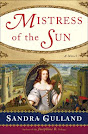
In the last week, my entire concept of what novel I will be writing next has changed. I saw a way into the story of Athénaïs — just a brief image came to me, and it opened up. Will that be the next book though? I'd always thought so, but after finishing Mistress, I didn't think I could write about her. (I was too angry.) Now, I'm not so sure.
Ciao!
.
We're heading off on our travels this morning, to Paris and Tuscany, and will be on the road for over 3 weeks. My husband and I are each only taking a carry-on bag — a challenge! — but I'm always grateful for a light bag.
I hope to blog now and then, but that's likely optimistic. I forget about how awkward it can be to type on French (or Italian!) keyboards.
In the last week, my entire concept of what novel I will be writing next has changed. I saw a way into the story of Athénaïs — just a brief image came to me, and it opened up. Will that be the next book though? I'd always thought so, but after finishing Mistress, I didn't think I could write about her. (I was too angry.) Now, I'm not so sure.
Ciao!
Friday, September 12, 2008
Living the questions
.
.
I subscribe to Stephanie Bennett Vogt's newletter, Your Spacious Self: short, inspirational nuggets on clearing out clutter (a constant battle in our house), and, what makes Vogt's concept different, clearing out muddled thinking in the process. Yesterday, she simply posted this Rilke quote, which, as the Quakers would put it, "spoke to my condition."
The To Do List grows — preparation for the trip, but also, the nuts and bolts of the writing life: fax to my UK publisher about buying some of the remaindered copies of The Lives & Sorrows of Josephine B.; a Q&A to fill out for M.J. Rose's Powell's blog, due this month; research preparation for the trip; a letter to decline a request to "blurb" a book (I'm already committed to one right now); Sandra Gulland Inc. bookkeeping; many emails to answer, especially those wishing to pin down a date for an event.
All this is urgent and pressing, but most of it is "author" work. The all-essential work, the work of the "writer," seems so easily overtaken.
.
I subscribe to Stephanie Bennett Vogt's newletter, Your Spacious Self: short, inspirational nuggets on clearing out clutter (a constant battle in our house), and, what makes Vogt's concept different, clearing out muddled thinking in the process. Yesterday, she simply posted this Rilke quote, which, as the Quakers would put it, "spoke to my condition."
"Be patient toward all that is unsolved in your heart ... The questions themselves are like locked rooms, like books written in a foreign tongue. ... Live the questions now, and perhaps you will then gradually, without noticing it, live along some distant day into the answer."I'm grappling with big questions now: What will my next novel be about? If La Grande Mademoiselle, might it be more than one novel? What about a novel about Athénäis? I'm trying to condense my galaxy of thoughts into an email to Dan, my adopted mentor, before leaving for Europe in one week.
— Rainer Maria Rilke, Letters to a Young Poet, from "Letter Four". Translated by M.D. Herter [and ammended by me]. Norton, New York, 1954.
The To Do List grows — preparation for the trip, but also, the nuts and bolts of the writing life: fax to my UK publisher about buying some of the remaindered copies of The Lives & Sorrows of Josephine B.; a Q&A to fill out for M.J. Rose's Powell's blog, due this month; research preparation for the trip; a letter to decline a request to "blurb" a book (I'm already committed to one right now); Sandra Gulland Inc. bookkeeping; many emails to answer, especially those wishing to pin down a date for an event.
All this is urgent and pressing, but most of it is "author" work. The all-essential work, the work of the "writer," seems so easily overtaken.
Wednesday, September 10, 2008
Totems
.
.
I've not been sleeping well, so I've been reading quite a bit through the long nights. One book I finished last night was How I write; The Secret Lives of Authors. At first glance, I didn't like it: it looked like a coffee-table book — cool design, but no substance, I thought. I was wrong.
It's an anthology of very short statements from over sixty authors on how they write — specifically on the wierd habits or objects that have become an essential part of their process. Johathan Lethem's list of names, Jay McInerney's axe artifact, Lionel Shriver's toy Clippity, A.S. Byatt's "Antonia Writing Time!" notice, Jonathan Franzen's old and ugly office chair, Claire Messud's graph paper pad and fine .005 felt-tip pens ...
I came away with a fuller understanding that the process of writing is magical, that for many writers, it requires some sort of incantation, totem or ritual. Which made me give some thought to my own:
.
I've not been sleeping well, so I've been reading quite a bit through the long nights. One book I finished last night was How I write; The Secret Lives of Authors. At first glance, I didn't like it: it looked like a coffee-table book — cool design, but no substance, I thought. I was wrong.
It's an anthology of very short statements from over sixty authors on how they write — specifically on the wierd habits or objects that have become an essential part of their process. Johathan Lethem's list of names, Jay McInerney's axe artifact, Lionel Shriver's toy Clippity, A.S. Byatt's "Antonia Writing Time!" notice, Jonathan Franzen's old and ugly office chair, Claire Messud's graph paper pad and fine .005 felt-tip pens ...
I came away with a fuller understanding that the process of writing is magical, that for many writers, it requires some sort of incantation, totem or ritual. Which made me give some thought to my own:
The cork from the bottle of champagne I brought to the class party at the end of the first writing workshop I attended. I was celebrating because I'd committed to becoming a writer. The cork reminds me that I'm lucky to be doing what I'm doing.None of these are essential to me, for I have more than one office, and I don't carry them with me. What is essential is my computer. I love the idea of writing long-hand, and I'm hopelessly romantic about notebooks, pens and pencils, but I rarely write more than a few pages before running back to my computer ... my computer which is both my friend and foe. I spend far too many hours on it not writing.
The tiny frame of the words "1-inch square" — this a reminder from Anne Lamott, I believe: When stuck approaching a scene, imagine viewing it through a 1-inch square. Describe what you see.
Two images, both of which "describe" to me the creative process. The first is a painting of a man and a woman on a floating raft, the bedding dragging in the water. The woman is asleep, the man awake and staring. (I wish I knew the artist's name and the name of the work.) This image evokes the unconscious at work.
The second, is Louis Lozowick's "Granite for Monuments (For Future Monuments)". For me, this image captures the feeling of "constructing" a novel.
Sunday, September 7, 2008
Overwhelmed!
.
.
I'm at that familiar "it's impossible" stage, brought on (as usual) by research. My focus has been La Grande Mademoiselle, but — like the lady herself — it's a big, brave, sad story, rather like that of a female Don Quixote. It's hard to take on a subject about which much has been written. I waded into Josephine blindly — and over a decade later waded back out.
Also, I waver between fact and fancy. I've been (as a novelist should) giving way to fancy — but now, rereading Pitts' La Grande Mademoiselle at the Court of France, I'm face-to-face once again with fact. It's like poking a hole in a balloon.
(For notes on the research, see my research blog, Baroque Explorations.)
.
I'm at that familiar "it's impossible" stage, brought on (as usual) by research. My focus has been La Grande Mademoiselle, but — like the lady herself — it's a big, brave, sad story, rather like that of a female Don Quixote. It's hard to take on a subject about which much has been written. I waded into Josephine blindly — and over a decade later waded back out.
Also, I waver between fact and fancy. I've been (as a novelist should) giving way to fancy — but now, rereading Pitts' La Grande Mademoiselle at the Court of France, I'm face-to-face once again with fact. It's like poking a hole in a balloon.
(For notes on the research, see my research blog, Baroque Explorations.)
Monday, September 1, 2008
Writing by dictation
.
.
I just started to use my MacSpeech Dictate program and I have to say I'm impressed. I am standing away from the computer talking into a microphone, not even looking at the screen. In a few minutes I will go over and see what in fact has appeared.
I can't believe it. It's perfect.
So now what? I wish I had some research notes to test. Okay. I'll talk about Elizabeth George's book Write Away.
I like this book: she details the professional nuts and bolts of her way of writing a novel. She's candid and honest and not too abstract.
For example, she writes:
However, having now read the entire book, I understand how much preparation she's done before creating the step outline:
1. Idea: basically, the story described in one long paragraph. I find this one paragraph impossible to write. I'm still looking for the idea, no doubt casting my net too wide.
2. Research: once she has an story idea sketched out, she begins her research, which is extensive and well-organized (I am impressed).
3. List of characters: she lists all the possible characters in the novel, giving careful thought to their names.
4. Detailed description of each character: her documents describing each character are extensive — three or four single-spaced pages long. I always mean to do this, but never do.
5. Develop settings: layout, photos, maps, etc.
6. And then — the step outline. She aims for 10 to 15 causally-related events, noted down in abbreviated form.
I thought: okay, I'll give it a try — see if I can come up with a short list of linked events. But no way: it's hard. She's a thriller writer, so that surely must help.
More on this to come.
(I'm finishing this post in a café in Berkeley. I just stocked up on my new favourite pen — a bold Uni-ball Gel Impact RT — and my long-time favourite pencil, Twist-Erase with a .9 lead. Plus a lovely grid-lined spiral notebook, one of the many I buy and never use. This is the store I remember buying stacks of tiny cards for French vocabulary as a pre-teen. It now has a sign on the door, "This is a soft building" — a warning in case of an earthquake.)
.
I just started to use my MacSpeech Dictate program and I have to say I'm impressed. I am standing away from the computer talking into a microphone, not even looking at the screen. In a few minutes I will go over and see what in fact has appeared.
I can't believe it. It's perfect.
So now what? I wish I had some research notes to test. Okay. I'll talk about Elizabeth George's book Write Away.
I like this book: she details the professional nuts and bolts of her way of writing a novel. She's candid and honest and not too abstract.
For example, she writes:
"To give myself a sense of direction, I do two things. I create a step outline. I then expand it to a running plot outline."I find this interesting. Right now, I'm creating (in brief) scene ideas which I will, at some point, arrange in the order I think they might unfold in my novel. I am a long way from the making-order stage, however. Right now I just imagining scenes, one upon another. Soon, I will begin to think about ordering these scenes.
"Every scene contains something within it that triggers a scene that follows."She can type her step outline on a single sheet of paper, and it doesn't take her longer than a few hours. It's confessions like this that make me feel like a wimp!
However, having now read the entire book, I understand how much preparation she's done before creating the step outline:
1. Idea: basically, the story described in one long paragraph. I find this one paragraph impossible to write. I'm still looking for the idea, no doubt casting my net too wide.
2. Research: once she has an story idea sketched out, she begins her research, which is extensive and well-organized (I am impressed).
3. List of characters: she lists all the possible characters in the novel, giving careful thought to their names.
4. Detailed description of each character: her documents describing each character are extensive — three or four single-spaced pages long. I always mean to do this, but never do.
5. Develop settings: layout, photos, maps, etc.
6. And then — the step outline. She aims for 10 to 15 causally-related events, noted down in abbreviated form.
I thought: okay, I'll give it a try — see if I can come up with a short list of linked events. But no way: it's hard. She's a thriller writer, so that surely must help.
More on this to come.
(I'm finishing this post in a café in Berkeley. I just stocked up on my new favourite pen — a bold Uni-ball Gel Impact RT — and my long-time favourite pencil, Twist-Erase with a .9 lead. Plus a lovely grid-lined spiral notebook, one of the many I buy and never use. This is the store I remember buying stacks of tiny cards for French vocabulary as a pre-teen. It now has a sign on the door, "This is a soft building" — a warning in case of an earthquake.)
Subscribe to:
Posts (Atom)


 Posts
Posts