Notes on the Writing Life: March 2009

Notes on the Writing Life

Notes on the Writing Life

Monday, March 30, 2009

Speaking of muses

. .

There were nine Greek muses. At one time they were goddesses of inspiring springs (such a perfect image), but then they became specialized.


  • Calliope (holding a wax tablet), muse of epic song.
  • Clio (with a scroll—shown above), muse of history.
  • Euterpe (with a double flute), muse of lyric song.
  • Melpomene (with a tragic mask and ivy wreath), muse of tragedy.
  • Terpsichore (with a lyre), muse of dance.
  • Erato (with a small lyre), muse of erotic poetry.
  • Polyhymnia (veiled and pensive), muse of sacred song.
  • Urania (holding a celestial globe), muse of astronomy.
  • Thalia (with a comic mask, ivy wreath and shepherd's staff), muse of comedy and bucolic poetry.
(I'm rather surprised to see a muse of astronomy, frankly, in such ancient times.)

I've illustrated Clio, the muse of history, for obvious reasons -- but what does she actually inspire?

Sunday, March 29, 2009

Amusing the muse

.
.
So busy! I'm on the verge of sending out a newsletter announcing the paperback editions of Mistress of the the Sun and upcoming Blog Tour. The newsletter-mailing service I use (GroovyMail) is relatively easy-to-use, but it's always a fiddly process, and, given that I haven't sent one out for over a half-year, of course I've forgotten the steps. It's almost ready, but that moment before pushing "send" is an ever-expanding one.

Concurrent with preparing the newsletter is getting my website revised and ready for visitors. There are still a few glitches and embellishments that have to be worked out. It has been a huge job (and no doubt expensive), but -- I say this every time -- next time it should be a snap. (Ha!)

And so, to my reader mail, and then later: out. It's a beautiful day here in San Miguel de Allende. I woke to fireworks celebrating the arrival of El Señor -- the highly revered Christ statue that will be lovingly paraded for weeks through cobblestone streets strewn with fragrant chamomile and mint. The jacarandas and bougainvillea are ablaze in purple, the colour of Easter. A church bell rings ... . How sensual Catholicism seems here, reminiscent, I think, of what it might have been like in 17th century France.

I muse ... my muse, amuse. Curious how these words connect.

Thursday, March 26, 2009

The ultimate post-modern historical

.
. .
The Lemoine Affair by Marcel Proust, newly translated from the French, is a puzzle of a book — or so I gather from its description. It's a novella, a series of essays — pastiches — about an early 20th-century con-artist scandal, but as told in the differing styles of Balzac, Flaubert, Saint-Simon and other French writers.

Got that? It's as if a current-day author published a historical account as told by well-known authors of the past. Fiction upon fiction upon fact.

Proust, of course, is well known for Remembrance of Things Past (or In Search of Lost Time). If I were clever, I'm sure I could come up with a better title for The Lemoine Affair, something along the lines of In Search of Lost Remembrances by Past Authors. Suggestions welcome!

"A delicious little bonbon," to quote one review. Irresistible, I'd say. And possibly a fun sort of exercise for a writer to play with, I think.


-----------------------------------------------------
Amazon link to The Lemoine Affair: http://tinyurl.com/dc4kgl
Sandra Gulland's website: http://www.sandragulland.com/
Sandra Gulland's blog: http://sandragulland.blogspot.com/

Wednesday, March 25, 2009

Daily Routines

.
.
Daily Routines is a wonderful blog about how different writers work. I love this quote, in particular, by Paul Auster:
Writing is physical for me. I always have the sense that the words are coming out of my body, not just my mind. I write in longhand, and the pen is scratching the words onto the page. I can even hear the words being written. So much of the effort that goes into writing prose for me is about making sentences that capture the music that I’m hearing in my head. It takes a lot of work, writing, writing, and rewriting to get the music exactly the way you want it to be. That music is a physical force.
Right now I'm so removed from writing I'm beginning to feel sick. Most of my attention is on revising my website, getting ready for a blog tour, correspondence and pressing household matters.

Meanwhile: waiting ... waiting for editorial feedback from an editor. Waiting never seems to get easier. What I need to do is just write.


*****************
Daily Routines can be found at: http://dailyroutines.typepad.com/daily_routines/
My blog: http://sandragulland.blogspot.com/
My website: http://www.sandragulland.com/
My newsletter sign-up: http://sandragulland.com/contacts/index.html

Friday, March 20, 2009

Inspiration give and take

. .
Through LinkedIn, I recently made contact with a woman I "knew" years ago, in the days when I used to participate in a writers' group on Salon.com. The moderator at that time was (and perhaps still is) MaryElizabeth Williams. We had a number of conversations about writing mothers (as I recall): she was about to have a baby and was working on a magazine article.

I dropped her a line yesterday, and she wrote back:
Of course I remember you! You were such a huge inspiration to me when I was writing my book. I kept you in my mind as someone who had the desire to write and the DISCIPLINE to do it, every day. I wrote mine at nights while the kids slept. Somehow got it done -- it just came out two weeks ago.
This comes at a time when I'm feeling quite low in the discipline department. I am reminded of myself. Somehow, all this is like an ocean — inspiration going out, and then coming back. (If I were a poet I could say this better, I know.)

MaryElizabeth Williams's book is Gimme Shelter, an account (in the Amazon description) "of the recent inflation of the real estate bubble and its economic—and emotional—impact on middle-class families." A timely and important subject if ever there was one.


-----------------------------------------------------
Link to Gimme Shelter: http://tinyurl.com/daqaeh
Sandra Gulland's website: http://www.sandragulland.com/
Sandra Gulland's newsletter sign-up: http://sandragulland.com/contacts/index.html


Thursday, March 19, 2009

Another great list from C.M. Mayo

.
.
Yet another wonderful "list" from C. M. Mayo: Ten Tools for Organizing a Novel-in-Progress.

How many times have I reached into my bag, searching for a pen and paper, thinking, with disgust, "What kind of writer am I?" One must always have a pen and something to write on.
By writing things down, I don’t lose them and also—this is subtle, but crucial—by keeping pen and paper with me at all times, I signal to my "artist self," I’m ready to write.
And, since I'm a sucker for gadgets, I made note of this:
But when I finally took David Allen’s advice in Getting Things Done and started using a labeler—mine is a Brother PT-18R—I realized what I had was—I’m not kidding—a mental health tool. Chapter 4? Labeled. Notes on Minor Characters? Labeled. Very Zen.
Thank you, Catherine, once again.

[Catherine's article may be found at: http://tinyurl.com/de4or8]

Wednesday, March 18, 2009

Books for novelists

.
.
I met Catherine Mayo last year in San Miguel at the San Miguel Writers' Conference. Since then I've been keeping in touch with her through her blog(s), Facebook, and now ... sigh ... Twitter (the latest in Net addiction). As well as charming, she's a wonderful writer and teacher.

She has a historical novel coming out soon: The Last Prince of the Mexican Empire. I am very much looking forward to reading it.

But the subject of this post is the list of books she recommends for novelists. Many of my own favorites are on it:

From Where You Dream: The Process of Writing Fiction by Robert Olen Butler;

Story: Substance, Structure, Style, and the Principles of Screenwriting
by Robert McKee;

Thirteen Ways of Looking at the Novel by Jane Smiley.

But there are a number I know nothing about. This one I will definitely be ordering:

The War of Art: Winning the Creative Battle
by Steven Pressfield.

Because the writing life is often a war: a battle for time, for discipline.


[Note — for the list, go to: http://tinyurl.com/cdmlmx]

Monday, March 16, 2009

Promotion BUZZZZ

.
I seem to have no self-control. (Failed it in Grade 3.) Now that I'm approaching the launch of the paperback editions of Mistress of the Sun, it's all I can think about. My bedside notepad is no longer full of midnight scribbles on character and plot. Now it's all thoughts about my newsletter, my website, a possible podcast series, my blogs. (Okay, in truth there is one scribbled note about my plot — and a good one, at that.)

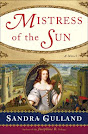
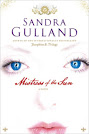
The problem with promotion is that it is, like most things, a bottomless pit. The other problem is that I love it. This morning, for example, I found out from Deanna McFadden, the wonderful digital guru at HarperCollins Canada, that they can give me a widget (I only learned the meaning of this word this year) that will display the contents of my book on almost any website. Very elegant! (My own quibble with this widget is that the cover used is an early draft that makes poor Petite look a little strange. Also, it would be nice to include a first chapter.)

In any case, the mind boggles. Now ... if only I could sleep.

Sunday, March 15, 2009

Website woes

.
I don't think there are many things more trying than renovating a website ... a house, perhaps. In anticipation of the release of the paperback editions of Mistress of the Sun, I've been giving my somewhat complex website an up-date.

Or, rather, I've been telling others what I want done. This is strenuous when it's a matter of "a little bit bigger," "no smaller," "no, a bit to the right." If only I could do it myself! It's both expensive (very!) and trying. Which is why I'm this minute downloading a trial of DreamWeaver software.

I'm fussy about the appearance of my site ... and lucky, too, to have had Karen Templer (now of Readerville.com fame) and her then-business-partner Mignon design the original. Their web design company was called Quiet Space: which gives you an idea of their aesthetic. They were literary — rare in the tech world — as well as artists.

But the world moves on, not always quietly, and changes must be made. And so ... will I wade into the horrors of HTML? When I should be researching and paying bills and answering emails and ... ? I doubt it!

Friday, March 13, 2009

This is where we live

.
.
I have a feeling I might have posted this here before, but I'll take a risk and post it again — it's so beautiful: a world of books.

http://vimeo.com/2295261

As stated on the site:
A film for 4th Estate Publishers' 25th Anniversary. Produced by Apt Studio and Asylum Films.

The film was produced in stop-motion over 3 weeks in Autumn 2008. Each scene was shot on a home-made dolly by an insane bunch of animators....
I've sent my plot off to my L.A. editor, then plunged into website renovation in anticipation of a Blog Tour. More on that later!

Monday, March 9, 2009

Adam Braver discussion on Readerville ... continued

.
The Adam Braver discussion on Readerville.com is over (although it will no doubt remain on-line). A number of things were said about that favorite subject of mine: the line between fact and fiction.

Karen Templer:
... any historical record has gaps in it, things we don’t and can’t know. If a writer takes the liberty of filling in those gaps, then we’re looking at fiction rather than nonfiction. But there’s no bright line between fiction and nonfiction ... , and historical fiction (for want of a better term for books-that-include-real-people-or-events) is a long continuum. “Girl with a Pearl Earring” has real people in it, but the story is entirely fiction. Nobody knows who the girl was; Tracy made the whole thing up. So let’s say a book like that goes at the fiction end of the continuum. Then at the other end, what would be the nonfiction end, you’ve got a book like Capote’s, where it’s extensively researched and based not very loosely at all on real people and events, but narrative devices are used in the telling of those events. So it’s closer to documentary, but it’s literary documentary.
Adam Braver, in responding to a number of posts, said:
... the nature of storytelling has always been a combination of real details and added details--sometimes consciously for the sake of narrative, and sometimes unconsciously, as our memories reconstruct the events for a better narrative. So in that vein, I don’t mind these blends.
And then he said something very dear to my heart:
On an ethical level, however, I do think one has to be upfront with a reader, as there becomes an implied contract.
I think this "contract" — often in the form of an Author's Note — is important in fact-based fiction. The reader needs to know where he or she stands.

Braver again:
Most of the unbelievable stuff is the real stuff. My imagination works best at seeping through the cracks, not in creating the larger than life structures.
That's often how I work.

Here's from Karen again:
It makes no sense, I know, but when I hear “historical fiction” I think of events/people further back in history than the ’60s. But I’d also have a hard time applying it to a book like yours with a more (pardon the term) postmodern structure. Can a thing be postmodern historical fiction? I don’t know. But I think I’m sticking with “literary documentary” when trying to describe your work in particular.
And so, a new genre is born: postmodern historical fiction. I love it.

Sunday, March 8, 2009

Plot concerns from a fan

. .
I've just sent the 14th draft of the plot of The Next Novel to my L.A. editor. Such a deep "sigh!" when I pressed send! I'm getting closer ... I think.

I answered emails from readers on the week-end. One I got was a first for me: a serious response to my struggles with research (as posted on my research blog) and what that meant with respect to the plot of The Next Novel. He (or she: I don't know) was concerned that I was headed in the wrong direction:
As a fan of your writing, I should probably have some faith that the Next Novel is going to be great, regardless of how you decide to organize the plot. However, I must admit that I'm a little dispirited by the direction in which your research seems to be leading you.
With permission, I've posted the letter in full on my research blog because it very much deals with the interpretations of historical account with respect to the Affair of the Poisons.
Novelists, even ones who are rigorous about the facts, have an obligation, first and foremost, to telling a good story.
I agree with this reader that story is the most important thing. As a writer, I do "massage" the historical record for the sake of story, but it's hard to write passionately about something for years and years if I suspect it's not true: and right now, I have some doubt about the extent of Athénaïs's guilt.

Part of my personal motivation for writing about history is to explore that reality — but what is the reality? I may not really know what I think about this until I'm into the bowels of the very last draft, years from now.

[Note: my research blog URL is http://17thcenturyresearch.blogspot.com/]

Saturday, March 7, 2009

Erica Jong, trooper poet


I heard Erica Jong speak recently. I went out of curiosity to see the author of Fear of Flying. It was her first novel, and, if I remember correctly, it sold 18 million in 27 languages. But most of all it shook the world with its frank eroticism, told from a woman's point-of-view.

I thought she would be 90 by now, but she looks like a contemporary (that is, early-60-something). She was natural and open — authentic: she charmed the audience. "Being famous means that an awful lot of people know the wrong things about you." True. I didn't know that she is — first, first, and first — a poet. I didn't know she'd won awards. I didn't know she was such a hard-working writer. The fame of Fear of Flying was something she said she had to deal with, ignore. It was, for her, both a blessing and a curse.

Some snippets from her talk:

She spent all of her 20s trying to write Fear of Flying. She rewrites a lot and gives up often -- pulling a manuscript back out of the drawer years later.

She talked about the subject of a poem before reading. For one, she explained that Sapho's poetry was discovered on the papyrus used to wrap a mummified sacred alligator. "That's the type of thing that drives a poet crazy." I agree!

She's now working on what she called "auto-fiction" (a term created by a French professor): autobiography + fiction. "Life has no plot," she said, so the true account must be reshaped to create a story. (The process is the same for biographical fiction.)

She's written a book on writing called Seducing the Demon; Writing for my Life. I'm interested in reading it.

Thursday, March 5, 2009

Thowing turnips

.
I keep this quote by my desk. I absolutely love it.
"I cannot tell you what work I spent upon the fugue scene! Brain work excites and exhausts me so preposterously, I prowl up and down till every limb aches fit to come off, and I cry like fifty fools, and rub my hair on end, and break or crush anything that is between my fingers for its sins — and am so found by the maid who announces callers or some other detail of sub-lunary existence! And then I feel inclined to throw turnips at my own head and ask myself — if you're played out like this over a tale the length of a halfpenny tract, whereabouts would you be with a novel?"
— Juliana Horatia Ewing, 1884

Monday, March 2, 2009

stories + memories + facts = history

I've posted before about Adam Braver's novel, Nov 22, 1963. It's a novel about that day, the day President Kennedy was shot, but mostly it's a novel about Jackie Kennedy. It's beautifully, artfully, achingly spare: a work of art in words.

I'm excited about his participation on Readerville.com this week: click here if you're interested. I'm especially interested, because of that subject so dear to me (for obvious reasons): the intersection of fact and fiction.

To quote Braver:
One of the things that I’d been thinking about for the past couple of years is the equation: stories + memories + facts = history. This doesn’t necessarily have to apply to history as “the historical record,” but also to our family histories, personal histories, social histories, etc. From a writing standpoint, it was also about finding the somewhat artificial distinction between genres--namely fiction and nonfiction. When you deal with facts, memories, and stories, I’m not sure it’s possible that anything can be pure fiction or pure truth.
I love this:
I really wanted to write a book that consciously combined those elements: where the facts were facts, the stories were stories, and the memories were memories. Put them together in one space, yet let each one speak for itself.
And this:
I’ve always been attracted to books that allow the quiet moments to tell a bigger story, and, I suppose, I was trying to follow in that suit. It wasn’t a matter so much of sifting through so much information, and then whittling it down. It was that conscious/subconscious radar for finding the little yet moving details.
I sent the current draft of the plot off this morning for a writers' group meet this coming Friday, so I'll have some time to following this fascinating Braver dialogue.
image