Notes on the Writing Life

Notes on the Writing Life

Notes on the Writing Life

Sunday, November 30, 2008

Bravo to NaNoWriMo participants!

.
.

. .

November, to those of you who don't know, is National Novel Writing Month, and at the end of this day thousands of writers all over the world will put down their weary heads. I love to think of so much collective (and frantic) writing energy, and one of these years I just might do it myself.

Saturday, November 29, 2008

The Black Hole of Research

.
.
I needed to get the wheels going once again on my concept-outline of The Next Novel. In no time at all I had fallen, like Alice in Wonderland, into what I think of as The Black Hole of Research. I emerged at 1:30, eyes-crossed, brain-numb, having forgotten to eat, much less even move.

1652: young Athénaïs is at her family chateau in Lussac and the Court is near-by in Poitiers. All I wanted to know is what Lussac was like, and what her family chateau looked like (and if it still existed). As well I wanted to know where the Court would likely have been housed while in Poitiers. In all this day, I didn't find out very much about Lussac, and I didn't even get to Poitiers.

As for the family chateau — there is a museum of prehistory that claims to be housed there (or what's left of it): so I got that far. But no images. Perhaps the most sparky bit of information I got in all this is that her family's motto was "Ante mare undae" — "Spirit surpasses matter." That's a sweet little detail.

On getting the facts right

.
.
Hilary Mantel's article in the Guardian on finishing a historical novel and getting the facts right is delightful. Just a taste:
"There's a certain kind of reader (they pop up at readings and festivals) who worries about the ethics of historical fiction, feels vaguely guilty about reading it, and would like the author to make it clear just which bits are made up, perhaps by printing them in red ink. Some fine authors hardly care about accuracy. I heard Penelope Fitzgerald say that she did her research after a book, not before. Didn't she get angry letters, asked a shocked member of the audience? Oh yes, she said, smiling. They tell me about the birds in the trees, she said; in no way could the hero, in such a place, in such a year, have seen or heard a collared dove! She had a certain way of smiling, which suggested a mind above ornithology, an imagination licensed for its own flights."

Friday, November 28, 2008

Fact and Fiction revisited

.
.
I've just finished reading Atonement by McEwan: what a masterful novel. I immediately searched the Net for discussions about it. It's a novel that's holds its grip. Now what will I read? Everything seems pale by comparison.

It is, technically, a historical novel. I recalled the plagarism scandal: McEwan had apparently too-closely borrowed from a non-fiction account. Here, for example, is from Lucilla Andrews's 1977 memoir, No Time for Romance:

"Bit sort of tight. Could you loosen it?" ... Then as I did not think it would do any damage to loosen the gauze bows, I let go of his hand, stood up, undid the first and, as the sterile towel beneath slid off and jerked aside the towel above, very nearly fainted on his bed. The right half of his face and some of his head was missing. I had consciously to fight down waves of nausea and swallow bile, wait until my hands stopped shaking and dry them on my back before I could retie the bow... [After he dies in her arms, a Sister says to her] "Go and wash that blood off your face and neck, at once, girl! It'll upset the patients."

And this from McEwan, in Atonement:

"These bandages are so tight. Will you loosen them for me a little?" She stood and peered down at his head. The gauze bows were tied for easy release ... She was not intending to remove the gauze, but as she loosened it, the heavy sterile towel beneath it slid away, taking a part of the bloodied dressing with it. The side of Luc's head was missing ... She caught the towel before it slipped to the floor, and she held it while she waited for her nausea to pass ... fixed the gauze and retied the bows ... The Sister straightened Briony's collar. "There's a good girl. Now go and wash the blood from your face. We don't want the other patients upset."

I remember the outrage over this and other "borrowed" passages. McEwan is beyond brilliant, but I think he could have integrated his research more, made it his own. I did feel that the war sections, although overwhelmingly powerful, were just a bit too research-thick. He is at his strongest, I think, when his focus is tight, when his characters are face-to-face.

I'm not sure, frankly. I'm still under the spell of this amazing novel.

------------

Now, two days later, I'm still puzzling over this novel; that's a wonderful feeling, when characters take up residence. I like the puzzles it leaves. I long for people to talk to about it. It would be an excellent selection for a book club, because there is so much to discuss.

Insofar as the plagarism accusations, I think there is a strong case to be made "for the defense." Writers are by nature magpies, stealing shiney things to make their nest. We are sparked by ideas, and throw them into the stew-pot of the novel. Had that nurse and patient story been told to me by a friend, I would certainly have used it. I gather my materials everywhere I go.

So is it so very different when the inspirational story is in written form? It's touchy. I do think one needs to be more careful. What I do: I break up an account into bits, use parts here and there. I make sure to put quoted sections in quotes in my notes, so that I know to reword it. Even so, the source underpinnings of a particular scene might be evident to someone who knows the material well.

The Life of Pi was inspired by another work of fiction. There is a scene in Geraldine Brook's prize-winning novel March I know I've read elsewhere — I just can't recall where. Novelists are blessed to find accounts that give them the true-life detail they need, and are apt to consume such accounts hungrily.

Thursday, November 27, 2008

A Romantic Tragedy

.
.
Happy Thanksgiving to all my U.S. friends and readers. As Canadians who have already celebrated the day with abundance aplenty, we nearly forgot. A stranger on the street here in San Miguel greeted me with "Happy Turkey Day!" as I set out for the post office. It's a sunny, warm day and everyone is smiling.

I've been at work today on the biographical essay for an anthology. I think it's coming along (I'm on draft 5), but I'm hoping to have my friend and memoir-writer Beverley Donofrio have a look at it before I send it off.

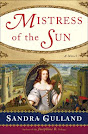
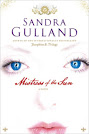
I also started an essay on Bone Magic and 17th century horsemanship — possibly to be used in the "P.S." back section of the Canadian paperback edition of Mistress of the Sun, and a shortened version for Wonders and Marvels, a 17th century research blog I'm a big fan of. I'm not sure yet. I've begun by dumping everything that comes to mind into a Word file. Tomorrow I'll print it out and see what I have.

"Bone Magic" was the working title for Mistress of the Sun, and in searching through my files for information on the ritual, I came upon an early draft subtitled:

A Romantic Tragedy with Several Changes of Scene

I still love that.

I don't write romances, but I think it might be fair to say that I do write romantic tragedies. I don't think that's a popular genre, however. Tant pis!

Wednesday, November 26, 2008

And yet another award ...

.
.
From The Daily Beast:
The news of the Bad Sex in Fiction awards has already made the rounds, but this news just caught our attention: The winner is London Mayor Boris Johnson’s sister. Rachel Johnson beat heavyweights like John Updike and Paul Coehlo and said she was honored to win the prize. The winning passage from her novel Shire Hell compares a man’s “light fingers” to “moths in a lampshade” and his tongue to “a cat lapping up a dish of cream so as not to miss a single drop.” In light of Boris’s own tendency to go overboard with metaphor (see his column in yesterday’s Telegraph for an example), let us hope for sex’s sake that he does not follow his sister’s lead.

Lost and found

.
.
Opium Magazine is holding a 500-word memoir contest. To judge from last year's winner, they're looking for edge, so don't be shy. Go for it! And if you win, and you heard about it here, be sure to let me know.

Some time ago I lamented the loss of my "translation" (in-progress) of a 17th century horsemanship manual. At last, I've found it (!), tucked onto a travel hard drive in San Miguel. Back up, back up, back up ... ! I don't know if I will do anything more with this work, but it sickened me to think of the loving hours I'd spend on it.

Monday, November 24, 2008

Luis Urrea's blog

.
.
Luis Urrea — author of a simply brilliant historical novel, The Hummingbird's Daughter — writes a wonderful blog. I especially loved his newest entry: here.

As for me: I'm working on an essay for an anthology. It's autobiographical, a departure for me, and I'm enjoying the process. Memory Lane: both sweet and sad.

Friday, November 21, 2008

Frittering time

.
.
I fritter away time with the best of them, but quite a bit of this fritter has truly to do with writing-related work that has nothing to do with actual writing. I detest the job of filing away tax-related receipts, yet it must be done. Today I also had a contract to read, sign and send off; an email to send my editor; Sandra Gulland Inc. tax payment request to scan and send to my accountant; a tax return to mail off to my Canadian bank; a number of emails from readers to answer.

Once all this is done — today, surely! — I will need to get to the essay due for an anthology ... and, most importantly, the on-going research for and outlining of The Next Novel.

Of course, I will do anything to avoid some of this tedious office work, and so instead I ordered a book on-line, fooled around on the Net, revised my To Do lists, and blogged about it all here.

Thursday, November 20, 2008

Every protagonist needs ...

.
.
Stephanie Cowell offers this quote from Donald Maass:
"Every protagonist needs a tortuous need, a consuming fear, an aching regret, a visible dream, a passionate longing, an exquisite lust, an inner lack, a fatal weakness, an irresistible plan, a noble idea, an underlying hope… "

Wednesday, November 19, 2008

Donald Maass podcast

.
.
I know I've mentioned before how I love to listen to Barbara DeMarco-Barrett's Writers on Writing podcasts when I'm doing the dishes, or sitting in an airport, or driving long distances. During this last long bout of travel (the last for a bit, I pray!), I enjoyed a number, but one in particular stood out for me: an interview with NY literary agent Donald Maass. I've read Donald Maass' book Writing the Breakout Novel -- and I wish I had it here with me now in my office in Mexico, because there are a number of interesting things he has to say in it.

Before writing the book, Maass made a systematic study of the novels that made the NYT bestseller list, wishing to identify what it was about a novel that made it outstandingly popular. I'm not attempting to be a Danielle Steels or Stephenie Meyer, but I do appreciate insights into what makes a story compulsively addictive. I like when a book has me deeply hooked: I love it ... and that's what I'm after.

Two things stood out in this particular interview for me:

One, that a compelling main character should be deeply conflicted right from the start: he or she must want two things that cannot co-exist.

The other thing he had to say that gave me thought was not so much about writing as about promotion: his belief that promotion and publicity isn't what sells a book — that what sells a book is the book itself. I'd like to believe that, but I'm not convinced. I don't think it's an accident that the Josephine B. Trilogy sold very well in the countries that invested a great deal in promotion (and conversely).

Monday, November 17, 2008

Hard truths

.
.
I've had a week of travel and "author" type meetings. This is the other side of the writing coin: meetings with agent, editors, booksellers. It's always a mix of stressful and wonderful. In Canada, rather too many of the hardcover edition of Mistress of the Sun were sent back to the publisher — this is the inevitable and dreaded undertow of book sales. The exhilarating thrill of a book's publication — the bestseller lists, the glowing reviews — are then followed by this wave of books being returned to the publisher, unsold.

My darlings, unwanted? My publisher explained that they would be pulped. Pulp is not a pleasant word, but it's better, in my view, than "remainder."

The question of blame inevitably arises — at least in my mind. Did the publisher over-estimate? Was my novel not good enough? Was the packaging not right? The economy? There is no way to determine cause. My U.S. publisher told me that one of their books was on the New York Times best-seller list and yet only sold 4000 books. "Canadian numbers," I told her, but in fact, low for even Canada. It's shocking.

Monday, November 10, 2008

Letter to an aspiring writer

.
.
I got an email today from a young woman who passionately wishes to be a writer. Here was my advice to her:
I urge you to follow your dream. Everyone feels insecure about writing, even the greatest.

I advise you to read books on writing. It's also important to read — constantly — for pleasure: this should be the writing you aspire to, and by reading, you develop an "inner ear."

I also advise you to write every day, even if for only for 15-30 minutes. Novels can be written in this way. Writing never really pays, and it's best not to put that burden on it. Find a way, rather, to work it into your normal life.

But whatever you do, persevere. Understand that there is an important difference between being a writer, and being published. You can be a writer now. It often takes decades to be published. Do it for the love of it.

Friday, November 7, 2008

Once upon a time

.
.
This video shows that we are born story-tellers.

And then ... .

And then ... .

And then ... !

Wednesday, November 5, 2008

Analytics

.
.
When I first published, I became obsessed with numbers: how many printed, how many books were still in the warehouse, how many had sold ... ? I don't do that any more: I don't watch my Amazon.com ratings, I don't call the warehouse. When people ask how my book is doing, I tell them I haven't a clue.

But lately I've been watching my blog and website numbers — now that I've finally figured out how to use Google Analytics. Through Analytics, I can see how many people are reading what (not many), how many move quickly on (most everyone), how many linger (only a few), and even how people got there (and what search terms were used if they used a search engine).

This is dangerously intriguing. Through Analytics I can see what pages on my website are most often visited. I can't help but consider these relatively low numbers in terms of the thousands of dollars I've invested in my website, but will any of this information change how I do things? Doubtful.

I tell myself that I rather like talking in the dark, that I'm blogging for myself (this is true) — but too, I've a weakness for a rising graph curve, I know. Perhaps I'd better return to the 17th century.

Imagine!

.
.
Imagine: a writer in the White House!

Tuesday, November 4, 2008

Deadlines

'
'
I met today with my wonderful agent, Jackie Kaiser, over lunch. Invariably I come away having committed to a deadline: and today was no exception. I told her my general (and, to my mind, vague) plan, which was to write the first draft of the next novel next summer, and to have a "viewable" manuscript the following year. In no time at all Jackie had excitedly caluclated a 2011 publication date, and suddenly, there it was: a target. It's not a bad thing: and, foolish as this may prove to be, I actually think it might even be possible.

Monday, November 3, 2008

Single-malt scotch

.
.
The morning of my birthday — the 64th — I was in the CBC broadcasting studios for a short recording that would be used for a new radio show, The Next Chapter. Farley Mowat was being interviewed by Shela Rogers when I arrived, and I had the pleasure of watching his session. Shela's voice was all present -- but I was puzzled: she was not there. I later learned that she lives on the west coast and that all this is done at a distance.

After Farley's session, he signed about having yet another interview that morning, and a call went out throughout the CBC building for single-malt scotch — "for medicinal purposes," Farley said. It was amusing to discover which radio shows and which announcers did have scotch on hand.

Tom, the Poetry Correspondent, was guiding me through the recording. (I love that Canada's national radio even has a "Poetry Correspondent"!) He confessed that he'd recently gone to some trouble to give his office an artistic look — special Italian notebooks, etc. He considered that a bottle of scotch would have appropriate, but he didn't drink it and the notebooks had used up the budget.

I do love hanging around watching the comings and goings of most media, but I especially love radio — and the CBC is tops. I even got to wear Farley's headphones.

Thursday, October 30, 2008

Dictation!

.
I have a number of letters to answer -- e-mails from readers. I woke up this morning with my right hand cramped, and so I decided to test out the new dictation program. And it works! I am dictating this post.

There is an interesting difference however. When I am at the keyboard, words come. When I'm dictating, I'm stumped. My initial plan was to use dictation to make it easier to record research notes from books. I begin to see that that's going to work, but it's possible that once I get used to it I'll be able to use it for writing, as well.

Wednesday, October 29, 2008

Jumping between blogs

. .
Oh, I'm bad. Too many blogs! Readers of this one might be interested in the post from guest blogger Mary Novik over at my 17th century research blog, Baroque Explorations. I have tremendous respect for her work, and her description of the writing process is comforting, because it's so meandering.

Mary mentions the book coming to her in a dream. I've heard this from two other writers of late. Josephine B. came to me in a dream, as well. This is all well and good, but what if no dreams come? What then?

(I did dream of Obama saying he had better get to work, that he had a big job ahead. And he does!)

As for me, I'm packing again — heading south for Mexico ... and for good reason. I've about 100 lbs. of books to pare down. Books and files and more books. It's not easy being a travelling writer of historical fiction.

Saturday, October 25, 2008

Oh no — not another blog!

.
.
Just what I don't need: another blog! But I'm pleased nonetheless:

Bookmarks: a collection.

It's a beginning.

Thursday, October 23, 2008

Festivals and Book Clubs

.
.
I've had a few days doing author-type things. I was in Ottawa at the Ottawa Writers' Festival for a few days, and last night I was at a book club meeting in Combermere. All very enjoyable, seeing old friends, meeting new ones.

A conversation at the book check-out counter at the Festival was delightfully confusing:

SHE: That will be $10.30. Oh! [Seeing my Festival name tag.] You're Sandra Gulland. I've read all your books.

ME, taking the book: Thank you, that's wonderful. [Handing her a $20.] I have 30 [as in cents].

SHE: Oh, I've not read 30.

ME, realizing what she meant, and overwhelmed at the thought of 30 books to my credit: I'll never make it to 30.

SHE, laughing and giving me my change: That what all 24-year-olds say — "I'll never make it to 30."

I take the bookMortifications; Writers' Stories of their Public Shame, the perfect companion for a writer on tour, BTW — and back away, dazzled by the notion of being a 24-year-old with 30 books to my credit. If only!

Wednesday, October 15, 2008

Unicorns and more

.
.
I recently got a letter from a friend who had just read Mistress of the Sun, which features a white horse which is mythic in spirit, magical — rather in the way of a unicorn. She reminded me of a party I’d gone to over 35 years ago. The theme of the party was to come as your “true essence," and I’d gone as a unicorn.

I have only a vague recollection of this. People ask me, "What is the significance of the horse in the novel?" My answer has been that it’s my main character’s true self, Petite's unbridled essence. And now I begin to see how much this is about me, as well.

In St. Louis, while on tour this last June, I had the pleasure to meet Beckah Voigt, the woman who had danced the part of Josephine in an amazing one-woman production. She understood that I might be too tired to meet — and I was — but mentioned that she did "energy work." I told her I could use "energy work"; I didn't know what it was, but, as the Quakers say, "it spoke to my condition." We made a date: we would meet, and I would rest. (The ultimate in multi-tasking.)

Meeting Beckah was like discovering a sister, and after the "work" — which was meditative in the extreme — she talked of what she had sensed. She didn't know anything about Mistress of the Sun, so I was astonished when she said that she got a very strong impression of a flying white horse.

All this just to say that it seems to me that the process of creation — whether it be a novel, a poem, a painting — has deep roots in an unconscious personal mythology, and that you won't really even know this until long after the work is completed.

Tuesday, October 14, 2008

Ergonomic issues

.
.
I slept last night with my right wrist bandaged in "pain pads" and a tensor — a reminder of how hard on the body working at a computer can be. When I am in full work mode, I set a timer to ring on the hour: a reminder to get up and go through a series of exercises intended to relieve the neck, back and wrists. But like most good intentions, this doesn't always happen. A friend noted that her son, a musician, had to take courses on ergonomic issues and how to avoid harming himself. Writing courses should do the same.

Accomplished yesterday: ordered a number of books related to my current area of research (17th century theatre); made bookings related to a trip to NY; posted to my research blog (and here); looked over my Sandra Gulland Inc. tax reports; began to organize my To Do lists, which include preparing for a library reading in a few days, a festival interview and CBC recording next week; sent off a photo and release form for an anthology I'm part of; rescheduled writer's group meeting; responded to an email from someone whose grandmother owns a portrait of Louise de la Vallière (subject of my research blog); printed out the manuscript of a novel written by a friend — which I will begin reading today.

You will notice in all this that although everything is writing-related, Not One Thing has to do with actually writing. Today I have over 20 emails from readers that need to be answered (a backlog from being away). Keeping up is hard to do!

Saturday, October 11, 2008

Research!

.
.
I'm in book mode. Winter will soon be upon us, and we plan to leave for sunny Mexico in only a few weeks. What research books will I need to take? I'm still somewhat unsure about the subject of The Next Novel. I have been thinking that it will be about La Grande Mademoiselle, but another possibility pounced upon me a week before we left for Europe and has taken root in my thoughts. It would be told against a background of the theatrical life in the 17th century. There is so much to be learned. On a practical level, I will need information, books — and I don't have very much time to order.

More anon!

(I also just posted to my research blog: Baroque Explorations.)
image