Notes on the Writing Life

Notes on the Writing Life

Notes on the Writing Life

Monday, February 15, 2010

Charting the writing process

.
.
I love this chart on the writing process, posted by Sarah Eve Kelly on Twitter:

Right now, I'm making the editorial changes I scribbled onto the 1st draft a few weeks ago. It's a tedious mechanical process, but it suits me right now: lots to do, lots coming up, a persistent cold (life!).

Friday, February 5, 2010

Books: Miss you already

.
.
I'm already feeling nostalgic about books, now that the ebook is so fully upon us. When reading, I often pause, and regard the book itself: the lovely ragged edges, the cover, the author photo. I love a book-lined room, love glancing over the books on my shelves, reveling in the memories that the books evoke. I love book clutter. And now I'm loving all this even more, with advance-longing against a time when all this might change.

Consider all the social aspects that have to do with books! When I love a book, I look forward to loaning it to friends. How will I get to know someone if I can't browse the books on their shelves? How will I know what people in lines, on airplanes, beaches, buses and subways are reading, if I can't see the cover? (Yes, I'm a snoop.)

I know, however, that I will love my ebook reader, once I take the plunge.

In defense, I tell myself that the time has come. We can't squander trees endlessly in the production of paper. I tell myself: the book will become more of an art-object, a treasure.

But already, facing a quickly-approaching future, I'm longing for the age that was, the age of books.

Tuesday, January 26, 2010

Dear Reader: a letter

.
.
I've been organizing my computer files, and in the process found a letter I sent to the two book clubs that critiqued the "final" draft of The Last Great Dance on Earth. I was surprised to learn that I cut 100 pages from Tales of Passion, Tales of Woe after a book club critique.

That's a lot, but it seems to be what I do. I cut so much from The Last Great Dance on Earth I sent it back to my publisher in a larger type size, hoping my editor wouldn't notice. I cut quite a bit from Mistress of the Sun -- an entire chapter and then some -- at the last minute.

Here is the letter, should it be of interest. (Warning: it's long.)

Dear Readers,

First, thank you for doing this. This is the second draft of The Last Great Dance on Earth;  there will be two more before it goes to my publisher, and then it will be edited and revised yet again. What you see here will no doubt change greatly—as many as 100 pages are apt to be cut, as many likely to be added.

The manuscript has not been edited for spelling and punctuation, so expect errors. However, at this stage, the true problems are much, much bigger, and much more difficult to remedy. Let's call it a reluctance to fly, to get off the ground. Let's call it a plane without wings. With each draft, I try to get that plane up in the air more often—and to get it to stay up longer. By the final draft, I want it to be a jet that takes the reader not only to France, but to the 18th century. No crashes!

Symptoms: You look at the clock. You put the book down. You sigh and thumb to the back: how many more pages? Then oh oh, you're up in the air: it could be midnight, but you don't care! The story has swept you away. And then … woops, another crash.

Why? And where? What parts carried you along and what parts were a bit of a trudge? That's what I need to know. What breaks the momentum? Plot structure (or a lack of it)? Characters you either don't believe or don't like (or both)? No narrative drive? ("Where is this going? What's the point?") Lots of things.

Before you begin, I should warn you that I think the opening chapters are not yet right. (And much more, of course—but especially the opening.) I think most novelists spend half their time on those opening chapters and even then, few are successful. Does this opening work, for you? If it did, what did you like? If not, how could it be better? Was it confusing? Is there another place you think the story could open?

Another problem, too, is that often it lacks a sense of place: this is one of the reasons for my research trip to Europe in September. Also, I've not put a great deal of thought into the details that make a story come to life: I want to have the storyline right before I do this.

Some general questions:

Which characters failed to hold your interest? Which ones came to life for you? What actions seemed suspect, unbelievable.

When did the story fail to convince you? When did you stop believing it? And what parts did you believe? Did it make you cry? Laugh? Forget about dinner? Knowing what works is as important to me as knowing what does not.

Again, thank you VERY much.  I want this novel to be wonderful—but before that can "happen," I need to find out its strengths and, most especially, its weaknesses. Be sure to tape your conversation. If you write down your thoughts, I would very much appreciate it. If you mark up the manuscript (please do!), it would be helpful to me to see it. (I could return it to you, if you wish.)

In closing, please don't be concerned if you only have negative things to say about this book. The book club that reviewed Tales of Passion, Tales of Woe hated it. I took out 100 pages, reworked it feverishly, and as a result it was short-listed for the Trillium. Criticism at this stage helps very much. (But a little praise helps too!)

Sincerely, 
Sandra Gulland
*****
Website: http://www.sandragulland.com/
Blog: http://sandragulland.blogspot.com/
Facebook: http://tinyurl.com/3xzbgv
Twitter: http://twitter.com/Sandra_Gulland

Sunday, January 24, 2010

On figuring out characters: What's Wig-Girl doing here?!

.
.
My husband and I have been at the beach for a week. Every morning I have been reading and editing the first draft of The Next Novel. Some days I was pleased, other days the verdict was more "Hummm." The last pages, which I read yesterday, made me shed a few tears (always a good sign). All in all, I think it's a good first draft, and I'm ready to roll up my sleeves and dig in.

There is one character (Wig-Girl) who puzzles me, an invented character I haven't figured out yet. (Most of the other characters in the novel are based in history.) She popped into the story early on. I like her, but I'm not sure what she's doing there. While writing the first draft, I kept trying her out in various roles: as a maid to the dying mother, as a romantic interest of the heroine's brother. None of these really worked, and so I'll cut those scenes, but it was amusing (and surprising!) to see her pop up and then disappear, only to pop up yet again in another guise entirely. It's as if I was auditioning her, trying her out.

Today I'll have another look at my character notes, and especially at the notes I took from Christopher Vogler's wonderful book, The Writer's Journey, on the basic characters that are typically part of any story. (I've put my notes on Docs, here — or here, at: http://bit.ly/5uqIA7.)

How does Wig-Girl fit in? What's her role? I've never followed Vogler's template closely, but I do love it, and I find it helps clarify characters and their purpose, their function in the story. It's one of my favorite books on writing.

*****
Website: http://www.sandragulland.com/
Blog: http://sandragulland.blogspot.com/
Facebook: http://tinyurl.com/3xzbgv
Twitter: http://twitter.com/Sandra_Gulland

Friday, January 15, 2010

How to promote your book (without giving up writing)

.
.
Stephanie Cowell, a wonderful novelist (click here to see her titles), wrote to me this morning:
I keep up my website and blog there, keep up my art web site, keep up my Amazon page, twitter, Facebook, reconstructing mailing list (!), answering many lovely e-mails….  What else do you do? I am afraid if I try much more I will not be able to submit my next book for hopefully a contract late winter. I’d appreciate advice. I also have not scheduled many in person signings. This is all so much more complicated than publishing a book several years ago!
This is such a big problem now. Writers have to invest both time and money in self-promotion, which robs time away from what's truly important: writing

How does one juggle so many balls? I suggesed to Stephanie that she try to get as much mileage out of what she was already doing (which is a lot). This is what I wrote to her:
Do you use Ping.fm or HootSuite.com? You set these up to automatically post your blogs to Twitter, Amazon and Facebook. (Note: my current favorite is HootSuite.)
Google Alerts are good for finding out whenever your book is mentioned on-line. Then you can leave a personal note, if it seems appropriate. The same for Twitter. Through a TweetDeck search, for example, I know whenever my novels are mentioned, and can respond. 
I’ve been making a point of including my on-line connections whenever I post to a blog or list. (See below. I don’t usually include a picture unless it’s an email — HMTL can be tricky on some sites.)
For answering fan mail, save time by creating a form-letter answer in signatures that’s easy to make personal. (A note on answering fan mail — some authors create an assistant identity to answer their mail. There’s an advantage to this: you can toot your own horn.)
Ultimately, a newsletter is important, so building up a database is crucial.


If you have a Facebook page (“fan page”), you can send out ads really, really cheap. It’s a lot of exposure for very little time and money.

Signings/readings do very little, in fact. So few people come! The main advantage is that it gets promotion. (I used to work this very hard, sending out posters, contacting the local media, etc.) Also, every reading you give is practice for the next one — every writer is an entertainer in training. And face-to-face reader contacts are wonderful, of course (the best).

There’s YouTube, as well — I use a little Flip video to record a reading or interview. These are good to put on your website and blog.

Book clubs are wonderful but hard to get to. I’ve been looking into Skype chats. (I still can’t figure out how best to reach book clubs, however.)

Book trailers are either time-consuming or expensive, but seem to be more and more important. (Are we to become film-makers, as well?)
I'd love to hear from readers of this blog: any other ideas? 

*****
Website: http://www.sandragulland.com/
Blog: http://sandragulland.blogspot.com/
Facebook: http://tinyurl.com/3xzbgv
Twitter: http://twitter.com/Sandra_Gulland

Tuesday, January 12, 2010

Letters from readers

.
.
The New Year has been a bit challenging so far, but my angels must be looking over me because I've been getting some of the most moving emails and comments from readers. I quote snippets from two of the emails here (without names):

 I am 12 years old. When I was 11, I read your Josephine Bonaparte series, and it changed my life.
I devour your writing and I am sad when I finish one of your books. I need more! ... Thank you for sharing your gift.
Humbly, I thank you. So much! A writer works in isolation; it means a lot to hear from readers.


*****
Website: http://www.sandragulland.com/
Blog: http://sandragulland.blogspot.com/
Facebook: http://tinyurl.com/3xzbgv
Twitter: http://twitter.com/Sandra_Gulland/

Monday, January 11, 2010

Editing sings the blues

.
.
For writers in the throes of revision, this is a wonderful You Tube author video.

(Thanks to the Twitter suggestion of writer Ami McKay.)

Sunday, January 10, 2010

On rust and viral attacks, virtual and otherwise

.
.
It's amazing how quickly writing gears rust: over-night! I've been on holiday, sick (for weeks!), dealing with serious computer problems, and now only gradually emerging out of the I-will-never-be-able-to-write-again-despair that so quickly sets in.

I begin by making visible piles: the manuscript to be read, the untouched notebook in which to record daily progress, files of notes, my favorite pencils.

I also begin by getting things fixed: me, first (yet a work in progress). My computer glasses, limping along on one leg, were finally repaired yesterday. My email database program ... well, we might — might — be getting there.

The biggest disadvantage with using Microsoft Entourage is that everything — everything! — is stored in one huge database: all contacts with notes and categories attached, all calendar items, all email, past and present. (A life in letters!) When that database gets damaged, game over. And mine is damaged.

(And, I now discover, wading through impossible-to-understand papers written by techs: twice the size Entourage is prepared to handle. Could the program not have informed me?)

Fortnately, I'm a back-up fanatic: I use TimeMachine, plus an on-line automatic back-up (CrashPlan), plus SuperDuper, a back-up to a separate drive. (Plus, when I'm writing, I email myself the draft I'm working on every day. But that's another story — and possibly one reason the database is fat?)

Sound extreme? Consider this: the TimeMachine back-up of my database is not really any good (why I don't know). CrashPlan's on-line back-up is current, and so its copy of the file I need is of the damaged database. Don't want that, thank you very much! And so, my hopes lie with back-up #3: SuperDuper.

Through Google I found Entourage help on-line. The first issue seems to be an over-crowded hard drive. I used Disk Inventory X to find out what the disk-hogs were, and tossed them out. Right now I'm using iDefrag to defragment the drive. I feel leaner and meaner already. If only I could Defrag my brain.

Friday, January 1, 2010

Jane Austen: "I must keep to my own style"

.
.
This is a charming letter, written by Jane Austen, April 1, 1816:
You are very, very kind in your hints as to the sort of Composition which might recommend me at present, & I am fully sensible than an Historical Romance, founded on the House of Saxe Coburg might be much more to the purpose of Profit or Popularity, than such pictures of domestic Life in Country Villages as I deal in--but I could no more write a Romance than an Epic Poem.--I could not sit seriously down to write a serious Romance under any other motive than to save my Life, & if it were indispensable for me to keep it up & never relax into laughing at myself or other people, I am sure I should be hung before I had finished the first Chapter.--No--I must keep to my own style & go on in my own Way ...
Which confirms, to me, that Jane Austen was a comic writer above all else.

(The quote is from Jane Austin Today.)

Thursday, December 31, 2009

Renewal

.
.
I've been absent, both on holiday and down with a nasty cold. (Don't feel too sorry for me: I'm in Buenos Aires, after all.) I'm just going to post some blog links.

First, I'm honored that Mistress of the Sun was included in Margaret Donsbach's top historical fiction of 2009 list: click here. Margaret is both a demanding reader and perceptive reviewer.

I've been enjoying reading Margaret Atwood's blog. Her "Fifteen Book Tour Packing Tips" has excellent advice — not surprising considering that she spends most of her life traveling. (How does she do it?) I'll be reviewing her post on "Ten Editing Tips, for Your Fiction Mss." on my return to Normal Life. Early in January, I plan to read/edit the first draft of the novel I finished at the end of October. (Am I nervous? You bet.)

My New Year's resolution for 2010: finish drafts two and three (without going crazy).

Happy New Year, everyone. Twenty-ten has a nice round sound and bodes well.

Saturday, December 5, 2009

Distracted by software

.
.
I'm on a Mac (I'm one of the Fervent Faithful) and have been using Microsoft Word forever. I use many of its bells and whistles: comments, hidden text, footnotes, styles. My relationship with Word is conflicted, however: I use Word 2004 because I find Word 2008 impossibly confusing. And lately, Word 2004 has been sluggish and — worse — buggy. Several times in a day it has crashed on me; I've lost work and had to retrace. This is a terrible problem!


So I've been looking into alternatives. OpenOffice.org does seem to be a possibility, but I quickly discovered that I couldn't insert a space above a line (how basic is that?), that zooming and hiding text was cumbersome, and worse, that I can't split the screen. I'm constantly referring back to part of the manuscript I'm working on while working on another part. I need to be able to see both, scroll through.


(What's really nice about OpenOffice — other than the fact that it's free — is that clicking on "full screen" actually does fill the screen.)


I also tested Pages, which has a nice feel. Zooming was a little easier, but I couldn't see how to hide a text selection. But the clincher, for me, yet again, is that it does not allow one to split the screen.


If I could find a comfortable program that had these features, I would consider switching.


I was reading Wen Fu this morning, the ancient text on writing, and nowhere does it deal with the frustrations of a word-processing program.


P.S. "Print out manuscript" is still on the To Do list. Spellcheck took a day!


*****
Website: http://www.sandragulland.com/
Blog: http://sandragulland.blogspot.com/
Facebook: http://tinyurl.com/3xzbgv
Twitter: http://twitter.com/Sandra_Gulland

Thursday, December 3, 2009

Caroline Leavitt on Butler's "From Where You Dream"

.
.
I'm a collector of books on writing, but few "speak" so clearly as Robert Olen Butler's FROM WHERE YOU DREAM. I've mentioned his book a number of times on this blog. It is within reach of my computer now, so I was pleased to see novelist Caroline Leavitt write about it on her blog today: here.

I've a flurry of things to do today. In addition to family and office matters, here's my writing-related to-do list. It's rather long, considering that I'm not, momentarily, actually writing.
  1. Print out manuscript (in preparation for first read-through on return from Christmas holiday): this takes longer than one would think.
  2. Finish writing newsletter — prepare to send it out soon!
  3. Revise biography and send it with photo to San Miguel Writers' Conference for their brochure.
  4. Set up character profiles. 
Of all of these, the last is the most important, yet it is the most likely to be pushed aside. Also neglected: research!

Sunday, November 29, 2009

Thoughts from an inch-sized heart

.
.
Maybe it's travel fatigue, or maybe it's my advancing age  . . .  or perhaps it's a malaise many writers are dealing with now (and indeed, most everyone): the sense that things were more happening before. The sense that the peak of success is now in the past. 

Wandering in and out of airport bookstores, knowing my books will not be there, telling myself not to even bother looking (and then glancing), and then wandering out, trying not to feel disappointment, admonishing myself for even thinking it possible.


Why do I even put myself though this? Because, in truth, I long to be that best-seller on the exclusive airport bookstore shelves and I feel, now, that my time is past, my chance at the gold ring.


But what kind of goal is that? The truth is that once I'm back at work again, once I'm engaged with the challenge of crafting a story, I won't give this a thought. The only goal that matters is to write.


On the ride home from the airport, through the beautiful Mexican towns, the dark desert hills, I listened to a podcast "Writers on Writing" interview of Louis Alterto Urrea. I love this author – love his and his wife's tweets on Twitter (@Urrealism) — and consider his novel The Hummingbird's Daughter one of the best historical fiction novels of all time. The interviewer concluded the talk by asking for his advice to writers.
"What I try to always bring across to the students is that they should surrender to the process of it. There is an ancient Chinese writing text called Wen Fu, and Wen Fu actually means "Writing Fu" — as in Kung Fu.  . . .  I am just trying to give them the sense that you are actually doing this writing not to be famous, not to be rich, or even to get groupies — as lovely as that might be — but to practice. You're doing a spiritual and physical practice in the world which will effect your response to this place we are living in."
Exactly.


Wen Fu was written around 300 A.D. Read it: it's beautiful:
Writing is in itself a joy,
Yet saints and sages have long since held it in awe.


For it is being, created from a void;
It is sound rung out of profound silence.
In a sheet of paper is contained the infinite,
And, evolved from an inch-sized heart, an endless panorama.
I love that: an inch-sized heart. 


*****
Website: http://www.sandragulland.com/
Blog: http://sandragulland.blogspot.com/
Facebook: http://tinyurl.com/3xzbgv
Twitter: http://twitter.com/Sandra_Gulland


Sunday, November 22, 2009

More on Mantel

.
.
My blog posts here get automatically posted to my Facebook home page (but not, BTW, to my "fan" page, as I would like, for reasons I've yet to sort out). Typically, on Facebook, there can evolve quite a discussion, which is what happened to my post a week ago Friday, "Weeping over History." Margaret Donsbach, Katherine Mary Govier and I got into quite an interesting discussion about the POV Mantel used in her brilliant novel, Wolf Hall. Govier has now written an excellent review of that novel for the Canadian National Post, "Why I love Hilary Mantel's Wolf Hall," in which she mentions some of what was discussed.

Meanwhile, I'm still under the spell of that brilliant novel. I'll be adding it to my Great Historical Novels lists. Few can compare.

Wednesday, November 18, 2009

On giving readings

.
.
Since arriving in San Miguel de Allende — in addition to catching up with friends and getting resettled — I prepared for a talk/reading.

I had planned to give the same reading I had given in Toronto in the spring, but realized that I really needed to revise it, make it current.

Of course this meant endless revisions and print-outs in addition to talking it out, timing it, and then, ultimately, practicing it in front of a mirror.

As a rule of thumb, I try to talk it through three times on the day of the event, the last one as close to the event as possible. Consequently, my voice was hoarse!

I like very much my new system of printing out the talk -- every word, including the selections from the book -- on 8.5 x 11 paper. I print it out in big, bold type that is easy to read, giving each sentence its own paragraph. I make sure to dog-ear the pages so that they are easy to turn. I use an elegant black binder to read from.

The talk went exceptionally well — so many people! The one thing I learned from it, however, is to make sure that the mike is working well for the audience. Some mikes you talk into — others you talk over. This was a talk-over kind, and sometimes — on a "t" sound, for example — I later learned that it spit the sound out at the audience. (I've seen one author who travels with her own mike, and I can understand why.)

The second reader of the evening — Barbara Levine, author of the amazing book Finding Frida Kahlo — had trouble with the low lighting. It was hard for her to see the text of her book. It occurred to me that a clip-on night-reader might be a handy thing to have on hand.

(Photo: the jardin at night in San Miguel de Allende. This is such a beautiful, vibrant and peaceful town, it pains me that visitors have been frightened away by the press north of the border.)


**********
Website: http://www.sandragulland.com/
Blog: http://sandragulland.blogspot.com/
Facebook: http://tinyurl.com/3xzbgv
Twitter: http://twitter.com/Sandra_Gulland

Friday, November 6, 2009

Weeping over history

.
.
I highly recommend this wonderful article by Hilary Mantel, on researching Wolf Hall. I admire this writer more and more. (I had something to say about her writing in my previous post.)

"How It Must Have Been" is an insightful review of Wolf Hall by Stephen Greenblatt in the New York Review of Books. He has a lot of interesting things to say about Cromwell and the nature of historical fiction.

Greenblatt asks: What is historical fiction? His definition is more narrow than I would have it, focusing on known characters and events:
At issue then is not merely the setting in an era different from the present of the novelist, the interest in significant historical events, and the representation of identifiable, documented historical actors, though all of these are important in establishing the parameters of the form.
The emphasis's in the quote are my own: for me, historical fiction does not have to touch on "significant" events or people. For me, historical fiction need only take me back in time, and Greenblatt expresses this quality well:
Historical novels have a further characteristic. They generate a sense in the reader best summed up in exclamations like "Yes, this is the way it must have been"; "This is how they must have sounded"; "This is what it must have felt like."
And further: "The historical novel then is always an act of conjuring." (As is true of all fiction.)
The historical novel ... offers the dream of full access, access to what went on behind closed doors, off the record, in private, when no one was listening or recording.
Greenblatt and other reviewers have noted Mantel's unique point-of-view in this novel.
Mantel contrives a telling effect by often referring to Cromwell as "he" without further identification, so that in many sentences the reader must figure out where, in a welter of "he's" and "him's," Cromwell is
Here is an example of the sometimes disorientating use of "he":
"Master Cromwell," he says lightly, "either my calculations are wrong, or the universe is not as we think it."
He says, "Why are comets bad signs?..."
The first speaker is the king's astronomer, and normally, the second "he" would refer back to him. Not in this novel. The second he — "He says" — is Cromwell speaking ... always Cromwell. It's effective, but it takes a little getting used to.

I have a theory about this, a hunch. I suspect it possible that the novel was first written in the first person voice and then changed to the close third. There are a few instances of the first person voice remaining. For example:
Very well. I dry my tears, those tears from All Hallows day. I sit with the cardinal, by the fire at Esher in a room with a smoking chimney. (page 162, Canadian edition)
This passage stands out. It is a rare use of the first person voice. This passage would normally have read: Very well. He dries his tears, those tears from All Hallows day. He sits with the cardinal, by the fire at Esher in a room with a smoking chimney. 

But as I said: just a hunch.

I'm in the middle of the novel now, and I'm having a little difficulty with the transition. Wolsey, wonderful Wolsey, has died, and Cromwell now serves King Henry VIII. There isn't the same emotional connection. Cromwell has lost his bearings, and so have I. I'm confident, however, that we will make it through.


*****
Image above: portrait of Thomas Cromwell by Hans Holbein the Younger, 1532-3.

Saturday, October 31, 2009

In transit: the world's edge

. .
.
On Halloween we hit the road, in transit for several days, heading south. I've chosen Wolf Hall by Hilary Mantel (winner of the Booker prize) for my travel book, and I'm well pleased with my choice.

Before I say something about the novel, I'd like to say something about the production. This is the Canadian HarperCollins edition, and it's gorgeous. The cover is textured and lush — I prefer it to both the U.K. and U.S. editions. It has French flaps, a lovely flexible binding, rough-cut pages. Sumptuous — as befits this story.

This is a very absorbing novel, and quite interesting from a craft perspective, as well. It's written in a very close third person point of view (sometimes slipping into first, which can be a bit curious). It's also written in the present tense, which I usually find annoying, but Mantel is a master and it succeeds beautifully. I love how the story skips along without very much explanation, leaving me curious. The details are spare, fresh, stunning.

This introduction to the Duke of Norfolk is simply brilliant:
The duke is now approaching sixty years old, but concedes nothing to the calendar. Flint-faced and keen-eyed, he is lean as a gnawed bone and as cold as an axe head; his joints seem knitted together of supple chain links, and indeed he rattles a little as he moves, for his clothes conceal relics: in tiny jewelled cases he has shavings of skin and snippets of hair, and set into medallions he wears splinters of martyrs' bones.
The dialogue is straightforward, without historic flourishes. Overall, one feels very present in a time and place. This is historical fiction at its best.

Here's a lovely Halloween passage:
Halloween: the world's edge seeps and bleeds. This is the time when the tally-keepers of Purgatory, its clerks and gaolers, listen in to the living, who are praying for the dead.
Thomas Cromwell, the main character, has recently lost a wife and two daughters to the plague.
All Hallows Day: grief comes in waves. Now it threatens to capsize him. He doesn't believe that the dead come back; but that doesn't stop him from feeling the brush of their fingertips, wing-tips, against his shoulder.
All Hallows Day is November 1st. We will arrive in San Miguel de Allende, Mexico, on the 2nd: El Día de los Muertos, the Day of the Dead. It's a beautiful tradition — not grim at all — honoring those who are no longer with us. I'll be thinking of many loved ones, but especially of my mother, who shared a passion for reading and who would have loved this novel.

Friday, October 30, 2009

Why we write

.
.
I've mentioned Lauren B. Davis's wonderful blog on writing here before. Her post today — From this broken hill... — is especially moving. The video clip she includes of a performance of Leonard Cohen's "If it be your will" could be every writer's anthem.

Thursday, October 29, 2009

French edition cover news, and ... and ... !

.
. .
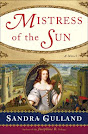
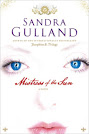
As readers of this blog know, I've been distressed over the cover of my French edition, La maîtress du soleil, which shows my blonde French character with jet black hair.

Now, after several sallies back and forth through my agent, the publisher has agreed to give the novel a new cover next spring, when it will be reissued: a heroine with blonde hair, as well as a more literary design. I'm relieved!

I'm also in the final signing stage for a film contract for a mini-series for the Josephine B. Trilogy (this has been in the works for some time), and on the verge of signing an option for a feature film of Mistress of the Sun. Sing ye!

As well, I've had an offer to translate all my books — both the Trilogy and Mistress of the Sun — into Turkish. Yay!

Now, back to packing ... !

Saturday, October 24, 2009

A question to internationally-published authors

.
.
What can be done to avoid bad covers? What do you do?

I'm still in shock from the arrival, yesterday, of a box of the French edition of my novel, Mistress of the Sun. My heroine, Petite (based on the real-life and blonde Lousie de La Vallière), is portrayed as a woman with jet black hair.

Forget all the historical inaccuracies: that her head is uncovered and her hair loose over her shoulders; that she's wearing what appears to be a ball gown on horseback. Forget that the ugly horse looks half-dead. Forget the fact that the cover screams: This is not a novel to be taken seriously! And that it seems to be aimed at young adults.

Forget the pages and the footnotes added.

Forget all that and just concentrate on her heroine's glaring black hair!

What can one do? (In the contract I was given approval of the cover, but this was overlooked.)

Here are some thoughts for the future:
1) Ask to see the publisher's catalogue before agreeing to sell the foreign rights.

2) Get some understanding of how this publisher "sees" my book, how they intend to position it.

3) Make a personal connection with the editor who will be seeing it though.

4) Provide a brief crib-sheet (in basic English) to the art department on possible approaches to a cover, including a basic description of the main character.

5) Ask when the cover will be ready. Remind them that you are to see it.

In short, get involved.
Not that there's ever time! Does one just sign, let it go and pray for the best? This is not my first bad experience, but it's a dilly.

Thursday, October 22, 2009

Post-finishing doubts

.
.
Now that I have finished the first draft of The Next Novel, I'm awash with doubts. I don't think I've gotten to the heart of the story.

What about ... ?


And shouldn't she have ... ?


Etc. etc. etc.

I shouldn't actually question this: of course I haven't gotten to the heart of it!

I've read two excellent on-line accounts recently by authors who went through painfully long revision processes. The first is Junot Díaz's account of writing The Brief Wondrous Life of Oscar Wao. He struggled with this novel for five years, then gave up ... gave up writing entirely. Then ...
"One night in August, unable to sleep, sickened that I was giving up, but even more frightened by the thought of having to return to the writing, I dug out the manuscript. I figured if I could find one good thing in the pages I would go back to it. Just one good thing. Like flipping a coin, I'd let the pages decide. Spent the whole night reading everything I had written, and guess what? It was still terrible."
And then five more years of revisions ... to overnight success.

The second is a wonderful blog entry by writer Gail Carson Levine on finding the right point-of-view for a story she was writing on Snow White. Three hundred pages from the POV of a dwarf. Scratch. Three hundred more from the POV of the prince. Scratch. Three hundred in omniscient. Scratch. And finally: success, from the POV of Snow White in her coma.
"The point is that POV can be hard to figure out and may not be possible to decide on in advance. You may have to try telling your story one way and another (and another and another) until you find out. There may be no shortcut for a particular book."
Point taken.

Saturday, October 17, 2009

The End Zone

.
.
I remember reading in Kenneth Atchity's fine book, A Writer's Time, that if you're wondering if you're coming to the end of a writing project, you aren't. That approaching the end is so all-consuming, there can be no doubt.

Somehow, I always forget this, and then bam, there I am, in the wind-tunnel, waking at 3:00 in the night, and heading for the computer. Typing fifteen hours at a stretch. And then, after days and days of this, somewhat stunned, I look at a paragraph and think: this is the end.

I stagger away from the computer, take a few deep breaths. I come back: is it? Yes.

I go have a nap. I rise, and look at the clutter that has arisen around me, the nest of my obsession. I have a bath, blog, breathe. I feel just a little bit lost, but I'll recover, no doubt: 125,490 words in 16 weeks, nearly 8000 words a week.

Well. That's a bit too intense, I think, looking back. I'm not sure I would set this pace again. But it's done, for now, and I'm pleased.

Monday, October 12, 2009

All of the Above

.
.
I do love Margaret Atwood interviews. She is invariably entertaining. For this one today on the L.A. Times blog:
Interviewer: Your book "The Handmaid's Tale" has become a seminal feminist work taught in universities all over.

Atwood: You know you've really made it when people start dressing up like that on Halloween.
I'm in post-Thanksgiving-dinner recovery: bloated and tired. The dishes are almost done, the furniture almost all back in place. My husband is simmering the turkey carcass for stock. A bit of left-over pumpkin pie with whipped cream was perhaps not exactly what I needed ... but impossible to resist.

I'm on my last two chapters (which may expand to three or four). I didn't expect too much of myself this holiday weekend, but I did manage to write each morning. And now, with the coast clear, I could dive back in, but I don't feel ready. I had hoped to be finished by this weekend, and although that didn't happen, I do feel that I can finish over the coming two weeks ... weeks which will get progressively busier as we prepare to move to Mexico for the winter months.

So — for today: research, catalogue books, read Atwood's The Year of the Flood, nap?

Answer: all of the above, or rather ...
To PO’THER. v.a. To make a blustering ineffectual effort.
He that loves reading and writing, yet finds certain seasons
wherein those things have no relish, only pothers and wearies
himself to no purpose. Locke.

Tuesday, October 6, 2009

Burning-at-the-stake scenes aren't easy

.
.
I'm getting through some big, tough scenes as I near the end of this first draft. Galloping toward the finish is gripping in the same way as when reading a novel. This draft will no doubt be a mess when I read it through -- it will need major surgery -- but overall, I'm pleased. I think I will have something to work with.

In my off-time, I check Twitter, the blogs I follow, Facebook. I just read a fascinating on-line conversation Karen Essex posted to Facebook, a conversation between Karen (author of, among other novels, Stealing Athena) and Andrew Davidson (author of The Gargoyle). There's a lot in this conversation about the writing process, and, most interestingly, about experiences of talking with (dead) historical characters: read — or listen — to it here.
I especially liked this quote from Essex:
So the challenge in writing historically based fiction is to take what really happened and without sacrificing history, and without just making things up, or ill-using history or historical characters, you have to figure out how to tell a story with a narrative out of a life that didn’t really unfold as one.
No truer words ... .

Thursday, October 1, 2009

The teleconference was fun...and you can listen to it here

.
.
The Cathy Marie Buchanan's teleconference, the culmination of her blog tour for The Day the Falls Stood Still, was lots of fun. A number of wonderful book bloggers were present, plus, of course, Cathy and I (briefly), and master of ceremonies, Diane.

You can listen to the conversation here.

Now that I can see how it works, I can see a lot of potential for this type of life author meet (without the airfare).
image