Notes on the Writing Life

Notes on the Writing Life

Notes on the Writing Life

Wednesday, February 13, 2008

Google adventures into the history of cleavage


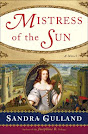
I’m being interviewed tomorrow by a journalist on the history of cleavage. Having written Mistress of the Sun, a novel set in the 17th century court of the Sun King, I’m now an expert.

Right?

Yes … and no.

I have some insights, some opinions on this, but I’ve not looked into the subject in any formal way. So: time to cram.

Of course the first thing I do to prep for this interview is Google the subject. One of the links to pop up is to an academic paper titled “Parties and Cleavages in the European Political Space.” (It occurs to me that this was an unfortunate choice of words for the title of a serious work, that the use of “party” and “cleavage” together was certain to give rise to hecklers. )

I persevere…

The next link brings up an article in the Journal of Metamorphic Geology. The article includes the sentence: “We interpret this to reflect a pressure-solution mechanism for cleavage development, where precipitation from a very small fluid reservoir fractionated that fluid.”
(How would you interpret this sentence?)

And further: “...the history of cleavage formation in the area is more protracted and complex. To unravel the cleavage history...”

Onward … for I must, indeed, “unravel the cleavage history,” and quickly.

Sunday, February 10, 2008

Heroine of a Golden Age: a wonderful article


I'm very pleased this morning to discover Janice Kennedy's article in the Ottawa Citizen, "Heroine of a Golden Age". I'm a long way from Ottawa—I'm in San Miguel de Allende, enjoying a sunny morning—yet through the wonders of the internet I learn of this article the morning it comes out. It describes—accurately and well—the long and difficult process of writing Mistress of the Sun.

The days before a novel comes out is a nervous time for an author: there will be reviews, articles, interviews. Who knows what to expect? So it's a pleasure to launch with an article such as this one. Thank you, Janice Kennedy! 

Thursday, January 31, 2008

That nervous time before lift-off...


In four weeks my novel, Mistress of the Sun, will be officially published in Canada (U.S. publication will be in June). The time before a novel comes out are always hard. Will readers like it?

Believe me, it's never easy. Over a decade ago, when I was just starting out, and piling up the rejection letters, Jane Urquhart—a wonderful best-selling Canadian author—told me: "Get used to it." If it isn't rejections, it will be reviews.

But getting "used to it" entails lots of nail-biting. Which is why sincere and unexpected enthusiastic responses mean so much. I had one such yesterday, a note from Bernard Turle on my Mistress of the Sun FaceBook page.

An endorsement from Bernard is extra-special because he was the wonderful French translator of the Josephine B. Trilogy. I'm not French, yet I write historical novels about French history, so I'm always concerned about how a French reader is going to respond.

Here is what Bernard so kindly wrote:

"I love Mistress of the Sun and I hope I shall do the French translation for my favorite publisher in Paris ; I am so glad Sandra has chosen to work on women of silent power ; I heard from her long ago that she was working on La Lavalliere and I so much enjoyed translating the Josephine trilogy that I was very keen and of course I enjoyed every minute of the reading. La Lavalliere is less known than other royal mistresses and the novel is a welcome addition to the literature on her. Among many other qualities, I like the point of view from which one sees history : through her : not in the light, not in the shadow, just in between. I sympathize with that position, which is typically a translator's position."

I love his phrase, "women of silent power." Thank you, Bernard, mille fois.

Wednesday, January 30, 2008

An amazing writer at work...

This article in the New York Review of Books by Michael Dirda on Joyce Carol Oates is well worth reading. It has a great deal on Oates' work patterns. She is a dirvish:
Between the beginning of 2000 and the end of 2005 she published nineteen books. She has written over seven hundred short stories, more than Maupassant, Kipling, and Chekhov combined.
But what's astonishing is that she is a writer who polishes her work, who rewrites every page over and over. As well, she is a professor and occasional editor of a literary journal. She has a balanced, healthy life and a happy marriage.

I don't know how all this is done. My time can easily become consummed with minutia. Who checks her galleys? Who answers her mail, the telephone? Who pays her bills?
Her journal tells us that she writes from 8 till 1 every day, then again for two or three hours in the evening. And she revises and polishes and reworks page after page after page.
I found this passage from her diary particularly moving:
I love to wake up early and begin to read. While the house is absolutely silent—Ray still asleep, nothing in motion. And then, after he's awake, work at my desk. Until 1:30 or 2. Then have breakfast (apple & cottage cheese). Then return to my desk.... Anything, everything, charms me at such times. Working on The Possessed [for an essay] or my own novel; dreamily shuffling through my old notes for stories or for Bellefleur; writing letters, postcards; staring out the window (at the perpetually falling snow—and occasionally cardinals, and often sparrows, in the berry bushes; today it's snowing so thickly that the river is invisible); thinking about the University; about students, classes, colleagues, things I must do, books I must read; day-dreaming; doodling; rewriting a brief chapter in Evening & Morning; browsing through things that have found their way onto my desk, for some reason; thinking vaguely ahead, as the afternoon darkens, to dinner....
[from The Journal of Joyce Carol Oates, 1973–1982, edited by Greg Johnson. Ecco, 509 pp., $29.95]
Such rich "doodling"! It feels rather like a life from another time, and I long for it.

Tuesday, January 1, 2008

That absorbed state


"I slipped into that absorbed state I have come to associate with the writing process, or rather, that part of writing that precedes actually putting any words on paper."
--Susanne Dunlap, from her essay "Men Seldom Make Passes at Girls Who Wear Glasses" in For Keeps; Women Tell the Truth About Their Bodies, Growing Older, and Acceptance, edited by Victoria Zackheim.
This sentence by Susanne, a friend, startled me. I know that feeling well. Quakers talk of being "moved to speak." This sensation is similar, a welling up intense interest, a tumbling of voices and thoughts. It's like falling in love, a feeling of inevitability—a feeling of being blessed. 
This sensation of "possession" makes writing vital, addictive. It is also what makes its absence distressing. Writing Mistress of the Sun, I was "possessed" for almost eight years. Now that the novel is out in the world, I'm experiencing that same flat disinterest I felt after The Last Great Dance on Earth—the last of the Josephine B. novels—was launched. It helps to remember that I've been here before, that it takes time for the well to fill. 

Tuesday, December 11, 2007

A space

Writers are often asked: “How do you write? With a word processor? an electric typewriter? a quill? longhand?” But the essential question is: “Have you found a space, that empty space, which should surround you when you write? Into that space, which is like a form of listening, of attention, will come the words, the words your characters will speak, ideas - inspiration.” If a writer cannot find this space, then poems and stories may be stillborn. When writers talk to each other, what they discuss is always to do with this imaginative space, this other time. “Have you found it? Are you holding it fast?”

From Doris Lessing’s acceptance speech for the Nobel Prize for Literature.

Sunday, December 9, 2007

Getting started


I often buy a calendar notebook in December. It’s one I will use only for writing, so I give quite a lot of thought to it. This year I splurged and bought a lovely Moleskin. My intention is to set daily goals of some sort. If I’m at a first draft stage, I will set daily word goals, but I’m not at that stage yet, so I may only set daily thinking and research time.

This calendar rarely stays with me for more than a few months, but at least it gets me started.

Tuesday, December 4, 2007

Books I've read more than once


There are very few books I've read more than once. Life is short, and the TBR pile tall. In fact, there are really only two. In my twenties, I read The Brothers Karamazov by Dostoevsky several times over, in part because it was required reading in a number of clases, but also because I loved Dostoevsky's passion. It would be interesting to return to those pages now.

The one book I keep going back to every ten years or so is A Walk with Love and Death, by Hans Koning, a spare, elegant love story set in 1538 in France. The author was Hans Koningsberger when I first read him—it must have been the spring of 1963. I was at the end of my first year at San Francisco State College, and I was being courted by an older student. I remember him handing me the book—"This is good," he said. Someone had likewise handed it to him, in this fashion.

In later years, I found it difficult to find copies of the novel. This was before the Net, and finding a copy of a particular out-of-print book meant stopping in at various used bookstores and searching the shelves, one bookstore at a time. I ordered it thought my small-town library, and a copy was sent to me from afar. I read it, loved it yet again, but could not bear to be parted from it. I was beginning to write myself, and Koning's spare style was something of a beacon for me.

So: I had the book photocopied before returning it to the library. It's a beautiful (if illegal) copy, its stark white pages bound up in a fat black plastic coil. I don't believe I've ever read this "edition," but I've carried it with me fondly. It reassurred me just to know it was there, on my shelf.

I wrote him; I wanted the author to know how much this beautiful little novel meant to me. I sent it his publisher, to Hans Koningsberger—not knowing that he had changed his name in 1972. The envelope was returned. I assumed he had died.

And then, with the Net, and the all-powerful and astonishing ability to seek out any title, any author, I discovered that the book I loved was by Hans Koning, that he was a professor at a university in the U.S., and that not only was he alive and well, but had published quite a number of books. I might have written him then...but my life was busy, and so I did not.

A few weeks ago, having sent of the "final" changes to my soon-to-be-published novel, I took A Walk with Love and Death down off my shelf. It had been 44 years since I had first read it. Perhaps the author had a website, I thought. In no time, I found it, and through the contacts page, I was finally able to send him a letter, telling him how much I love this novel, and how much it has taught me about writing.

The email was bounced back. Hans Koning had died that spring, only months before. It brings tears to my eyes even now. I had missed my chance.

I have just finished yet another reading of A Walk with Love and Death. I still love this book. Such beautiful sentences! I'm going to quote from the opening lines, which I think set the tone beautifully for the bitter-sweetness of the story, and the elegance of the prose:
In the spring of that year, 1358, the peasants of northern France did not sow their fields any more.
I had succeeded in getting out of Paris just before sunset and walked to Saint-Denis in the twilight; I had found a room there to sleep and now was on the road again.

The sun was rising almost opposite me; a harsh light skimmed the empty fields. The war was in its twentieth year, but I was happy.

The ending: ah, I resist the obvious.

Friday, November 23, 2007

Betwix and between


I find myself now in that puzzling country: the novel of eight years is off my desk yet still in my heart. I'm a blog writer now, not a novelist, although I do feel I've conceived and that the next novel is growing, slowly, in me.
image