Notes on the Writing Life

Notes on the Writing Life

Notes on the Writing Life

Thursday, May 22, 2008

Picking out a signing pen

.
.
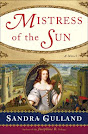
My husband can go in and out of an office supply store in 5 minutes. Not me. Yesterday I had the luxury of time, and I walked all the aisles, lingering. I did have a list -- printer inkers, storage boxes (for packing away Mistress of the Sun notes), stick-on dots (for coding the research books on my shelves), and, most importantly, a good pen for signing my books.

When my first book was published, Richard gave me a beautiful Waterman fountain pen, which I treasure. But it proved challenging to use as a signing pen: it sometimes blotched, stained my fingers, and it could leak in-flight. Also, and most importantly, I had to carefully blot the signed title page before closing the book. In the beginning, when I had only few books to sign, I welcomed a time-consuming process. Now, when I'm signing as many as 40 books, I need to be more efficient.

Recently, I stopped into a Chapters/Indigo store in Toronto, and offered to sign my books. I did not have a pen with me, and I was quickly offered a Sharpie. Well. Not that elegant, but — "They don't blot," the clerk told me. "Which is why we use them." The other nice thing about a felt-tip marker, I later thought, is that you are given notice when it's drying up — not like a fountain or ball-point pen that can quit mid-signature. Making a mess in a $30 book is not a good thing.

So I lingered long at the felt-tip marker section. It wasn't an independent office supply store — the wonderful type of store where you can test the pens on a scrap of paper provided — so I purchased a selection, and headed north, to Petawawa Stables, where I had my horse to visit ... and a book to sign.

I've known Dawn and her mother Yvonne since before I began writing Mistress of the Sun. I used to take riding lessons there, and my horse, Finnegan, is wonderfully looked after there during the winter.

I was delighted to sign Yvonne's book, a gift to her from Dawn. I had tested the markers in the car: the Sharpies, a medium tip, were too fat — a fine-point would be a better choice — but the blue Staedtler (1.0 Medium) worked quite nicely ... if only I didn't have to buy a set of eight in assorted colors to get that one blue.

I'll be in New York soon, with time, I hope, for one of my favorite past-times: lingering in the aisles of an office supply store.

Photo: Finnegan and me, taken by Dawn Townshend at Petawawa Stables.

Wednesday, May 21, 2008

What next?

.
.
James Macgowan has published an article in the Ottawa Citizen, "After the End," asking writers what they do after a novel is finished. I'm in that space now (and starting to feel a bit too much at home in it). I was somewhat pained by Alan Cumyn's claim that the novel is never really over, reassured by Andrew Pyper's "cut adrift" feeling, and totally related to Scott Gardiner's getting onto all the chores that were ignored in that all-consuming last push to finish. Gail Anderson-Dargatz's answer was romantic and charming:
I have a confession to make: I have an "affair" with my next project before I finish the first, just so I avoid many of the feelings of separation that come when I "divorce" my main novel project and move on. And I do go through real separation at the end of a project, with many of the accompanying feelings of grief, anger, exhaustion and general stress, before finally coming to an acceptance that yes, the relationship is over and it's time to move on. After all, I've spent the better part of five years with this novel. Moving on to that new project before the old "marriage" is over means I have something exciting to look forward to, a place to redirect my focus, so I don't stay in the doldrums as long. So a little fling is a good thing. I think those feelings of separation as we move out of a project are necessary in giving us distance from it, so we can move into the editing process with a new perspective. It's very much like that moment when you see your old love on the street (after the divorce is over) and you can see the guy for who he really is, and can judge him accordingly, without the fuzz of love to distort your perceptions.
It took me a moment to realize that this is exactly what had happened with Mistress of the Sun. I'd finished The Many Lives & Secret Sorrows of Josephine B., and decided to have "an affair" with Louise de la Vallière's story before returning to the very long marriage of the Trilogy. After finishing the Trilogy and writing an early draft of Mistress, I took a detour into the life of La Grande Mademoiselle -- whose story I may well write about now. It reminds me that writing is more of a meandering journey where nothing really is wasted.

Tuesday, May 20, 2008

The wonder of Penelope Fitzgerald

.
.
Penelope Fitzgerald's Offshore and The Blue Flower are on my list of all-time great novels, but what I love best about her is that she didn't start writing until her late-50s.
To quote from the Guardian book blog, "The quiet genius of Penelope Fitzgerald":

Fitzgerald was a wonderful writer, and since her death in 2000 her reputation has continued to soar. Despite a late start (she began writing her first novel when she was almost 60, composing it as a diversion for her dying husband), she gained immense popular and critical acclaim during the last 20 years of her life. She won the Booker (for Offshore), and became the first non-American to win the National Book Critics' Circle award (for The Blue Flower, which many consider her masterpiece). In the eight years since her death, an increasing number of readers - including AS Byatt, Frank Kermode and Hermione Lee - have begun speaking of her as the greatest English novelist of recent decades.

I heard Penelope Fitzgerald interviewed by Eleanor Wachtel on the CBC radio show, Writers & Company. I was struck by her account: her first novel was a mystery. Accepted for publication, her editor asked her to cut it by half. She did so, and continued to do so, for every book she wrote. A good lesson, that.

Monday, May 19, 2008

Podcasts I couldn't do without

.
.
I subscribe to three podcasts. I listen to them while doing excercises, the dishes, the laundry, driving. They are all writing-related, and I highly recommend them.

Writers on Writing: interviews with writers and agents on the craft and business of writing. As a writer, a reader and a teacher of writing, Barbara DeMarco-Barrett knows the subject well. The interviews are invariably inspiring and informative. I just listened to a wonderful interview with script doctor John Truby and have ordered his book, The Anatomy of Story: 22 Steps to Becoming a Master Storyteller. (Click here to listen to the interview.) I really like Truby, and this sounds like the perfect book for me right now.

The other podcast I love is put out weekly by the New York Times Book Review. It's snappy, short, informative and entertaining.

My third favorite I used to listen to on the CBC every Sunday afternoon at 3:00, usually as I made soup. My life is not so easily patterned these days, and so I appreciate the freedom of being able to listen to Eleanor Wachtel's Writers & Company whenever I please.

Saturday, May 17, 2008

Book Launch 2.0

.
.
This short video — Book Launch 2.0 — is going around the publishing industry like wildfire, I'm told. It's priceless.

Monday, May 12, 2008

Keep calm and carry on

.
.
In the new Chapters/Indigo on-line community, Gail Anderson-Dargatz posted about The Vancouver Writers and Readers Festival website series on BC writers' rooms. She noted that her writing room is a hallway.

I don't know how she does it!

I have not one but two perfect offices, I confess. This is the one in Mexico. My office ("bunker") in Ontario is every bit as nice: smaller, but overlooking woods and meadow. If only cubic feet equaled writing output.

Gail Anderson-Dargatz pointed out that the Guardian has a series on writers' rooms as well. I love seeing writers' offices. I especially loved the poster on Sarah Waters' wall: "Keep calm and carry on."

Sunday, May 11, 2008

How to begin

.
.
A reader writes that she wants to write a book. She has a story in mind, but she doesn't know how to begin.

How to begin? This is a hard question to answer, but I'm going to try ... in part because this is where I am myself right now: back at the beginning.

I could start by saying something about focusing on the story — dreaming about it, walking with it — not even thinking about that looming scary thing: a novel. Anne Lamott wrote about this in Bird by Bird, an excellent book on just this thing — beginning — and I would suggest reading this book first above all the others. Another good book at this point is Becoming a Writer, by Dorothea Brande. She talks about the importance of dreaming, as does Butler, in From Where You Dream.

But for me, when I was beginning, I wanted a "how-to" system. I needed to know the nuts and bolts. I wanted steps to follow. "Dreaming," would not have helped me then. I had the good fortune to find a book that outlined the procedure of writing a novel, aptly named How to Write a Novel. The author described how to write down thoughts on index cards, and then sort the cards, grouping them into scenes. This I could do. A novel: no. A stack of index cards: yes. That book unfortunately appears to be out of print, but another author, Ken Atchity, describes a similar system in A Writer's Time. It gave me what I needed to write my first novel.

And now? Now I'm back to dreaming. I'm typing my thoughts onto the computer this time, but soon, I plan, I will transfer each onto an index card and begin anew.

Saturday, May 10, 2008

To town and back

.
.
It has been eight years since I've had a book out, and the entire process has changed. We don't see galleys anymore, for example, and much of the promotion is through the internet. Before, when I had a reading, I would make up posters to put up around town myself, or mail off for others to put up. Now I'm thinking of making up a poster that can be downloaded and printed from my website.

Some things never change, however: and that's the need for a box of my books in the back of my car. I went into town today — gas, bank machine, drug store, grocery store, flower shop ... — and I was asked several times for my book. (The town is small, 600 at last count, and bookstores nonexistant.) I'd forgotten about this part of the process, this ever-so-sweet selling of books out of the trunk of a car, a tradition every writer alive has been part of. I think of Grisham, driving around the country, peddling his novels to bookstores. I think of Dickens. It wouldn't have been a car but a horse-drawn buggy ... but without a doubt, he would have had books with him.

Monday, May 5, 2008

Collecting books, collecting book lists

.
.
After my mother died, it was poignant and sad to look through the scraps of paper she kept in a drawer by her reading chair — notes of titles of interest, books to get. The writing becomes more frail with time, and in the last years of her life, she was unable to read at all.

Coming back to our home in Canada after being away all winter, I am struck by all my books — my wonderful research library, my To Be Read stack, nicely awaiting me by the bed — as well as by all my lists of books. Granted, much of this has to do with building a bibliography, seeking out all the possible titles available on whatever subject I'm writing about — but in truth, I recognize that I'm a collector of titles of books to read as well as of books. There are not enough hours remaining in my life to do justice to even a small fraction of them (I'd better begin a short list), but that doesn't seem to matter.

And all this to say: I read an article on Readerville Journal this morning which lists novels about travels into Mexico. I want to note it somehow, but I resist the urge to print it out — and so: here it is.

Tuesday, April 29, 2008

Writers as spies

.
.
Three authors have emerged, lately, as former spies. Noel Coward was an informant, sent by the British across Europe, and returning to report what was being said about the Nazis. As a society star, he was well-placed to gossip. After 1939, he became a fully-trained member of the secret service, along with Ian Fleming.

The third author is a surprise to me: Peter Matthiessen, author of At Play in the Fields of the Lord (a novel I loved). For two years, he worked for the CIA. His cover? Being co-founder and editor of The Paris Review. The prestigious literary magazine was founded in 1953, well past WWII, so what motivated him?

Monday, April 28, 2008

On airport bookstores

.
.
I cannot pass a bookstore without browsing, and for a few moments in a Virgin bookstore in the Vancouver airport, I loose myself in the titles. And then I wake up: I'm an author, I've a new book just published, is it on the shelves?

No.

I can't believe it. How is that possible? It's not that it's a hardcover, for they do have other hardcover fiction titles displayed, and published by my own publisher — titles not on the Maclean's best-selling fiction in Canada list for over two months, I note with angry jealousy. For a crazy moment I consider inquiring of the clerk, and imagine her saying, Oh, we just can't keep it in stock, it flies off the shelves. Instead I skulk away, pouting.

It's amazing how emotional this can be. I'm not this type of person — normally. But normally, too, I'm not on a book tour, I don't have a book out, and normally I do not have a book on anyone's best-seller list. A sense of entitlement comes quickly ... and lethally.

I remember walking in a mall with my then-young son just before my first book was to be published. Passing a bookstore I told him, "Next time we come, my book will be in that store." I realized, then, that my bookstore experience would change forever. No longer, relaxed and easy browsing. Once I had a book published, I would approach bookstores as an Author, making sure I was presentable, checking to see if my titles were on a table or shelf, and then going up to the clerk and explaining that I was the author of a book on their shelf (pointing), and offering to sign.

It's a job, what you do. My experiences have been varied, from the manager of a large store jumping up and down with enthusiasm, to an annoyed end-of-day who-needs-this response from a clerk. More and more, I'm asked to prove my identity first with an ID before being allowed to sign.

I came to see airport bookstores as the cream of the crop, and longed for the day when my books would be in one. I remember with great satisfaction when I first saw the titles of the Josephine B. Trilogy on the shelf of a bookstore in a San Francisco airport. As the Trilogy became more successful, I began to even expect to see it.

And so, grumpily, I left the Virgin bookstore in the Vancouver airport and proceeded through check-in. There was another bookstore on the way to my gate: I glanced over the shelves warily. No. No. No.

And then: yes. There is was, Mistress of the Sun stacked ever so nicely on a shelf at the front.

Happily, I got on the plane.

On the Road (at 63): travel advice for ageing authors

.
.
An unhappy thumb is a wonderful problem to have to deal with, since it's caused by swarms of fans wanting their book signed. The Calgary reading was one of my favorites — intimate, yet of a good size. They forgave my stumbling delivery. (Note to self: write my talk out, experiment with reading different sections, practice.) And then they bought books and lined up to have them signed.

I write out names before I sign because people often want me to sign more than one, and I fear misspelling a name. And so I have a record, neatly recorded in the lovely Moleskin I thought would be for recording thoughts about my next novel, but was rather quickly taken over by promotion notes. So: at my Toronto launch in February, I signed for 28. This was considered a smashing success: many had more than one book to be signed, and several, as well, only wanted a signature.

In Calgary, however, I signed for 46! Many, many of these were for more than one book. It seemed like I was signing for a very long time — an hour and a half? (Impossible, surely.)

The next morning, in Vancouver, my right thumb showed signs of stress. This worried me: if my thumb completely gives out, I'm incapable of shaking a hand, much less holding a pen — much less writing.

Add to survival gear list: an ergonomic pen.

The true danger of travel

.
.
One night "on the road" and already I fear I'm coming down with a cold. This two-stop tour (Calgary, Vancouver) is something of a test run. The big tour will be in June – four and a half weeks of travel and promotion from New York to San Francisco. I can see that one of the (many) challenges will be staying healthy, given all the different hotels with variable temperatures, all the hand shaking and closed airplane air, all the late nights and early mornings — not to mention the excitement and consequent stress.

I add to my survival gear list: Echinacea (with Golden Seal, made in our local area by St Francis Herb Farm: the best), Tea Tree oil (vile even in drops, to gargle). And Airborne, which I still believe in.

Test Tour

.
.
Mr. Seat by the Window calls out and waves to all the crew. "Hey, Joe! Nice to see you!" He obviously lives on WestJet — which, I can attest, is a perky sort of airline (superior, in my view, to grumpy Air Canada). I quickly dig out my earplugs and open a book. I think of Alexander McCall Smith, who writes on airplanes. I think of Margaret Atwood, who writes poetry on tour. "What else is there to do?" They are the gold metal winners of the tour circuit. I'm just aiming to get through it in one piece.

I begin a list of survival gear: iPod, earplugs. I will need a purse/backpack that fits under the narrow aisle seat I now favor, something sturdy I can put my feet on (given that the seat heights are too tall for me, designed for men). A shawl and slipper socks for when it's cold; a layer I can slip off when it's hot.

I've chosen an excellent novel for travel — The Book Thief — but it's too fat. I need a slender yet engaging book. I remember traveling through Europe with War and Peace, tearing off pages as I read them, returning home with a few pages and the back cover — but I don't want to do that with this book. This is a book to pass on.

(Written last Thursday, but not posted.)

Monday, April 21, 2008

Ishiguro interview in The Paris Review

.
.
I've long loved The Paris Review interviews, but I've acquired a habit of counting the male/female balance of those interviewed, and often that's enough to turn me away. The current issue isn't any different: 7 men in bold on the cover, to 1 woman (Katie Ford, author of a beautiful poem "Earth").

However, the feature interview is with Kazuo Ishiguro, an author I greatly admire. Indeed, he is one of the few male authors who can write absolutely convincingly from a female point-of-view — so convincingly, in fact, that I could not believe that his first novel, A Pale View of Hills, was written by a man. He continues to astonish with every novel he publishes.

Here are some snippets from "The Art of Fiction" that caught my interest:
I’ve never felt that I have a particular facility at writing interesting prose. I write quite mundane prose. I think where I’m good is between the drafts. I can look at one draft, and I have lots of good ideas for what to do with the next one.
I find that reassuring. (I'd like to know how many drafts he might write.)

The PR interviewer asked how the English setting for The Remains of the Day came about, and Ishiguro said that it started with a joke that his wife made.
There was a journalist coming to interview me for my first novel. And my wife said, Wouldn’t it be funny if this person came in to ask you these serious, solemn questions about your novel and you pretended that you were my butler? We thought this was a very amusing idea.
He became obsessed with the idea of a butler as a metaphor for classical British reserve, but also as someone who serves loyally, without any responsibility for the larger issues. He did a lot of research,
but I was surprised to find how little there was about servants written by servants ... . It was amazing that so few of them had thought their lives worth writing about. So most of the stuff in The Remains of the Day about the rituals of being a servant was made up. When Stevens talks of the “staff plan,” that’s made up.
I've long had trouble finding information on what it was, exactly, servants did, so I find this interesting. I'm considering writing about a man who was a loyal secretary to my character — his role would have been similar to that of an English butler.

At this point in the on-line interview, I must chose to purchase the print edition of The Paris Review in order to read what follows. I do, selecting "state" of Ontario (is this a plot?), and scrolling up the long list of countries from the pre-selected U.S.A. to find Canada. Now I'll have to wait for the print issue to arrive the old-fashioned way, by burro-express.

Sunday, April 20, 2008

Reading: the first step

.
.
A friend who teaches writing was puzzling over a student who worked hard, but just "didn't have it." It turns out this student doesn't read.

I'm astonished by people who wish to be writers, but don't read as a rule. That would be like wanting to be a musician, but not listening to music, or wanting to be a chef, and not enjoying food. By reading, a writer develops an instinct for what works ... and what doesn't. And why write if one doesn't enjoy reading? It's incomprehensible to me.

I often advise people who want to write, to write what they read. Often this ruffles — my suspicion is that they read commercial or genre fiction, and imagine themselves above that, on a so-called higher literary plane. If that's the case, then that is the type of book they should be reading.

As a writer, one begins to read differently: for pleasure (always), but also for craft. I note changes in point-of-view, challenging structures. (The book Reading Like a Writer by Francine Prose is excellent, as is Jane Smiley's Thirteen Ways of Looking at the Novel.)

Right now I'm reading The Boys in the Trees, by Mary Swan, and I'm reading it in a reverie of awe. It's a brilliant book: she's a brilliant writer. As a writer myself, it's thrilling — and yes, humbling, I admit — to encounter a work of such daring reach. I'm studying the way she's able to change point-of-view, the heart-stopping structure (the main characters abruptly changing a third of the way in!), the nuanced, rich details. Just gorgeous. Bravo!

Friday, April 18, 2008

Process and product


I talked with a friend last night at a party. She confessed that she had always wanted to write, but that she's given up. "Now it's too late." She is in her early fifties.

Of course I said, It's never too late ... and I believe that to be true. I told her that even one-half hour a day is all it takes ... and I believe that to be true, as well.

I woke up this morning thinking of this conversation: thinking, as well, that it came down to process versus product. It's never too late to engage in the process of writing. But the product: this is what stops people, and I don't believe that it should.

By product, people think agent, publishing house, editors, production, promotion ... all of that. They also assume — although it's not always the case — that there is profit involved, money to be earned by the writer. Somehow this confers legitimacy. And it does — I'm not going to argue that — but it's not the only legitimacy.

I think of a book that once meant a great deal to me, in my teens: To Paint is to Love Again, by Henry Miller. (Miller's full quote is, "To paint is to love again, and to love is to live life to its fullest.") Although I don't know for sure, I believe this was initially a self-publication. No doubt I could have an entire blog dedicated to wonderful books that were self-published. Margaret Atwood and friends started a magazine in order to be able to publish their work. Today, self-publishing is an art form: you can have so much control, and it doesn't cost very much. It's no longer "vanity publishing" — but rather more like an indy movie. And however it's viewed, it's a legitimate creation.

Which led me to think of my own long-time dream of "Log Cabin Press." I can immediately think of a number of titles — all my own, for I have no desire to be applied to by others, to have to accept or reject, to edit the work of others. That becomes work, and this is all about process, and the creative culmination of that process.

The first title that comes to mind is Bone Magic, the short story that became Mistress of the Sun.

Another is The Book of Books, a compendium of essays about my mother, illustrated with her paintings and other creative work.

Another is The Clown's Mother, a book of memories about my mother's mother, my grandmother May.

And the last would be Confessions of an Airhead, my own autobiography.

Vanity press? Yes, in a way, because these would all be intensely personal works, but all the more legitimate, for that.

I think, ultimately (and not a little sadly), of the opening lines of a poem, "Undid in the Land of Undone" by Lee Upton:

All the things I wanted to do and didn't
took so long.

It was years of not doing.

I began writing because I imagined my tombstone with the words, She never got around to it. So: I must ask myself, What's next? I do want to write at least one more Sun Court novel, but I also want to complete these Log Cabin Press creations ... not for profit, not for fame, but for myself, and for those near and dear.

Wednesday, April 16, 2008

Art about Writing


I love this image — "Still Trying" by Diem Chau. It feels as precarious as writing can be, especially at the trying stages. (And isn't it always thus?)

Tuesday, April 8, 2008

The importance of images


The painting Pegasus by William Blake is an evocative image, I think, for Mistress of the Sun: I see Petite in the clouds, handsome Louis, and, of course, an enchanting white horse. (I would be thrilled if this image was used by a publisher for the cover.)

I didn't come across this beautiful painting until Mistress was in production; otherwise, I would have pinned a print above my computer. I have always regarded this novel as something of a fable , and that's the feeling that this painting gives.

Another painting, also of a white horseTête de cheval blanc by Géricault — was pinned above my desk, and for all those years that I was working on Mistress, I imagined that this image would be the cover.

"Cover" image, working title, the story itself invariably change, but they are important to me while writing. I write a dedication first thing, as well. This, too, will change over time, but I need to feel that what I'm writing is, in fact, a book, and the more I can approximate one visually, even in the very messy early stages, the more ardently I apply myself to the task at hand.

This image of a white horse was important in other ways; I felt it was my "key" into the novel. I discovered it on a postcard in the Louvre gift shop. I was on my last research trip for The Last Great Dance on Earth. I dreaded finishing that novel, knowing that my long-term and intimate relationship with Josephine and her world would come to an end. I was in tears leaving the room where David's magnificent painting of the Coronation of Empress Josephine was displayed at the Louvre.

This painting has to be seen to be experienced. It appears life-size. "One walks into it," Napoleon said. I knew all the characters so well, I felt I was there with them. I also knew that when I returned — if I returned — I would view it as an outsider: hence the tears. As I left the museum, I stopped in the gift shop, needing time to collect before facing the bustling world. I spotted the postcard of Tête de cheval blanc and latched onto it, seeing in it the lifeline to my next novel, my next world.

Monday, April 7, 2008

On dream-storming


At a certain point, one must begin...again. Looking back, writing a novel seems an impossible thing to have done, and an even more impossible thing to do again. Frankly, it's hard on life and on the body. One must forsake things — pleasures often. "Write novel" is a space- and time-sucking up thing to have on the To Do list, and it will park itself at the top of that list for years. So reluctance and its sister resistance sets in. However, as pointed out by Susan Shaughnessy in Walking on Alligators (a wonderful book of meditations for writers), resistance is the first stage. In other words: I'm already writing.

About two years ago I read a book on writing that included a card technique for this initial process that appealed to me: From Where you Dream, by Robert Olen Butler.

It's Chapter 5 that interests me, "A Writer Prepares": which is exactly what I need to do. The technique is "dream-storming": investing 6 to 12 weeks or so (i.e. serious time) just dreaming up scenes, a good 200 or so. The next step is put them on cards, spread them out and begin to find the shape of the story.

What I like about this approach is that as you write, and when the story begins not to work (like immediately), you stop and re-dream it, so the plot is not a fixture, but an organic thing that keeps changing. Which, of course, it does anyway, but I'd like not to spend eight years trying to sort it out this time. What I'd like is to dream the story this year and write it the next, second and third drafts the year following.

But first, I must actually begin.

Thursday, April 3, 2008

Languages


A French friend confessed recently that he was surprised how bad my French was. (As am I: I have been studying that language forever.) A day or two later, I was translating some sentences into Spanish. Only by the third sentence did I realize that I was translating into French. I am continually mangling the two.

I find learning languages challenging, and this winter has been particularly rigorous because I've had to learn Net-ease and rudimentary HTML. Promoting a book requires "getting out there," and these days, out there is here, on the Net, which has a language of its own.

Sunday, March 30, 2008

A schizophrenic life


For years you toil alone. There is no coffee-machine chatter, no morning "Hello! How is your daughter this morning? Is she feeling better?" before going to your station. In moments of frustration (and there are many, many, many) you have no one to turn to. In moments of satisfaction, you think, "So, this is what it's all about. This is the secret." But you keep it to yourself.

You revel in the silence, the daily solitude. You put up signs, "Keep out!" You disconnect the phone. You lower the blinds and put on noise-cancelling head-phones, set to play a dronning hypnotic note. Daily, you sit at your computer and enter another world.

And then, one day, you come out, blinking against the glare. Your creation, over which you've wept and laughed — your creation, which has been your private and rather intimate affair for all these many years — is deemed ready to be sent out into the world. Your agent, your editors take it eagerly from your hands (they have been waiting; they had hoped to have it earlier). It's prodded and poked. Some adjustments are made, and it enters the machine of publication.

And so do you. You get your nails done, your hair tinted and trimmed. You acquire new clothes. You study questions, and think up answers. You talk in front of a mirror, to practice. Your words sound dumb to you, stumbling and inarticulate and false, and so you practice some more, for you well know what is to come, that you must go forth into the world, you and your creation. Now and then you think of her — your creation — and you wonder how she's doing, in the bowels of the publication machinery. But most of all, you worry: you want her to be liked. You want her to be loved.

And so you throw yourself into fray, do everything you can think of to prepare for her reception in the world. Your private place is closed to you know — it seems so long ago. Now you live in a public arena. You speak before audiences, the bigger the better. You type letters, hundreds of them. You seek connection with the same hunger that you formerly saught solitude. You must leave no rock unturned.

You are applauded, and it's wonderful. The creation is loved, welcomed, adulated. You have succeeded beyond what you'd dreamed possible.

"What will your next book be about?" the people ask. "I'm not sure," you tell them. What you don't say, what you're keeping to yourself, is that you fear that you've lost the way back to that cave. Like Hanzel and Gretel, you look for crumbs.

Saturday, March 22, 2008

Blog star = lit star


I think of myself as not writing right now—"just" blogging—but blogging
is writing, as is demonstrated by the literary success of this Japanese singer/blogger.

A note about the (awful) word "blog": it's from web log.

Wednesday, March 12, 2008

The fuzzy line between fact and fiction


I just posted to my research blog my thoughts on fact, fiction, and that messy realm in-between: "
The fuzzy line between fact and fiction." It's certainly relevant here, as well.

Friday, March 7, 2008

With voltage


.
I sent out a newsletter this morning, and was taken aback to discover that the lion's share of the clicks went to this blog. I wasn't sure that my house was in order.


Truth is, my house is in profound disorder! Having a book published is rather like having a baby--suddenly there is so much to do, and so little time. Suddenly there are waves of emotions, and cherished moments with so many readers.

Once upon a time (surely I should begin a book that way one day), a German fan posted a review to Amazon in Germany. Through the wonders of the internet, I could have it translated. Basically what I learned was that she was chained to her chair and experiencing reading my book with voltage. Once I got past the fear that she had electrocuted herself, once I understood that what she had said, in her native language, was that she was enraptured, I began to see the term "with voltage" not as a mistranslation, but as the true thing. The ideal reading experience is one that happens "with voltage." And writing, as well.

And now, meeting the readers, I see it as yet another form of voltage. Writing a novel is an intimate act; reading a novel is likewise intimate. There is a very special connection between the writer and the reader — and meeting with readers this week, and hearing of their profound connection to something I had created: this, surely, is voltage.
image