.
.
Tuscany is a long way to go to sleep well, and perhaps it's the late-night dinners, but I seem to dream well here, too. Last night I dreamt that I asked a woman what she would not want to ever give up. Her teeth, she said. For me, it was my office.
My writing life began, I think, with my first winter in Canada, in Nain, Labrador, the sub-artic. I read a lot that winter -- all of Lessing's Children of Violence series, Anais Nin's diaries, Virginia Wolf's A Room of One's Own. And it was in reading Wolf's book that I began to dream of just that, a room of my own.
I've had desks in dark and crowded basements, desks in the corner of utility rooms. In reading Cameron's The Artist's Way I began to seriously dream of an office I could call my own. I put it on my wish list. For a long time I was considering a tent and then a house-trailer. Then came my first foreign sale and lo -- the means to consider the impossible: an office addition to our house.
And yes, my office would be the one thing I would not ever want to give up.

Friday, September 26, 2008


Wednesday, September 17, 2008
Ciao!
.
.
We're heading off on our travels this morning, to Paris and Tuscany, and will be on the road for over 3 weeks. My husband and I are each only taking a carry-on bag — a challenge! — but I'm always grateful for a light bag.
I hope to blog now and then, but that's likely optimistic. I forget about how awkward it can be to type on French (or Italian!) keyboards.
In the last week, my entire concept of what novel I will be writing next has changed. I saw a way into the story of Athénaïs — just a brief image came to me, and it opened up. Will that be the next book though? I'd always thought so, but after finishing Mistress, I didn't think I could write about her. (I was too angry.) Now, I'm not so sure.
Ciao!
.
We're heading off on our travels this morning, to Paris and Tuscany, and will be on the road for over 3 weeks. My husband and I are each only taking a carry-on bag — a challenge! — but I'm always grateful for a light bag.
I hope to blog now and then, but that's likely optimistic. I forget about how awkward it can be to type on French (or Italian!) keyboards.
In the last week, my entire concept of what novel I will be writing next has changed. I saw a way into the story of Athénaïs — just a brief image came to me, and it opened up. Will that be the next book though? I'd always thought so, but after finishing Mistress, I didn't think I could write about her. (I was too angry.) Now, I'm not so sure.
Ciao!
Friday, September 12, 2008
Living the questions
.
.
I subscribe to Stephanie Bennett Vogt's newletter, Your Spacious Self: short, inspirational nuggets on clearing out clutter (a constant battle in our house), and, what makes Vogt's concept different, clearing out muddled thinking in the process. Yesterday, she simply posted this Rilke quote, which, as the Quakers would put it, "spoke to my condition."
The To Do List grows — preparation for the trip, but also, the nuts and bolts of the writing life: fax to my UK publisher about buying some of the remaindered copies of The Lives & Sorrows of Josephine B.; a Q&A to fill out for M.J. Rose's Powell's blog, due this month; research preparation for the trip; a letter to decline a request to "blurb" a book (I'm already committed to one right now); Sandra Gulland Inc. bookkeeping; many emails to answer, especially those wishing to pin down a date for an event.
All this is urgent and pressing, but most of it is "author" work. The all-essential work, the work of the "writer," seems so easily overtaken.
.
I subscribe to Stephanie Bennett Vogt's newletter, Your Spacious Self: short, inspirational nuggets on clearing out clutter (a constant battle in our house), and, what makes Vogt's concept different, clearing out muddled thinking in the process. Yesterday, she simply posted this Rilke quote, which, as the Quakers would put it, "spoke to my condition."
"Be patient toward all that is unsolved in your heart ... The questions themselves are like locked rooms, like books written in a foreign tongue. ... Live the questions now, and perhaps you will then gradually, without noticing it, live along some distant day into the answer."I'm grappling with big questions now: What will my next novel be about? If La Grande Mademoiselle, might it be more than one novel? What about a novel about Athénäis? I'm trying to condense my galaxy of thoughts into an email to Dan, my adopted mentor, before leaving for Europe in one week.
— Rainer Maria Rilke, Letters to a Young Poet, from "Letter Four". Translated by M.D. Herter [and ammended by me]. Norton, New York, 1954.
The To Do List grows — preparation for the trip, but also, the nuts and bolts of the writing life: fax to my UK publisher about buying some of the remaindered copies of The Lives & Sorrows of Josephine B.; a Q&A to fill out for M.J. Rose's Powell's blog, due this month; research preparation for the trip; a letter to decline a request to "blurb" a book (I'm already committed to one right now); Sandra Gulland Inc. bookkeeping; many emails to answer, especially those wishing to pin down a date for an event.
All this is urgent and pressing, but most of it is "author" work. The all-essential work, the work of the "writer," seems so easily overtaken.
Wednesday, September 10, 2008
Totems
.
.
I've not been sleeping well, so I've been reading quite a bit through the long nights. One book I finished last night was How I write; The Secret Lives of Authors. At first glance, I didn't like it: it looked like a coffee-table book — cool design, but no substance, I thought. I was wrong.
It's an anthology of very short statements from over sixty authors on how they write — specifically on the wierd habits or objects that have become an essential part of their process. Johathan Lethem's list of names, Jay McInerney's axe artifact, Lionel Shriver's toy Clippity, A.S. Byatt's "Antonia Writing Time!" notice, Jonathan Franzen's old and ugly office chair, Claire Messud's graph paper pad and fine .005 felt-tip pens ...
I came away with a fuller understanding that the process of writing is magical, that for many writers, it requires some sort of incantation, totem or ritual. Which made me give some thought to my own:
.
I've not been sleeping well, so I've been reading quite a bit through the long nights. One book I finished last night was How I write; The Secret Lives of Authors. At first glance, I didn't like it: it looked like a coffee-table book — cool design, but no substance, I thought. I was wrong.
It's an anthology of very short statements from over sixty authors on how they write — specifically on the wierd habits or objects that have become an essential part of their process. Johathan Lethem's list of names, Jay McInerney's axe artifact, Lionel Shriver's toy Clippity, A.S. Byatt's "Antonia Writing Time!" notice, Jonathan Franzen's old and ugly office chair, Claire Messud's graph paper pad and fine .005 felt-tip pens ...
I came away with a fuller understanding that the process of writing is magical, that for many writers, it requires some sort of incantation, totem or ritual. Which made me give some thought to my own:
The cork from the bottle of champagne I brought to the class party at the end of the first writing workshop I attended. I was celebrating because I'd committed to becoming a writer. The cork reminds me that I'm lucky to be doing what I'm doing.None of these are essential to me, for I have more than one office, and I don't carry them with me. What is essential is my computer. I love the idea of writing long-hand, and I'm hopelessly romantic about notebooks, pens and pencils, but I rarely write more than a few pages before running back to my computer ... my computer which is both my friend and foe. I spend far too many hours on it not writing.
The tiny frame of the words "1-inch square" — this a reminder from Anne Lamott, I believe: When stuck approaching a scene, imagine viewing it through a 1-inch square. Describe what you see.
Two images, both of which "describe" to me the creative process. The first is a painting of a man and a woman on a floating raft, the bedding dragging in the water. The woman is asleep, the man awake and staring. (I wish I knew the artist's name and the name of the work.) This image evokes the unconscious at work.
The second, is Louis Lozowick's "Granite for Monuments (For Future Monuments)". For me, this image captures the feeling of "constructing" a novel.
Sunday, September 7, 2008
Overwhelmed!
.
.
I'm at that familiar "it's impossible" stage, brought on (as usual) by research. My focus has been La Grande Mademoiselle, but — like the lady herself — it's a big, brave, sad story, rather like that of a female Don Quixote. It's hard to take on a subject about which much has been written. I waded into Josephine blindly — and over a decade later waded back out.
Also, I waver between fact and fancy. I've been (as a novelist should) giving way to fancy — but now, rereading Pitts' La Grande Mademoiselle at the Court of France, I'm face-to-face once again with fact. It's like poking a hole in a balloon.
(For notes on the research, see my research blog, Baroque Explorations.)
.
I'm at that familiar "it's impossible" stage, brought on (as usual) by research. My focus has been La Grande Mademoiselle, but — like the lady herself — it's a big, brave, sad story, rather like that of a female Don Quixote. It's hard to take on a subject about which much has been written. I waded into Josephine blindly — and over a decade later waded back out.
Also, I waver between fact and fancy. I've been (as a novelist should) giving way to fancy — but now, rereading Pitts' La Grande Mademoiselle at the Court of France, I'm face-to-face once again with fact. It's like poking a hole in a balloon.
(For notes on the research, see my research blog, Baroque Explorations.)
Monday, September 1, 2008
Writing by dictation
.
.
I just started to use my MacSpeech Dictate program and I have to say I'm impressed. I am standing away from the computer talking into a microphone, not even looking at the screen. In a few minutes I will go over and see what in fact has appeared.
I can't believe it. It's perfect.
So now what? I wish I had some research notes to test. Okay. I'll talk about Elizabeth George's book Write Away.
I like this book: she details the professional nuts and bolts of her way of writing a novel. She's candid and honest and not too abstract.
For example, she writes:
However, having now read the entire book, I understand how much preparation she's done before creating the step outline:
1. Idea: basically, the story described in one long paragraph. I find this one paragraph impossible to write. I'm still looking for the idea, no doubt casting my net too wide.
2. Research: once she has an story idea sketched out, she begins her research, which is extensive and well-organized (I am impressed).
3. List of characters: she lists all the possible characters in the novel, giving careful thought to their names.
4. Detailed description of each character: her documents describing each character are extensive — three or four single-spaced pages long. I always mean to do this, but never do.
5. Develop settings: layout, photos, maps, etc.
6. And then — the step outline. She aims for 10 to 15 causally-related events, noted down in abbreviated form.
I thought: okay, I'll give it a try — see if I can come up with a short list of linked events. But no way: it's hard. She's a thriller writer, so that surely must help.
More on this to come.
(I'm finishing this post in a café in Berkeley. I just stocked up on my new favourite pen — a bold Uni-ball Gel Impact RT — and my long-time favourite pencil, Twist-Erase with a .9 lead. Plus a lovely grid-lined spiral notebook, one of the many I buy and never use. This is the store I remember buying stacks of tiny cards for French vocabulary as a pre-teen. It now has a sign on the door, "This is a soft building" — a warning in case of an earthquake.)
.
I just started to use my MacSpeech Dictate program and I have to say I'm impressed. I am standing away from the computer talking into a microphone, not even looking at the screen. In a few minutes I will go over and see what in fact has appeared.
I can't believe it. It's perfect.
So now what? I wish I had some research notes to test. Okay. I'll talk about Elizabeth George's book Write Away.
I like this book: she details the professional nuts and bolts of her way of writing a novel. She's candid and honest and not too abstract.
For example, she writes:
"To give myself a sense of direction, I do two things. I create a step outline. I then expand it to a running plot outline."I find this interesting. Right now, I'm creating (in brief) scene ideas which I will, at some point, arrange in the order I think they might unfold in my novel. I am a long way from the making-order stage, however. Right now I just imagining scenes, one upon another. Soon, I will begin to think about ordering these scenes.
"Every scene contains something within it that triggers a scene that follows."She can type her step outline on a single sheet of paper, and it doesn't take her longer than a few hours. It's confessions like this that make me feel like a wimp!
However, having now read the entire book, I understand how much preparation she's done before creating the step outline:
1. Idea: basically, the story described in one long paragraph. I find this one paragraph impossible to write. I'm still looking for the idea, no doubt casting my net too wide.
2. Research: once she has an story idea sketched out, she begins her research, which is extensive and well-organized (I am impressed).
3. List of characters: she lists all the possible characters in the novel, giving careful thought to their names.
4. Detailed description of each character: her documents describing each character are extensive — three or four single-spaced pages long. I always mean to do this, but never do.
5. Develop settings: layout, photos, maps, etc.
6. And then — the step outline. She aims for 10 to 15 causally-related events, noted down in abbreviated form.
I thought: okay, I'll give it a try — see if I can come up with a short list of linked events. But no way: it's hard. She's a thriller writer, so that surely must help.
More on this to come.
(I'm finishing this post in a café in Berkeley. I just stocked up on my new favourite pen — a bold Uni-ball Gel Impact RT — and my long-time favourite pencil, Twist-Erase with a .9 lead. Plus a lovely grid-lined spiral notebook, one of the many I buy and never use. This is the store I remember buying stacks of tiny cards for French vocabulary as a pre-teen. It now has a sign on the door, "This is a soft building" — a warning in case of an earthquake.)
Saturday, August 30, 2008
.
.
I'm in California now, in the basement apartment of my father's house. Tomorrow is my sister's wedding: the Big Day. Yesterday I got my toes and nails done, and took Dad to a barber to get trimmed up. Today I'll find a card, which as any woman knows is a time-consuming task, necessitating reading every card on the rack. The card store I have in mind is close to two of my favorite clothing-shopping stores, so will I be able to resist? (Doubtful.) A very good bookstore used to be in this block too, but the last time I was here, it seemed on last legs. If it's still there, I'll browse there, too.
I've been reading Elizabeth George's Write Away, and I like it. I love the quotes from her journals, her fears and struggles. She has a very matter-of-fact way of putting things. I'm almost finished with it, in part because I don't read the excerpted examples included (never have, never will).
Here are some quotes.
Which made me ask: what is the central conflict in my story?
I like this especially:
On character (which is where she begins):
And no, I haven't been getting to my scenes. Thinking of them, but coming up short.
(Having written that, I wrote the five.)
.
I'm in California now, in the basement apartment of my father's house. Tomorrow is my sister's wedding: the Big Day. Yesterday I got my toes and nails done, and took Dad to a barber to get trimmed up. Today I'll find a card, which as any woman knows is a time-consuming task, necessitating reading every card on the rack. The card store I have in mind is close to two of my favorite clothing-shopping stores, so will I be able to resist? (Doubtful.) A very good bookstore used to be in this block too, but the last time I was here, it seemed on last legs. If it's still there, I'll browse there, too.
I've been reading Elizabeth George's Write Away, and I like it. I love the quotes from her journals, her fears and struggles. She has a very matter-of-fact way of putting things. I'm almost finished with it, in part because I don't read the excerpted examples included (never have, never will).
Here are some quotes.
"...your setting should be a place that you want to know about, a place you are interesting in exploring, a place you want to describe, a place that resonates with you ... " [24]
"What you should keep in mind is that anything in a character's environment can serve as an indicator of his internal landscape if you use it wisely." [38]She makes it clear that you need conflict to have a story, and that events must occur as the conflict unfolds, and that these events "must be organized with an emphasis on causality." (Like dominoes.)
Which made me ask: what is the central conflict in my story?
I like this especially:
"Skilled writers know that what you're supposed to do is continually open up your story. You do this by creating scenes in which you lay down — but do not answer — dramatic questions. You do this by making sure that if you do answer a dramatic question in a scene as the novel progresses, you've already laid down another. You do this by making partial disclosures instead of giving out all the information you possess." [43]In other words, the writer is a tease.
On character (which is where she begins):
"I believe it's critical to know the basic need each character has in his life because the denial of that need leads directly to the second area that I consider crucial in developing a character. This is his pathological maneuver. Better said, it's what the character does when he's under stress. The supreme stress he's ever under, by the way, is having his efforts to meets his core need thwarted." [50]
"The final important area that I include in my analysis is to decide what the character wants in the novel. (I make this decision about each scene as well, giving an agenda to each character in a scene.) [52]More on voice and plot to come ...
And no, I haven't been getting to my scenes. Thinking of them, but coming up short.
(Having written that, I wrote the five.)
Wednesday, August 27, 2008
.
.
I'm in the middle of so many books it's crazy: The Hour of Our Death (a history of attitudes toward death—excellent); The Plot against Pepys; a book on 17th century French cooking; three or four books on writing; a novel; a book of short stories. Like a bee in the honeysuckle, I fly from one to another.
I'm also ordering books, because fall is coming, and we're approaching that period of time when we move to Mexico for the winter, where it costs quite a bit to order books in. The problem will soon be deciding which books to take, and which to leave behind. I need to finish some of the research books I'm reading, and (this is the hard part) record notes onto computer.
I've complained of this before. The day before yesterday, I recorded notes from two text pages to the Timeline and the Research Notes — it took an hour. (In large part because I became absorbed.)
I'm going to try a new method: computer dictation. I've ordered the software, but will it help or hinder? That remains to be seen. If it does work, it might also prove way to rewrite a second or third or zillionth draft: by reading it into the computer. I always find reading my work out loud changes how I see and hear it. I hear the redundancies, the unnecessary phrases. I've read pages from a work in process out loud, but never an entire draft — although, with every book, I tell myself I should.
Today: packing. I'm going to California for my sister's wedding: my sister and her female partner of over twenty years. It's a joyous summer in California this year, so many couples leaping at the window of opportunity to legally bless their union. Certainly, Robin and Betsy's wedding is going to be a big "hats off!" whoop of joy. People are flying in from all over. My blind, 90-year-old dad will be proudly walking (hobbling?) my sister down the aisle, my brother's band playing.
I will try to blog while away, but I might disappear for a week or so. My father doesn't have Internet (torture!) and even the connection at the local Starbucks is slow and frustrating.
Did I write my scenes yesterday? No. Have I written my scenes today? Yes.
.
I'm in the middle of so many books it's crazy: The Hour of Our Death (a history of attitudes toward death—excellent); The Plot against Pepys; a book on 17th century French cooking; three or four books on writing; a novel; a book of short stories. Like a bee in the honeysuckle, I fly from one to another.
I'm also ordering books, because fall is coming, and we're approaching that period of time when we move to Mexico for the winter, where it costs quite a bit to order books in. The problem will soon be deciding which books to take, and which to leave behind. I need to finish some of the research books I'm reading, and (this is the hard part) record notes onto computer.
I've complained of this before. The day before yesterday, I recorded notes from two text pages to the Timeline and the Research Notes — it took an hour. (In large part because I became absorbed.)
I'm going to try a new method: computer dictation. I've ordered the software, but will it help or hinder? That remains to be seen. If it does work, it might also prove way to rewrite a second or third or zillionth draft: by reading it into the computer. I always find reading my work out loud changes how I see and hear it. I hear the redundancies, the unnecessary phrases. I've read pages from a work in process out loud, but never an entire draft — although, with every book, I tell myself I should.
Today: packing. I'm going to California for my sister's wedding: my sister and her female partner of over twenty years. It's a joyous summer in California this year, so many couples leaping at the window of opportunity to legally bless their union. Certainly, Robin and Betsy's wedding is going to be a big "hats off!" whoop of joy. People are flying in from all over. My blind, 90-year-old dad will be proudly walking (hobbling?) my sister down the aisle, my brother's band playing.
I will try to blog while away, but I might disappear for a week or so. My father doesn't have Internet (torture!) and even the connection at the local Starbucks is slow and frustrating.
Did I write my scenes yesterday? No. Have I written my scenes today? Yes.
Sunday, August 24, 2008
Still catching up
.
.
I'm keeping to the scenes. Today, being Sunday, I thought: just one. But it ended up being five index cards. They are stacking up.
I'm also filling out the Timeline with respect to La Grande Mademoiselle: I've read many books on her, "T" marked in the margins — this is my code for "post to Timeline." Posting facts to the Timeline is a big job, engrossing but time-consuming, and also somewhat hard on my body (in spite of all my ergonomic equipment).
My intent is to get the facts about La Grande Mademoiselle's life down and then print the significant events onto cards, and sort them in with the scene cards. Before I do that, I'd like all those "T" notes posted. I question the wisdom of this: am I procrastinating in the guise of research?
As well, I found a down-loadable version of one of La Grande Mademoiselle's novels, which I now have on computer. It would be a worthwhile project to attempt a translation. (Reminding me now of the lost project, the "translation" of the 17th century book on horsemanship.)
All this helps to explain, I think, why it takes me so darn long to write a novel.
.
I'm keeping to the scenes. Today, being Sunday, I thought: just one. But it ended up being five index cards. They are stacking up.
I'm also filling out the Timeline with respect to La Grande Mademoiselle: I've read many books on her, "T" marked in the margins — this is my code for "post to Timeline." Posting facts to the Timeline is a big job, engrossing but time-consuming, and also somewhat hard on my body (in spite of all my ergonomic equipment).
My intent is to get the facts about La Grande Mademoiselle's life down and then print the significant events onto cards, and sort them in with the scene cards. Before I do that, I'd like all those "T" notes posted. I question the wisdom of this: am I procrastinating in the guise of research?
As well, I found a down-loadable version of one of La Grande Mademoiselle's novels, which I now have on computer. It would be a worthwhile project to attempt a translation. (Reminding me now of the lost project, the "translation" of the 17th century book on horsemanship.)
All this helps to explain, I think, why it takes me so darn long to write a novel.
Thursday, August 21, 2008
Am I doing my taxes? NO.
.
.
Am I doing my taxes? NO. I'm reading writer blogs. I so totally relate to this post on revising on C.W. Gortner's blog:
.
Am I doing my taxes? NO. I'm reading writer blogs. I so totally relate to this post on revising on C.W. Gortner's blog:
At times, I honestly thought the book would crumble apart and found myself ruing the day I decided I could tackle such a difficult subject. Catherine led a long, eventful, and unbelievably complicated life; the decision during this revision rapidly became one that often put me, as they say in Spain, between the cape and the sword. I had to make very tough decisions between what must stay and what must go; and when you're writing a historical novel that covers an actual person's life, that is not an easy thing to do. In fact, I had an agonizing few weeks when I wondered if I could even do her justice, given the constraints.I'm very much looking forward to reading this novel, The Confessions of Catherine de Medici.
Books on writing
.
.
I love reading books about writing, especially when I’m somewhat stuck, or balky. Yesterday I took a load of unwanted books to The Bookstore in Golden Lake, run by my writing friend Jenifer McVaugh. In exchange, I brought home a load of new books, a number of them books on writing. The Art of Dramatic Writing by Lajos Egri is a classic; a number of people have mentioned it. The Practice of Poetry by Behn & Twichell is a book that Jenifer loaned me, a book she recommends, and one I’m looking forward to exploring. The Sound of Paper; Starting from Scratch by Julia Cameron looked interesting. I got a great deal out of her book The Artist’s Way, but haven’t connected with any of her newer books. This one might suit; I don’t know. I'm skimming it — I'm a little annoyed, already, by her predictable list assignments, but, as is always the case with a book by a writer on writing, finding bits that resonate.
The book I started reading right away was (heh) Write Away by Elizabeth George. I like it. It’s nudging me to do things I know I should be doing, like character analysis.
I like this about setting:
One thing I like especially is that George heads each chapter with an excerpt from her writing diary.
As for today: after writing in my journal that I was entirely dry in the scene-creation department, I wrote out (in brief) my allotted 5 scenes. Which pleases me greatly.
And then, on discovering that my reader mailbox was again 3-weeks deep, answered emails: one to the German translator of Mistress of the Sun, whose glowing email I treasure. One to a woman seeking a relative who may be related to Josephine (I get emails of this sort regularly) — I need to do a little research to answer. Several heart-warming letters from fans.
And now: taxes, which I hope to finish today. Beyond that, perhaps a walk on my horse, some research recording, some Q&As to work on, preparation for my European research trip (coming up).
.
I love reading books about writing, especially when I’m somewhat stuck, or balky. Yesterday I took a load of unwanted books to The Bookstore in Golden Lake, run by my writing friend Jenifer McVaugh. In exchange, I brought home a load of new books, a number of them books on writing. The Art of Dramatic Writing by Lajos Egri is a classic; a number of people have mentioned it. The Practice of Poetry by Behn & Twichell is a book that Jenifer loaned me, a book she recommends, and one I’m looking forward to exploring. The Sound of Paper; Starting from Scratch by Julia Cameron looked interesting. I got a great deal out of her book The Artist’s Way, but haven’t connected with any of her newer books. This one might suit; I don’t know. I'm skimming it — I'm a little annoyed, already, by her predictable list assignments, but, as is always the case with a book by a writer on writing, finding bits that resonate.
The book I started reading right away was (heh) Write Away by Elizabeth George. I like it. It’s nudging me to do things I know I should be doing, like character analysis.
“ . . . you cannot bring a character to life in a book unless he or she is alive before the book begins.”I’ve always been a bit lazy about this, I confess, allowing a character’s eccentricities to emerge during the writing, or during a 3rd or 4th draft emergency analysis.
I like this about setting:
“Your setting should be a place that you want to know about, a place you are interested in exploring, a place you want to describe . . . "And further:
"But it's tough to make a place come to life unless you've been there . . . "I find this to be true, and it's a key reason for my research trips. But it's not only the sensual experience of a place that matters — for me it's the deep conviction that something happened, and that it happened here, on this spot.
One thing I like especially is that George heads each chapter with an excerpt from her writing diary.
"I am filled with doubts. Why isn't Steinbeck filled with doubts?"Yet Steinbeck was filled with doubts while writing Grapes of Wrath. I suspect that every writer is filled with doubt, most of the time.
As for today: after writing in my journal that I was entirely dry in the scene-creation department, I wrote out (in brief) my allotted 5 scenes. Which pleases me greatly.
And then, on discovering that my reader mailbox was again 3-weeks deep, answered emails: one to the German translator of Mistress of the Sun, whose glowing email I treasure. One to a woman seeking a relative who may be related to Josephine (I get emails of this sort regularly) — I need to do a little research to answer. Several heart-warming letters from fans.
And now: taxes, which I hope to finish today. Beyond that, perhaps a walk on my horse, some research recording, some Q&As to work on, preparation for my European research trip (coming up).
Wednesday, August 20, 2008
.
.
I’ve been spinning my wheels, but this is not entirely unproductive. Mucking about on my computer this morning, filing things away, discovering things missing, giving some thought to how things might be better organized. This is important in terms of research, which generates so many files — files that need to be found quickly, as needed.
In general, I use Notebook as a repository for most all information, but it has limitations. (Too, it’s possible that I’ve not learned to use it perfectly. )
I also store larger documents in DevonThink – but I’ve never been at ease with Devon, in spite of all it’s qualities. I keep thinking I will spend some time with their on-line tutorials – but that requires a high-speed link, as well as time. Also, now that the Mac OS is so searchable, why not simply keep these documents on my computer?
All of this mulling (and hair-pulling) has come after a discovery that a “translation” of an 17th century horsemanship manual I worked on for years is no longer to be found on my computer. When my new computer stopped working, and I had to move back into my old computer, I needed throw off lots of data to make room. Surely, it’s somewhere.
.
I’ve been spinning my wheels, but this is not entirely unproductive. Mucking about on my computer this morning, filing things away, discovering things missing, giving some thought to how things might be better organized. This is important in terms of research, which generates so many files — files that need to be found quickly, as needed.
In general, I use Notebook as a repository for most all information, but it has limitations. (Too, it’s possible that I’ve not learned to use it perfectly. )
I also store larger documents in DevonThink – but I’ve never been at ease with Devon, in spite of all it’s qualities. I keep thinking I will spend some time with their on-line tutorials – but that requires a high-speed link, as well as time. Also, now that the Mac OS is so searchable, why not simply keep these documents on my computer?
All of this mulling (and hair-pulling) has come after a discovery that a “translation” of an 17th century horsemanship manual I worked on for years is no longer to be found on my computer. When my new computer stopped working, and I had to move back into my old computer, I needed throw off lots of data to make room. Surely, it’s somewhere.
Wednesday, August 13, 2008
Sideswiped
.
.
I've been sideswiped by summer, family matters ... and now: taxes. All good intentions have been forgotten. Not that I haven't been busy — with writing-related and other work — but as for scenes ... ?
Writing is so like exercise or dieting or any of those things that require resolve. You just have to keep at it.
.
I've been sideswiped by summer, family matters ... and now: taxes. All good intentions have been forgotten. Not that I haven't been busy — with writing-related and other work — but as for scenes ... ?
Writing is so like exercise or dieting or any of those things that require resolve. You just have to keep at it.
Wednesday, July 30, 2008
Catching up
.
.
I've fallen behind in my posting: a reading in Eganville last Wednesday, a weekend away to go to a friend's 60th birthday party.
To catch up:
There were so many cars parked at the church in Eganville I thought there must be a funeral on. But no, they were there for the reading: a wonderful crowd of well over a hundred. I asked friend and professional filmmaker Jackie Levitin take videos. She got some wonderful shots. I especially enjoyed her interviews with some of the people in attendance. I'll post them eventually, when my Net speed is up.
I missed sketching out my five scenes one morning, but I have otherwise kept to my goal, even while travelling on the weekend.
For the last two days I've been an on-line guest for a UCLA extension course in writing. I enjoying thinking about and articulating process and will share some of it here where I get a chance.
I also came up with a title for my PEN lecture in San Miguel in February: "What: no panties? The 17th-century revealed."
Somewhat fatigued! We have much to do preparing for 7 house guests this coming week-end and a dinner party for 29 on Sunday. It's the Leo season: birthdays for both my husband and daughter Carrie, who will be turning 30!
.
I've fallen behind in my posting: a reading in Eganville last Wednesday, a weekend away to go to a friend's 60th birthday party.
To catch up:
There were so many cars parked at the church in Eganville I thought there must be a funeral on. But no, they were there for the reading: a wonderful crowd of well over a hundred. I asked friend and professional filmmaker Jackie Levitin take videos. She got some wonderful shots. I especially enjoyed her interviews with some of the people in attendance. I'll post them eventually, when my Net speed is up.
I missed sketching out my five scenes one morning, but I have otherwise kept to my goal, even while travelling on the weekend.
For the last two days I've been an on-line guest for a UCLA extension course in writing. I enjoying thinking about and articulating process and will share some of it here where I get a chance.
I also came up with a title for my PEN lecture in San Miguel in February: "What: no panties? The 17th-century revealed."
Somewhat fatigued! We have much to do preparing for 7 house guests this coming week-end and a dinner party for 29 on Sunday. It's the Leo season: birthdays for both my husband and daughter Carrie, who will be turning 30!
Tuesday, July 22, 2008
On waking
.
.
This morning the five scenes seemed like quite a lot. Perhaps it isn't a modest aim at all.
I woke thinking I should give thought to my "archives" — a lofty term for the boxes of papers in my basement. Might a library take them on? Now — in that between-novels stage — would be the time to at least inquire. Of course I expect rejection. One, I'm not a lit star, and two, I imagine that the days of libraries having much money for this type of thing might be over.
I must also finish preparing for my reading in Eganville tomorrow night. Yesterday I steamed my gown, and organized my props (wig, poke, bumroll). Today I will transfer the edits from my U.S. reading copy to my Canadian edition. I thought of simply changing the covers, but the Canadian is slightly larger. I might read from the U.S. edition, but without the cover. Or with the cover, and talk about the two designs. It's a wonder I get anything done at all with all this dithering.
I'll type and print out my talk onto cards: the ones I used throughout the US are now scribbled over. Too, I want to say something special. I've done this countless times by now, but in the three weeks since my last one in California, I feel I've never given a reading before. Too, a presentation before friends and neighbours is always more stressful than one before strangers.
It's also time to give thought, shape and title — that's the hardest part — to my talk for PEN in San Miguel de Allende next spring. I'm glad that they are so well-organized, that they are working on promotion so far in advance, but it's certainly far, far from my thoughts right now. I've set an end-of-month deadline for myself.
.
This morning the five scenes seemed like quite a lot. Perhaps it isn't a modest aim at all.
I woke thinking I should give thought to my "archives" — a lofty term for the boxes of papers in my basement. Might a library take them on? Now — in that between-novels stage — would be the time to at least inquire. Of course I expect rejection. One, I'm not a lit star, and two, I imagine that the days of libraries having much money for this type of thing might be over.
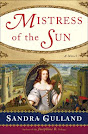
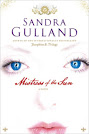
I must also finish preparing for my reading in Eganville tomorrow night. Yesterday I steamed my gown, and organized my props (wig, poke, bumroll). Today I will transfer the edits from my U.S. reading copy to my Canadian edition. I thought of simply changing the covers, but the Canadian is slightly larger. I might read from the U.S. edition, but without the cover. Or with the cover, and talk about the two designs. It's a wonder I get anything done at all with all this dithering.
I'll type and print out my talk onto cards: the ones I used throughout the US are now scribbled over. Too, I want to say something special. I've done this countless times by now, but in the three weeks since my last one in California, I feel I've never given a reading before. Too, a presentation before friends and neighbours is always more stressful than one before strangers.
It's also time to give thought, shape and title — that's the hardest part — to my talk for PEN in San Miguel de Allende next spring. I'm glad that they are so well-organized, that they are working on promotion so far in advance, but it's certainly far, far from my thoughts right now. I've set an end-of-month deadline for myself.
Monday, July 21, 2008
Beginning is hard
.
.
Beginning is hard. I remind myself that resistance is the first stage of writing. This morning I described — in only a sentence or two or three — possible scenes in The Next Novel. I wrote these out on 3x5 index cards. I intentionally held to five scenes — five cards: a modest beginning. I want to start something I'll keep up. If I keep to five scenes a day, every day, I'll increase it.
This is the first stage of the "dream-storming" method described by Robert Olen Butler in Chapter 5, "The Writer Prepares," of From Where You Dream; The Process of Writing Fiction. He cautions against writing a scene out fully, even if you can hear the voices, see it clearly. (I'm not sure I have the discipline not to write it out, especially dialogue.) He says only to give one sensual detail, one small thing to hook the scene — a smell, a sound, a feel.
I read this book over a year ago, and the procedure appealed to me. I resolved that I would try it for The Next Novel. It's not out-lining, but it's not just jumping in, either. It's a fluid visualization technique that's somewhere between the two. I'm hoping, in this way, to have a clearer idea of the novel as a whole before I begin to write it next spring. (I'm hoping not to take eight years to write The Next Novel.) Of course once I begin to write, the entire thing will change, derail, veer off in some unexpected direction. And then one goes back to the cards.
I'm a sucker for systems, anything to offer a step-ladder out of the swamp. I'll try this; it appeals to me.
.
Beginning is hard. I remind myself that resistance is the first stage of writing. This morning I described — in only a sentence or two or three — possible scenes in The Next Novel. I wrote these out on 3x5 index cards. I intentionally held to five scenes — five cards: a modest beginning. I want to start something I'll keep up. If I keep to five scenes a day, every day, I'll increase it.
This is the first stage of the "dream-storming" method described by Robert Olen Butler in Chapter 5, "The Writer Prepares," of From Where You Dream; The Process of Writing Fiction. He cautions against writing a scene out fully, even if you can hear the voices, see it clearly. (I'm not sure I have the discipline not to write it out, especially dialogue.) He says only to give one sensual detail, one small thing to hook the scene — a smell, a sound, a feel.
I read this book over a year ago, and the procedure appealed to me. I resolved that I would try it for The Next Novel. It's not out-lining, but it's not just jumping in, either. It's a fluid visualization technique that's somewhere between the two. I'm hoping, in this way, to have a clearer idea of the novel as a whole before I begin to write it next spring. (I'm hoping not to take eight years to write The Next Novel.) Of course once I begin to write, the entire thing will change, derail, veer off in some unexpected direction. And then one goes back to the cards.
I'm a sucker for systems, anything to offer a step-ladder out of the swamp. I'll try this; it appeals to me.
Sunday, July 20, 2008
Managing the workload, finding time
.
.
I'm giving some thought these days to how to manage my workload: how to carve out time to write. I'm a full-time writer, in theory, and yet ... . And yet there always seems to be a great deal of "other stuff" to do.
Since I've been back from my tour, 11 days ago, in addition to the usual laundry and cleaning, I've:
I'm back from my tour and summer is truly here: I've resolved to carve out time for creative nurture, that important recharging — "artist's dates" as in Cameron's The Artist's Way: get on my horse now and then, reflect and read, read and reflect. And maybe, just maybe, begin to give some concrete (as opposed to misty) thought to The Next Novel. This Sunday morning, I’ll begin by going, at long last, to Quaker meeting.
.
I'm giving some thought these days to how to manage my workload: how to carve out time to write. I'm a full-time writer, in theory, and yet ... . And yet there always seems to be a great deal of "other stuff" to do.
Since I've been back from my tour, 11 days ago, in addition to the usual laundry and cleaning, I've:
- Unpacked (noting what got used on my tour, and what did not, for future reference).
- Prepared the house and cabin for four house guests (making up beds; picking, buying, arranging flowers; moving furniture; getting DVDs for their kids from the library, etc.).
- Paid and posted a month of bills and bank statements (this isn't finished yet).
- Put together thoughts on The Next Book for a writer's group meeting; went to the meeting.
- Read/edited a 50-page manuscript and gave feedback.
- Sent a signed book plate to a fan in Germany.
- Answered over 140 emails (fans, editors, agents, friends and family), regarding, among a number of things, the new covers for my Canadian edition, tour expenses, setting up promotion, contributing to an anthology, The Next Novel, writing a review ... .
- "Refreshed" my To Do lists (this takes a surprising amount of time).
- Looked into plane schedules for a possible trip to go to my sister's wedding.
- Gave some thought to what to get my husband for his birthday.
- Entertained wonderful house guests from Mexico for two days.
- Set up the horse field, fixed fences, got my horse back into the meadow, set up his feed.
- Started an essay for an anthology on ageing.
- Had an X-ray.
- Cancelled appointments in Ottawa in order to go to my chiropractor (it's a one-hour drive to get there): he's never seen me in such bad shape!
- Rescheduled Ottawa appointments.
- Sorted my expense receipts from my 4-week tour, wrote a summary letter, sent them off.
- Puzzled over an incomprehensible expense fax from my Canadian tour: gave up.
- Posted to blogs and social-network sites. Updated my website events pages.
- Looked everywhere — everywhere! — for my good reading glasses.
- Moved out of my new (and fatally flawed) MacBook Pro, back into my old G4. Backed up, erased and packed off the new but flawed one. Received the new replacement and moved into it. (Yay!) Bought extended warranty on-line.
- Made calls about a reading this coming week; emailed the newspaper a photo and query. Fretted that nobody will come.
- Reconfigured my 700-page timeline for The Next Novel: this was not easy to figure out.
- Began reading four wonderful research texts, one in French.
- Looked into the possibility of hiring a Virtual Author's Assistant. Began a list of things that a Virtual Assistant might be able to do (it's not long, unfortunately).
I'm back from my tour and summer is truly here: I've resolved to carve out time for creative nurture, that important recharging — "artist's dates" as in Cameron's The Artist's Way: get on my horse now and then, reflect and read, read and reflect. And maybe, just maybe, begin to give some concrete (as opposed to misty) thought to The Next Novel. This Sunday morning, I’ll begin by going, at long last, to Quaker meeting.
Saturday, July 19, 2008
Wise words from CarolineLeavittville
.
.
I love this post from Caroline Leavitt's blog. I just sent a member of my own writing group feedback: "Better, but no." I've been feeling bad about that, but I'm heartened by Caroline's words. "No" is critically important. It takes time to find the right note.
Basically, my feedback was that it was almost all there: just cut away, cut to the heart of it.
I remember the moment I felt like a "real" writer. I had just cut the one scene I considered to be the best in the book. With every draft, I had marvelled at that scene, and now it was in the trash. Proudly, but somewhat bewildered, I walked into the living room and announced what I'd done to my husband. I had blood on my hands, as every writer must.
.
I love this post from Caroline Leavitt's blog. I just sent a member of my own writing group feedback: "Better, but no." I've been feeling bad about that, but I'm heartened by Caroline's words. "No" is critically important. It takes time to find the right note.
Basically, my feedback was that it was almost all there: just cut away, cut to the heart of it.
I remember the moment I felt like a "real" writer. I had just cut the one scene I considered to be the best in the book. With every draft, I had marvelled at that scene, and now it was in the trash. Proudly, but somewhat bewildered, I walked into the living room and announced what I'd done to my husband. I had blood on my hands, as every writer must.
Friday, July 18, 2008
Manuscript evaluations and mentorships
.
.
Gail Anderson-Dargatz posted very helpful information on where to go for manuscript evaluations and mentorships on the Indigo Community Forum. (And on her blog, as well.) Since that post will only be held for 3 months, I'm copying it here:
.
Gail Anderson-Dargatz posted very helpful information on where to go for manuscript evaluations and mentorships on the Indigo Community Forum. (And on her blog, as well.) Since that post will only be held for 3 months, I'm copying it here:
Outside my work teaching advanced novel and advanced fiction at UBC, in the optional-residency CW MFA program, I do take on private mentorships and manuscript evaluations for fiction when I have time, and if I think I can really help the writer. Anyone interested can contact me at books@gailanderson-dargatz.ca and I'll send back a sheet with details and fees.On mentorship, Gail explains:
Booming Ground (the UBC non-credit CW program) also offers a great mentorship and manuscript evaluation service with some of Canada's best writers, as does the Writers Union of Canada. Just google either and you'll find information and fees.
I'm also interested in hearing from other professional writers who offer mentoring as I'm often approached by apprentice writers looking for mentorship, but I don't always have time to provide it, and would like to have a list of writers on hand that I can pass along. If you're interested, let me know, again at books@gailanderson-dargatz.ca.
It's just one-on-one teaching or guiding a writer through process. The writer submits a story or portion of their manuscript by email once a month over the course of several months. I use the writer's own material as an opportunity to discuss elements of craft. So I'll give notes about the manuscript that are instructive, and I also give detailed comments on the manuscript itself (using the comment function on word). The writer and I discuss these notes, and then the writer goes off to rewrite and prepare the next month's submission. Manuscript evaluation is also an opportunity for mentorship, so I offer instruction on elements of craft as I offer advice on how to improve the manuscript itself.Mentorships are not only for unpublished writers. I enrolled in a Humber correspondence course while writing Tales of Passion, Tales of Woe. I was fortunate enough to have Carol Shields, a correspondence I treasure. I realize now, too, that I'm in the process of setting up a mentorship with Dan Smetanka for my next novel. Writers work alone, but it's important to set up a support system, be it a writers' group, a teacher, an editor, friend, family -- or (in my case) all of the above.
Monday, July 14, 2008
Ira Glass on Storytelling
.
.
Chet sent me a link to an Ira Glass video on storytelling. Glass has a lot to say that's relevant to storytelling generally, I think, whether through video or book-form. In this video, Glass explains that there are basically two building blocks:
1) a story sequence -- "He did this, and that led to that, which led to ... " -- which includes a bait opening, and
2) moments of reflection that lets us know why we're spending time with this story.
Interesting. And so I watched the other videos. Number 2 is truly important for novelists, I think. The message is:
1) spend a lot of time looking for a good story (as much time as you make creating it), and
2) ruthlessly kill projects that aren't working, and get rid of the boring parts.
"Failure is a big part of success."
Number 3's message is: you will spend years making junk. Persevere.
I recommend these videos to all writers.
.
Chet sent me a link to an Ira Glass video on storytelling. Glass has a lot to say that's relevant to storytelling generally, I think, whether through video or book-form. In this video, Glass explains that there are basically two building blocks:
1) a story sequence -- "He did this, and that led to that, which led to ... " -- which includes a bait opening, and
2) moments of reflection that lets us know why we're spending time with this story.
Interesting. And so I watched the other videos. Number 2 is truly important for novelists, I think. The message is:
1) spend a lot of time looking for a good story (as much time as you make creating it), and
2) ruthlessly kill projects that aren't working, and get rid of the boring parts.
"Failure is a big part of success."
Number 3's message is: you will spend years making junk. Persevere.
I recommend these videos to all writers.
Sunday, July 13, 2008
Research stimulation
.
.
I've started percolating, thinking of The Next Novel. The process — which is scary, shapeless and bewildering — is greatly stimulated by research, about which I posted to my research blog: Baroque Exlorations. See you there...
.
I've started percolating, thinking of The Next Novel. The process — which is scary, shapeless and bewildering — is greatly stimulated by research, about which I posted to my research blog: Baroque Exlorations. See you there...
Thursday, July 10, 2008
Tour notes
.
.
I've more-or-less unpacked. I've stacks of papers and books everywhere, thoughts scattered. Before I move on, I want to note down some memorable moments from my tour. There were so many.
Diane, my wonderful escort in Chicago, had previously owned a bookstore out west, not long before. She loved the Josephine B. Trilogy and had hand-sold lots. She told me how furious customers could get if the 2nd or 3rd in the Trilogy was not in stock. She and her staff came to call any frustrated customer response "that Josephine B. look." (I love this.)
(An aside: Diane and one of the bookstore owners got into an interesting discussion on the differences between male and female book-buyers. Men, in general: don't browse, need lots of space, don't like being crowded, buy non-fiction, don't discuss a book with staff or other customers, buy greeting cards in 15 seconds, while women will linger over the cards for some time. It was this last I found most amusing. I can't imagine buying a greeting card without reading nearly every one on the rack, but I'd never imagined that I was hard-wired to do so.)
One of the most moving things about publishing is when other artists are inspired to create something of their own in response to a work. I've mentioned earlier in this blog meeting Rachel Maes, who wrote "To Destiny," an 8-page epic poem inspired by the Josephine B. Trilogy. In St. Louis I met the director, Janet Park Datema, and dancer, Beckah Voigt, of the one-woman dance performance inspired by the Trilogy and performed in St. Louis in the fall of 2004.
Beckah, Head of Dance Program at Webster University, also does "energy work" — and treated me to an astonishing session. She knew nothing of Mistress of the Sun, yet during the session had a strong image of a flying white horse (which tells me that Diablo is still very much with me).
I loved meeting other authors while on tour. In West Chester, PA, I met Susan Holloway Scott, author of Royal Harlot, Duchess, and coming soon, The King's Favorite, about Nell Gwyn. In a Borders event in Wilmette, IL, I met Aimée Laberge, Canadian author of Where the River Narrows. I had blurbed this wonderful historical novel, so it was a pleasure to meet Aimée. We had previously met, but only briefly, at a Writers' Union AGM in Montreal. At another Borders event in Birmingham, MI, I met aspiring writer Karen Batchelor, a life coach who wants to write about her slave ancestors, and Philine Tucker, an award-winning romance writer who is now turning to historical fiction.
In California, I began seeing family at events. At Borders in Thousand Oaks, just north of LA, my sister Robin and her fiance Betsy (partners for decades and soon to be married this wonderful Summer of Love in California) as well as Betsy's mom Alma greeted me enthusiastically.
While in LA, I met, at last, Dan Smetanka — a brilliant editor who had been so important in the evolution of Mistress of the Sun. We'd worked closely together — the relationship between an editor and writer can be intensely intimate — but had never met. We talked in an exploratory way about The Next Novel.
The following night, at famous Volman's bookstore in Pasadena, I was surprised to see three people. First, Manuel Romo and his wife. My husband and I know Manuel well — we rent a casita from him when we go to a beach in Mexico every January — but I'd never seen him in a jacket and reading glasses and long pants, and certainly never expected to see him in California. He laughed at my puzzlement, "You don't recognize me!"
Then there was Alisha and her husband Andy. Alisha is a cousin's daughter (second-cousin, then?), and a dear family connection. She spends hours each week with the apes at the zoo and has learned how to communicate with them. I persuaded her to share this special language at my reading. I have it on video and will post it as soon as I get my computers sorted out.
And then there was Bonnie Sachs, with whom I'd shared a glorious week on horseback in the Loire Valley. We had a wonderful time relating stories.
Once in San Francisco, in the Bay Area, I was truly in home territory, a wonderful place to end the tour. At Book Passage in Corte Madera, I met virtual friend and author, Deborah Grabien, close family friend Andrée Morgana, who brought Suzy and Val from high school days (!), my brother's wife Jenny with her mother and aunt, and — now back in northern California — soon-to-be sister-in-law Betsy. I've never had so many photographs taken — they were like paparazzi!
Then, the next day in San Francisco, after a full morning of bookstore stock signing, I had a wonderful lunch-meet with historical novelist Christopher Gortner, who glowingly reviewed Mistress of the Sun for the Historical Novels Society. It's a special thing when a reader strongly "clicks" with your work, and the more so when that reader is a writer. Christopher's novel The Last Queen will be out shortly — I'm very much looking forward to reading it.
And then, at a wonderful last event in Oakland, at A Great Good Place for Books: brother Perry and Jenny (again!), aunt Dildar, my 90-year-old dad, Bob Zentner, who I induced to demonstrate in my wig. (Photo to come.)
Also there: writer, anthologist and pal Victoria Zackeim, her daughter and her daughter's two daughters (such a beautiful family), as well as — tra la! — three members of Books et Al, a book club that had read Mistress of the Sun in draft before it was published, and whose feedback had been so important to the final final final draft.
And thus came to an end a four-week tour I had expected to exhaust and deplete me, but which I enjoyed enormously.
This photo was taken by Jenny at this last event:

.
I've more-or-less unpacked. I've stacks of papers and books everywhere, thoughts scattered. Before I move on, I want to note down some memorable moments from my tour. There were so many.
Diane, my wonderful escort in Chicago, had previously owned a bookstore out west, not long before. She loved the Josephine B. Trilogy and had hand-sold lots. She told me how furious customers could get if the 2nd or 3rd in the Trilogy was not in stock. She and her staff came to call any frustrated customer response "that Josephine B. look." (I love this.)
(An aside: Diane and one of the bookstore owners got into an interesting discussion on the differences between male and female book-buyers. Men, in general: don't browse, need lots of space, don't like being crowded, buy non-fiction, don't discuss a book with staff or other customers, buy greeting cards in 15 seconds, while women will linger over the cards for some time. It was this last I found most amusing. I can't imagine buying a greeting card without reading nearly every one on the rack, but I'd never imagined that I was hard-wired to do so.)
One of the most moving things about publishing is when other artists are inspired to create something of their own in response to a work. I've mentioned earlier in this blog meeting Rachel Maes, who wrote "To Destiny," an 8-page epic poem inspired by the Josephine B. Trilogy. In St. Louis I met the director, Janet Park Datema, and dancer, Beckah Voigt, of the one-woman dance performance inspired by the Trilogy and performed in St. Louis in the fall of 2004.
Beckah, Head of Dance Program at Webster University, also does "energy work" — and treated me to an astonishing session. She knew nothing of Mistress of the Sun, yet during the session had a strong image of a flying white horse (which tells me that Diablo is still very much with me).
I loved meeting other authors while on tour. In West Chester, PA, I met Susan Holloway Scott, author of Royal Harlot, Duchess, and coming soon, The King's Favorite, about Nell Gwyn. In a Borders event in Wilmette, IL, I met Aimée Laberge, Canadian author of Where the River Narrows. I had blurbed this wonderful historical novel, so it was a pleasure to meet Aimée. We had previously met, but only briefly, at a Writers' Union AGM in Montreal. At another Borders event in Birmingham, MI, I met aspiring writer Karen Batchelor, a life coach who wants to write about her slave ancestors, and Philine Tucker, an award-winning romance writer who is now turning to historical fiction.
In California, I began seeing family at events. At Borders in Thousand Oaks, just north of LA, my sister Robin and her fiance Betsy (partners for decades and soon to be married this wonderful Summer of Love in California) as well as Betsy's mom Alma greeted me enthusiastically.
While in LA, I met, at last, Dan Smetanka — a brilliant editor who had been so important in the evolution of Mistress of the Sun. We'd worked closely together — the relationship between an editor and writer can be intensely intimate — but had never met. We talked in an exploratory way about The Next Novel.
The following night, at famous Volman's bookstore in Pasadena, I was surprised to see three people. First, Manuel Romo and his wife. My husband and I know Manuel well — we rent a casita from him when we go to a beach in Mexico every January — but I'd never seen him in a jacket and reading glasses and long pants, and certainly never expected to see him in California. He laughed at my puzzlement, "You don't recognize me!"
Then there was Alisha and her husband Andy. Alisha is a cousin's daughter (second-cousin, then?), and a dear family connection. She spends hours each week with the apes at the zoo and has learned how to communicate with them. I persuaded her to share this special language at my reading. I have it on video and will post it as soon as I get my computers sorted out.
And then there was Bonnie Sachs, with whom I'd shared a glorious week on horseback in the Loire Valley. We had a wonderful time relating stories.
Once in San Francisco, in the Bay Area, I was truly in home territory, a wonderful place to end the tour. At Book Passage in Corte Madera, I met virtual friend and author, Deborah Grabien, close family friend Andrée Morgana, who brought Suzy and Val from high school days (!), my brother's wife Jenny with her mother and aunt, and — now back in northern California — soon-to-be sister-in-law Betsy. I've never had so many photographs taken — they were like paparazzi!
Then, the next day in San Francisco, after a full morning of bookstore stock signing, I had a wonderful lunch-meet with historical novelist Christopher Gortner, who glowingly reviewed Mistress of the Sun for the Historical Novels Society. It's a special thing when a reader strongly "clicks" with your work, and the more so when that reader is a writer. Christopher's novel The Last Queen will be out shortly — I'm very much looking forward to reading it.
And then, at a wonderful last event in Oakland, at A Great Good Place for Books: brother Perry and Jenny (again!), aunt Dildar, my 90-year-old dad, Bob Zentner, who I induced to demonstrate in my wig. (Photo to come.)
Also there: writer, anthologist and pal Victoria Zackeim, her daughter and her daughter's two daughters (such a beautiful family), as well as — tra la! — three members of Books et Al, a book club that had read Mistress of the Sun in draft before it was published, and whose feedback had been so important to the final final final draft.
And thus came to an end a four-week tour I had expected to exhaust and deplete me, but which I enjoyed enormously.
This photo was taken by Jenny at this last event:

Tuesday, July 8, 2008
Unpacking
.
.
I'm at home (ahhhh) and unpacking, making lists — lists and lists and lists. First item: do not get overwhelmed!
I did fairly well with all that moving: I left behind four things. One, my wireless mouse. Too bad, but at least it's replaceable. Two, my Body Shop face cleanser, which I learned I can travel without. Three and four, books I was reading and very much enjoying. The first, Conceit by Mary Novik, has been generously resent to me compliments of the author. Thank you, Mary! It's a story told from the point-of-view of John Donne's daughter, every sentence a joy, and I'm eager to dive back into it. The other book lost was Ghostwalk by U.K. writer Rebecca Stott — another stunning historical novel — which I left on the airplane on the very last leg of this long journey. I'm upset by this loss! This book was signed to me by Rebecca, with whom I read in Kansas City — is not replaceable. So, I add to the top of the list: see if I can't track it down.
And, also on the list: prepare to have my MacBook Pro replaced. Apple has seen the light.
.
I'm at home (ahhhh) and unpacking, making lists — lists and lists and lists. First item: do not get overwhelmed!
I did fairly well with all that moving: I left behind four things. One, my wireless mouse. Too bad, but at least it's replaceable. Two, my Body Shop face cleanser, which I learned I can travel without. Three and four, books I was reading and very much enjoying. The first, Conceit by Mary Novik, has been generously resent to me compliments of the author. Thank you, Mary! It's a story told from the point-of-view of John Donne's daughter, every sentence a joy, and I'm eager to dive back into it. The other book lost was Ghostwalk by U.K. writer Rebecca Stott — another stunning historical novel — which I left on the airplane on the very last leg of this long journey. I'm upset by this loss! This book was signed to me by Rebecca, with whom I read in Kansas City — is not replaceable. So, I add to the top of the list: see if I can't track it down.
And, also on the list: prepare to have my MacBook Pro replaced. Apple has seen the light.
Monday, July 7, 2008
On the way home
.
.
I'm writing this in the San Francisco airport. I'm on the way home. The tour is over; it has been wonderful. The last event in Oakland at A Great Good Place for Books couldn’t have been more heartwarming. My dad was there (and happy to show everyone how funny and grand he looks in my wig); members of Books et Al, a book club that had critiqued Mistress of the Sun in manuscript; a number of family (aunt Dildar, brother Perry and sister-in-law Jenny); friends (Nina, Mary); writer friend Victoria Zackheim (plus her beautiful daughter and two gorgeous grand-daughters!); enthusiastic bookstore clerks; and, always so wonderful to meet: fans. I was smiling from head to toe.
I've notes on my other events, plus pictures and even a video. As soon as I'm back home and settled, I'll post them. Some treasures!
Plane is boarding ... I'm off.
.
I'm writing this in the San Francisco airport. I'm on the way home. The tour is over; it has been wonderful. The last event in Oakland at A Great Good Place for Books couldn’t have been more heartwarming. My dad was there (and happy to show everyone how funny and grand he looks in my wig); members of Books et Al, a book club that had critiqued Mistress of the Sun in manuscript; a number of family (aunt Dildar, brother Perry and sister-in-law Jenny); friends (Nina, Mary); writer friend Victoria Zackheim (plus her beautiful daughter and two gorgeous grand-daughters!); enthusiastic bookstore clerks; and, always so wonderful to meet: fans. I was smiling from head to toe.
I've notes on my other events, plus pictures and even a video. As soon as I'm back home and settled, I'll post them. Some treasures!
Plane is boarding ... I'm off.
Monday, June 30, 2008
Holding up the lightening rod
.
.
I met with Dan Smetanka last night in LA, a brilliant editor who worked with me (along with my other editors) on Mistress of the Sun. Dan is the type of editor who reaches into your bowels and yanks out your stuff. Sorry to be so graphic, but he's not a polish type of guy (although he does that, too). He's the big picture, the gritty picture, a guts-of-the-matter guy. Working with him was like working with a master.
We talked about The Next Novel. I confessed I was at a loss. For both Mistress and Josephine B., I felt I'd been hit by lightening: the message was clear. Now, I have interests, certainly, but I haven't exactly been zapped. He advised me to give myself time, to rest, dream, hold up that lightening rod. Yes.
So this morning, Caroline Leavitte's blog post on her own Next Book spoke to me clearly: What's that novel about again? She writes:
.
I met with Dan Smetanka last night in LA, a brilliant editor who worked with me (along with my other editors) on Mistress of the Sun. Dan is the type of editor who reaches into your bowels and yanks out your stuff. Sorry to be so graphic, but he's not a polish type of guy (although he does that, too). He's the big picture, the gritty picture, a guts-of-the-matter guy. Working with him was like working with a master.
We talked about The Next Novel. I confessed I was at a loss. For both Mistress and Josephine B., I felt I'd been hit by lightening: the message was clear. Now, I have interests, certainly, but I haven't exactly been zapped. He advised me to give myself time, to rest, dream, hold up that lightening rod. Yes.
So this morning, Caroline Leavitte's blog post on her own Next Book spoke to me clearly: What's that novel about again? She writes:
It's hard to know what your new novel is about until after you've finished it, at least it is for me.It's possible to just wade in, but Mistress took eight years, and this time I'd like more of an idea of what the novel is about before I begin writing it. In the meantime, I'm treading water, holding up that lightening rod with a wary eye on the circling sharks.
I feel like I'm treading water and there are sharks all around. And they're hungry.
Subscribe to:
Posts (Atom)


 Posts
Posts