Notes on the Writing Life

Notes on the Writing Life

Notes on the Writing Life

Friday, February 27, 2009

One-track-mind syndrome: blessing or curse?

.
I suffer from one-track-mind syndrome. This is both a curse and a blessing. Once I'm hooked on trying to figure out The Plot, I'm gone, from 5:00 in the morning until 9:00 at night. Puzzle, puzzle, puzzle. I have zillions of emails awaiting answers, and a scramble of notes to unscramble from the SMA Writers' Workshops ... and, and, and.

I'm meeting with my writing buddy Susan McKinney tomorrow, to swap notes from the Workshops, and so, under "deadline" pressure, I'll type up my notes now. (And print it all out for Sue.)


_______________

Jeanne Ralston, author of The Accidental Lavender Queen, gave a workshop on writing memoir. I was interested because I write memoir, of a sort -- only not my own. I got a lot out of it. Her wisdoms:

"Start in the middle of the middle." And then back-track. There is a danger in back-tracking, especially early on — one writer calls it "premature flashback" — but it did make me consider opening The Next Novel with a first person account in the middle of the middle, and then beginning at the beginning in third person, and then ending with an epilogue in the first person to round it out. All this in a flash.

She took an on-line course (from mediabistro.com) on writing a book proposal, and this forced her to really think through what the book would be about, forced her to come up with that impossible one-sentence description which would form "the spine" of the book, that touchstone for every scene.

Here's the first draft one-sentence I came up with for The Next Novel:
A rag-poor daughter of a theatrical star leaves the make-believe world of the theatre for the Court — the so-called "real" world of power and wealth — only to discover that it's a sham at the core.
This sentence will change a million times, but it's a start.

I also thought of another title possibility during this workshop: Lost in the Hall of Mirrors. (Opinions on this?) The current working title is The False Enchantments, or False Enchantment, or ... ? I'll be seeking for years, I suspect.

Jeanne writes three drafts:
  1. In the first, everything goes down, typing "TK" for stuff to come.
  2. In the second, she works on the structure and filling in the TKs.
  3. In the third, she makes the language sing.
We talked in class of a movie technique: putting every scene on a 3x5 card and then grading them A, B, C. Throw out B & C and then move the A's around.
_______________

Susan Page, an organizer of the event, suggested, at one point, that it was important to write down two things:
  1. Your goal.
  2. What is the distinctive contribution that your writing makes to the world.
(Frankly, such questions always stump me.)
_______________

The panel discussions were fantastic. On a panel on the Brave New World of Publishing, friend Lulu Torbet came up with a winning title: How to Grow Your Penis While Shrinking your Mortgage.
_______________

I took Paul Headrick's course in literary journals. Some day — perhaps between the first and second drafts of TNN (The Next Novel) — I'd like to try to place a short story or poem.

He covered the full spectrum of the different types of journals, and (of course) suggested aiming for a modest first publication, and then inching up. He said never to pay to enter a contest and to make sure that it will be a blind submission. Also to send a thank-you for any editorial feedback. Journals are often partial to those in their region because of their funding.
_______________

Josephine Humphries gave a wonderful keynote opening speech. She opened with a story about her friend Kate Gibons, who had been invited to speak to a university. Mid-way through, she felt ill, and quickly excused herself to get to the washroom, and — cursing — throw-up. The organizer came in: "How are you doing?" "I'm fine now." "Perhaps we should remove this," the organizer said. The mike! The students gave her a huge applause when she emerged.

She kept in her wallet for one full year a damning review of a book written by the man who had written a bad review of her own book. (I love hearing stories like that.)
_______________

I also took the workshop given by two enterprising souls on how to get to #1 on the Amazon.com list. Interesting concepts, which I will be discussing with Sue tomorrow. Not for me, I don't think — but things to be learned, nonetheless.
_______________

Nina Burleigh, author of Unholy Business, gave a wonderful talk on writing non-fiction. Two things that jumped out at me:
  1. The storyline: that which drives the story along.
  2. She took a book she greatly admired, analyzed it and used its structure.
_______________

And those are my notes. There was lots, lots more. All in all, it was an extremely stimulating few days.

Thursday, February 26, 2009

Translator Love

.
.
There are many surprises in becoming a published writer: suddenly one has an intense relationship with readers, bookstore clerks, editors. But the relationship with a translator is the most intimate of all. A translator really knows your words, has lived and wrestled with them for months, has had to dig deep to recreate your world into the words of another culture, another history. This is akin to magic.

I recently got a very moving letter from Hana Brezakova, the woman who translates my work into Czech for Talpress in Prague. She has given me permission to quote from it here:
Dear Sandra,

Accept my warmest greetings and my deepest admiration. My name is Hana Brezakova, I'm from the Czech Republic, and for almost 18 years I've been working as a translator for the publishing house Talpress from Prague. It could actually be said I'm their "Court translator." There have been many beautiful books I translated during those years, and some of them thoroughly enraptured my heart. I don't dare to compare the work of a writer and a translator, but in some ways it's similar, as I give the story, the novel and its characters a new life in quite a different language, and in doing so, I more often than not have a deep relationship with some characters and their fates.

One of my favourite "heroines" was Josephine, Napoleon's wife, and truthfully, I consider The Many Lives & Secret Sorrows of Josephine B., Tales of Passion, Tales of Woe and The Last Great Dance on Earth the best ones I've done so far. It was a happy period of my life when I was translating your books.

By the way, the Josephine B. Trilogy was very well accepted in the Czech Republic, and met with great success. A friend of mine has read them three times; they have become her favourite ones....

At the moment I'm translating another book of yours — Mistress of the Sun — another enchanting and breathtaking story that thoroughly enchanted me.

My life has changed a bit since Josephine, and whilst then I lived in a little village not far from Prague, now I'm working on my translation practically on the bank of the Okanagan Lake in Canadian Kelowna, BC, where I'm with my Czech-Canadian friend for a couple of months. Life can turn upside down now and then, but I'm happy all in all, and living through the fate of lovely Petite when I work on my translation for several hours a day helps me a lot.

With best wishes, your admirer and translator of your books for Czech readers,

Hana
It's awkward to follow-up such a moving letter with details of day-to-day life, but I do want to mention that yesterday I also received a book ordered from France: Madame de Montespan et la Légende des Poisons by Jean Lemoine, a French historian I admire greatly. I inhaled this book, eager to know his thesis — his verdict regarding the guilt or innocence of Athénaïs with respect to dealings in Black Magic, Spanish Fly, infanticide. The plot of The Next Novel hinges on this crucial question: was she guilty? I'll be posting more on this on my research blog: here.

Wednesday, February 25, 2009

On Giving Readings

.
.
I so enjoyed my PEN reading last night — and everyone else seemed to, as well. I don't know the count, but the theatre was almost full, so my guess is about 150, perhaps more — which is excellent.

This time I followed some of the advice given in one of the workshops I had taken at the SMA Writers' Conference this last weekend. The workshop was on giving readings, by Terrence Hill, author of the delightful "Two Guys Read..." series, and a fabulous presenter himself.

His wisdoms:
It's not a reading, it's a performance.

Wear something odd, or come in costume.

Know exactly what you're going to read.

Select your reading based on the audience.

Select readings that form a story.

Offer to write your introduction.

Rehearse, rehearse, rehearse.

Time your presentation.

Arrange for someone to ask the first question, in order to break the ice at the beginning of the question and answer period.

Arrive early and see what's missing. Check the room and the equipment.

Show your book to the audience, but don't read from it. Read from an edited print-out.

Write out everything, even the asides.

End early.

Prepare a closing: "Thank you for listening.

I very much like Terrence's approach. In many ways, I've been doing much of it already; he confirmed that I was on the right track. I much preferred reading from copy in 16-point type than from a marked-up book, which can be difficult to handle.

One thing I used for the first time was a spring-loaded notebook, a gift from the wonderful writer, Merilyn Simonds. Instead of a scramble of loose sheets or cards, this time I had this elegant portfolio that lay beautifully flat on the podium. It has become essential to me now. I highly recommend it.

Monday, February 23, 2009

The Day After

.
.
It's the day after the San Miguel writers' conference week-end and my brain is buzzing. So stimulating! My own workshop on Net promotion for writers went very well. I'm thinking of making the information available on-line ... but first, first ...

First I have to give some thought to my PEN lecture tomorrow afternoon. I need to have a look at my usual talk, revise it for the occasion, and incorporate some of the things I learned at the conference.

And then: practice, practice, practice. My gown is ironed and ready to go. I checked it: I can still get into it — but barely!

And then, quickly, before it all slips away, I need to organize my Conference notes.

Wednesday, the day after the PEN lecture, will be the first day of a two month "free period": time to settle into normal life. Time to get at the plot of The Next Novel.

(Photo credit: James Brylowski)

Thursday, February 19, 2009

Virtually: face-to-face with book clubs

.
.
Okay, the New Age has begun. Sort of. Sitting here in San Miguel de Allende, at my office desk, I chatted face-to-face with the members of the East Grand Rapids book club in Michigan. They had their glasses of wine and I had my glass of water. (Next time I set up a video visit with a club, I'll ask: "And what will we be drinking?")

We chatted back and forth for about 45 minutes: they could see me, and I could see them (or at least those who were in the line-of-sight of their computer camera-eye). Amazing ... but it was not without a few glitches.

Here's how it went:

First, we both had membership in Skype.com (free), broadband computer access, and computers with a video capacity. This can be built-in, or you can buy a USB camera for very little.

We set up a time. This can be tricky because of time zones.

I fussed a bit before they called. My computer was on, Skype was open, I was "available". All set. But I didn't know how I would look to them, so I opened iChat and clicked the video camera icon. And there I was: in need of make-up, a better top, perhaps a scarf — and definitely better lighting.

It was rather like setting up a camera shoot. I tidied my office, propped the computer up on a book for better camera shot, closed my curtains, turned on a lamp. Reminded myself not to stare at the screen with my mouth hanging open. And to sit up straight (yes, mother).

And then the call, so like a phone ringing. I clicked answer, and we were connected. "Hello?" Only I could see myself, but not them. Humm. We decided to try again.

Hang up, quit Skype, reopen Skype, click the telephone icon. Aha: now I could see them, and they could see me — but their image was "frozen," not moving. So, once again...

Hang up, quit Skype, reopen Skype, click the telephone icon. Ah! We could all see each other, and we were moving ... and talking!

It was great — we had a real visit! It was very much like sitting and chatting with a book club, but different – both more remote (we were not face-to-face), but also more intimate, in a way. Because I was in my office, for example, I could show them the stack of papers I was working on: the outline of The Next Novel.

The technology was a bit balky -- the video quality reminded me of shots of men walking on the moon. There was a bit of a lag, sometimes, both in sound and visually, and a few times there was a bit of a freeze. (This may differ depending on net speed and time of day.)

But all in all: fantastic! So thank you, East Grand Rapids Book Club, for helping me to figure this out. Brave New Worlds ... here I come!

P.S. I love the way, when I open Skype, it says: Take a deep breath. I do, every time.

Tuesday, February 17, 2009

Moved to speak; moved to write

. .
Every writer will recognize the feeling: you're trying to fall asleep and words form in your mind, sentences, thoughts, essays, scenes. Finally, you get up and write something down -- just a word or two, just enough to pull it all back in the morning.

The feeling reminds me of being in a Quaker meeting, that welling up of a thought that becomes so heart-pounding insistent that one is, as Quakers put it, "moved to speak." Being "moved to write" is similar, and it's important to have that scrap of paper and pencil handy.

Last night, it was thoughts about Jean Lemoine's biography of Claude — the heroine of The Next Novel — that kept me awake. I've posted the more academic of my thoughts on Baroque Explorations (my research blog): here.

But what I'd like to say here, is that Jean Lemoine's book is that quintesentially French academic publication with thick, cream-coloured, ragged-edged paper, no cover to speak of, just black-and-cream, no commercial hooks whatsoever. All brain.

(This is an example: don't you just swoon?)


It is the type of book you see filling the stalls of the bouquinistes along the river Seine. The type of book I've long cherished, and longed to have printed in my name. That's impossible, of course: I'm no academic and, too, I doubt that such books are even being published in France today.

Tant pis!

Sunday, February 15, 2009

Beware the "Working Title"

.
.
One of the things I did yesterday was tackle the claim form for the Google Library settlement. I love Google Book for research, but I'm not really happy about the settlement because — according to a New York Times Book Review article — it gives Google a monoply. The Google groups might be Good Guys now, but that may not always be the case.

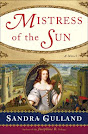
Nonetheless, a settlement is a settlement, and my literary agency is advising their authors to fill out the claim form. I did, with the usual on-line form frustrations. But the puzzle (and surprise) was to discover that one of the Google Book listings for Mistress of the Sun is shown as: Mistress of the Sun; A Romantic Tragedy with Several Changes of Scene. Say what?!

Readers of this blog might recall that this was the title of a very early draft of this novel — possibly the first one submitted to HarperCollins, my Canadian publisher. My guess is that that was the title on the contract and that somehow it got picked up by Google Book. I'm rather charmed to discover this — I'm fond of this title — but it cautions me to be wary in the future. What I think of as a "working title" might easily become etched forever in the ethernet airwaves.

Saturday, February 14, 2009

A Valentine for my readers

.
.


I mentioned that I met with a group of readers from Little Rock a week or so ago. One of the members has written to my U.S. publicist to find out how to arrange a visit. (How I would enjoy that! This was a lively and fun-loving group: a pleasure to be with.) At the top of her letter was this charming heart, which I am passing on to you on this lovely Saint Valentine's Day.

Richard and I began the day with "surprise!" bouquets of roses to each other. I gave him a Valentine's Day card in Spanish: who knows what it might say! And then, because my coffee-maker is stratigically placed in my office (I recommend this strategy to all aspiring writers), I settled down to a little work on the plot. My recent research binge unearthed some unsettling but quite dramatic developments. I'm feeling both hopeful and excited — although still unsure about the ultimate and all-important question: is my heroine guilty?

Then I answered an email from my ever-efficient VA: how to podcast, details about my reading event in April. (She has achieved so much in very little time.)

And so now, to breakfast, and a wander out into this beautiful day. Happy Valentine's day, one and all.

Thursday, February 12, 2009

Emerging from the Archives

.
.
I've finally made it through to the end of the French biography of my heroine — sentence by slow sentence. Of course now my entire concept of Claude is different and the plot is going to have to be entirely changed. And also, of course, I should have carefully read this biography before I'd crafted the plot. I'd skimmed the book, but there was a great deal I didn't understand. Fact-based fiction can be so challenging!

But before I dive back into The Plot, I need to give some thought to the promotion workshop I'm giving in ten days, as well as the PEN lecture I'm giving shortly after. Plus two talk meets today: one with my VA (who has already done so much!), and another with a French translator about certain passages in the Bastille Archives that defy my understanding. And then, later in the day, another attempt at video conferencing in preparation for a book club meet next week. The first, last Tuesday, failed, using AIM. This time we're going to try using Skype.

I've two links to post here before signing off, both having to do with creativity. The first is a fantastic TED lecture by Elizabeth Gilbert, author of Eat, Pray, Love, on creativity: click here to see it. She's amazing.

And the second is a blog post on "how to write a book" using computer technology: click here. The discussion that follows the blog is of interest, as well, and one certainly close to my heart, since I'm continually trying to figure out how best to use certain database programs such as DevonThink and Evernote and NoteBook. Each have limitations that I find frustrating and I've yet to sort out. (For those of my readers who get pangs of Mac-envy, I've learned that the best database program for historical researchers is OneNote—for PC only, alas.)

Sunday, February 8, 2009

Catching up

.
.
We've had house guests this week — very good friends — and it's amazing how busy the days and nights can get. Nonetheless, I've been working each morning on The Next Novel — mostly research at this point. I've been slowly wading through a French biography of my character. Some French is easier to read than others, and I find this historian's writing quite challenging.

Too often, too, I've had to deal with computer/software/Net frustrations. One morning my keyboard had a terrible stutter. The word "stutter," for example, would appear as ssssstuutteerrrrrr. Then suddenly, it's fine. Why?!

I'm also trying to figure out the technology involved in setting up a video conference with a book club. This has involved quite a bit of searching the Net for solutions to the error messages that kept popping up.

I've had corrections to make to my anthology essay; an interview for a magazine article; quite a bit of reader email; time spent trying to figure out how to qualify for the Net research site Jstor (this is on-going); on-going puzzle-time trying to figure out how to store my research documents (more on that to come); a visit with a wonderfully fun group of readers from Little Rock; and — now! at last! — correspondence with a woman who will be my VA (Virtual Assistant). Readers of this blog will know that I've been thinking about and searching for a VA for some time.

So, for now, back to wading through this French biography.

Sunday, February 1, 2009

Big questions

.
.
I mentioned earlier that I would answer reader letters today. (I've been lax!) It's a chore — but invariably a pleasure.

One young reader wrote with these questions:
I have always had a vague interest in writing historical fiction. How did you get into it? Do you have another job besides writing? How did you find a publisher?
I answered:
I got into writing novels because I love books and I wanted to write. I was a book editor at the time. I found an agent before I found a publisher, but it took many, many, many years. My advice is to persevere and just do it. Create a novel that you would want to read. Don't even think about trying to publish it until you have written five drafts, and all the readers you recruit to read it love it. It's rare to be able to publish a first novel, so think of yourself as being a student of writing. Writing is enough of a reward in itself.

Outline Swamp

.
.
I've been working on the outline of The Next Novel. I had promised this next draft to my L.A. editor (Dan) today. Yesterday I sent him an email: no way! My agent had asked, back in November, if she could expect it at the end of January, and I had, "Oh, yes." At that time January was a distant world.

It surprises me what a time-consuming process this is. The outline is 40 pages, but it's double spaced, with lots of chunks in "invisible type" which I use to fade out scenes I'm in doubt of. (Putting them in outline purgatory.) I had imagined that I could read it through in one day, and then revise it the day later. The reading part is accurate, but the revising part is not. I seem to get through only about four or five pages a day.

The process is not so different from writing. With each line I'm asking: Would she really do that? How does she feel? What is their relationship? Can I cut this scene? Combine these? How can I make this scene more dramatic? And (the loathsome stickler): What are the facts?

A "What are the facts?" question sends me off into Research Land — and this can, and does, take hours. (See my post on my research blog: here.)

I've not worked out an outline so carefully before, and it remains to be seen if it's a worthwhile thing to do. Somehow I think so. I know that the novel that will eventually (miraculously) see the light of day will be quite different — writing is a process of discovery — but it's possible that I may be short-cutting that process by a few years of drafts by imagining it through in this way, over and over and over.

Today, Sunday chores: answer reader emails, attend to bills and filing, prepare for houseguests. But first, I'll just have a peek at the next page of the outline.

Saturday, January 24, 2009

Research blues

.
I love the research required to write a fact-based novel, but there are times when it becomes overwhelming ... like this morning. Not only does my heroine possibly have the heart of a murderer, but the convoluted relationships between two of my other characters — Corneille and Molière — have suddenly become far more complex than I ever imagined. Corneille and Molière were in competition for the king's favour — and my current plot dramatizes this competition — but now there appears to be evidence to suggest that Corneille was in fact writing a number of Molière's plays. In short, that they were collaborators, not competitors. Groan.

All of this will require more study and digestion (and, no doubt, indigestion) -- and no doubt, as well, an hysterical call or two to academics who have offered to help. But right now I feel that this subject is impossibly big.

Friday, January 23, 2009

Strange Revelations

.
.
We arrived back from the beach yesterday afternoon. I'm almost unpacked -- although not quite. We returned to piles of magazines, mail (bills), Christmas cards, plus several books I'd ordered before we left. Two of these are on the Affair of the Poisons, which features in The Next Novel. One, Strange Revelations, is a scholarly work, and recently published, so I am eager to read it.

Immediately I skimmed the index and skimmed the bits about Claude des Oeillets, the main character of my novel. I was rather disturbed to descover that the author of this book, Lynn Wood Mollenauer, states that Claude "probably" plotted to kill the king.

Well! Strange revelations indeed. This would put a rather different cast on my character and a bomb in my plot. First, I have to be convinced myself.

Nous verrons!

Sunday, January 18, 2009

The writer as athlete

book. .
I finished, yesterday, Haruki Murakami's What I Talk About When I Talk About Running. Murakami is the astonishing Japanese author (of Kafka on the Shore and many other titles). This is a book is a memoir of sorts, a reflection on running and writing, and the relationship between them. (He runs to keep fit for writing.) Of course it was the writing parts I found the most interesting, although I enjoyed learning about running as well.

Here are some lines that I found noteworthy:
"Writers who are blessed with inborn talent can freely write novels no matter what they do—or don't do. Like water from a natural spring, the sentences just well up, and with little or no effort these writers can complete a work. ... Unfortunately, that category wouldn't include me. ... I have to pound the rock with a chisel and dig out a deep hole before I can locate the source of creativity. To write a novel I have to drive myself hard physically and use a lot of time and effort. Every time I begin a new novel, I have to dredge out another new, deep hole." [page 43]
That's what I'm doing now: dredging.
"Writing novels, to me, is basically a kind of manual labor. Writing itself is mental labor, but finishing an entire book is closer to manual labor. ... The whole process—sitting at your desk, focusing your mind like a Lazar beam, imagining something out of a blank horizon, creating a story, selecting the right words, one by one, keeping the whole flow of the story on track—requires far more energy, over a period of time, that most people ever imagine." [page 79]
This is one reason it gets harder to write a novel as one ages. It's simply hard work!
"You might not move your body around, but there's grueling, dynamic labor going on inside you. Everybody uses their mind when they think. But a writer puts on an outfit called narrative and thinks with his entire being; and for the novelist that process requires putting into play all your physical reserve, often to the point of overexertion." [page 80]
The last four months of working on Mistress of the Sun I watched my diet, avoided staying out late, and abstained from all alcohol. I felt like an athlete in training. I suspect that the depression that follows the high of finishing has to do with an extreme fatigue.

Sometimes Murakami refers to writing as a toxin.
"Basically I agree with the view that writing novels is an unhealthy type of work. When we set off to write a novel, when we use writing to create a story, like it or not a like of toxin that lies deep down in all humanity rises to the surface. All writers have to come face-to-face with this toxin and, aware of the danger involved, discover a way to deal with it, because otherwise no creative activity in the real sense can take place. (Please excuse the strange analogy: with a fugu fish, the tastiest part is the portion near the poison—this might be something similar to what I'm getting at.) No matter how you spin it, this isn't a healthy activity." [page 96]
I first read this passage with resistance, but I think there is truth in it. Inevitably, writing a novel entails digging deep, and often into septic layers. I think a writer must be prepared for this, and have a plan in place for self-protection.

Friday, January 16, 2009

The hammock life

.
.
The loveliest day today: I awoke at 4:00, after a solid six hours sleep. I lingered until 5:00, and then got up. I felt rested. I tip-toed out onto our porch with my laptop and settled into a chair facing the dark surf. The world is mine at that hour.

I worked on the plot outline for several hours, until the day dawned — a beautiful thing to see anywhere, but especially on an isolated beach. I scolded myself a bit for spending much of this time fooling with format, but then I realized that this is the natural thing to do before something gets sent out. It's the ribbons and bows stage. Not that I'm truly there!

By 8:00, I had done a great deal of work and was content. It was a gorgeous morning, clear and calm. We ate melon, walked the beach, chatted with acquaintances. I studied my French language tape (yes, in Mexico! go figure), read from my book on 17th century French theater, and then we swam in the warm ocean and went for abalone and shrimp in the palapas down at the village end of the beach.

Everything had a movie glow: "summer at the beach." Bathers bobbing, a fishing boat blaring rock 'n roll, couples hitting a ball back and forth, women in bikinis lying in the sun reading. But all so wonderfully Mexico: vendors cruising, singers playing — and intoxicated lovers getting tattoos. (Oh dear!)

Now, as I write this, the sun is setting, a golden ball reflected in the water. I do love this reflective life. A reader of this blog asked if I felt more creative here, and I believe the answer is yes.

Thursday, January 15, 2009

Biographical fiction 101

. .
An important part of writing is reading and I've been reading biographical fiction of late, one title after another, observing how other authors take on "a life". Two I started and abandoned: they were set in the Court of the Sun King. One had too many factual errors for me to enjoy it. The other I began with joy — the language was bawdy and the spirit zestful — but I found the portraits of the characters too one-dimensional, and, again, there were also errors of fact (without apparent reason). It began to feel like an all-too-English portrayal of "those terrible French" (as if the English are so innocent!).


The next novel was a gem: November 22, 1963, by Adam Braver, a novel about Jackie Kennedy, primarily, and that fateful day. I'll have more to say about this novel later (I'm at the beach, and the book is back home), but for now, I'll make these general observations:

A highly dramatic and sympathetic subject is a serious leg-up when it comes to biographical novels, and this novel rates five stars on both counts. It held me breathless from the first sentence to the last, but in the hands of another writer, I could easily have set such a novel down, in spite of the compelling subject. But Braver is a fantastic writer. He handles this subject with perfect authority, elegance, but most of all: heart. This is a very spare novel: the author cuts between different points of view with great ease. We're given slices of the various events of that day from the perspective of a police escort, a coffin manufacturer, the man whose life work was care for the presidential limousine, the various White House staff.

I followed this spare novel with one of vast proportions (728 pages of small type!): Blonde, by Joyce Carol Oates. I finished this last night and in a word: wow. I've not read Oates before — I find her style generally too gothic for my taste — but I respect her greatly as a writer, and I'd read that this novel, a novel about Marilyn Monroe, was her best.

It is a stunning — stunning — experience. Oates' gothic, feverish, hallucinatory style is perfectly suited to the subject of Monroe. As a writer, Oates is fearless: there is nothing that she shrinks from. I wouldn't have had the courage, personally, to write certain (awful!) scenes — especially those involving JFK (thinking of Caroline).

The characters are never named, interestingly: "the Ex-Athlete" is Joe DeMaggio, "the Playwright" is Arthur Miller, "the President" is JFK, for example. This was possibly a legal consideration, but, more importantly, it lent itself to the mythic feel of the novel.

It's hard to create sympathy for an addict — drunks are notoriously impossible for the writer of fiction to portray sympathetically, for example — but I've come away from this novel with a great sympathy and respect for Monroe.

As always, I'm curious about what was not included: this is always key. Nothing about the Mafia lovers, nothing about her secretary. Certainly there were lovers enough, and a staff would have interfered with the image of Marilyn so very alone.

I believe that Author's Notes are very important with respect to a fact-baced fiction. The reader needs to know: Where do we stand? What's fact? What's fiction? Can I trust you (the author)? Oates states:
Blonde is a radically distilled "life" in the form of fiction, and, for all it's length, synecdoche is the principle of appropriation.
(Okay, I had to look up synecdoche: a figure of speech in which the part is made to represent the whole or vice-versa.)

Oates makes it clear that instead of many lovers, abortions, medical crisis, she will focus on a select few. With any biographical fiction, one must cut away, cut away, cut away to get at the essence, in order to bring a life to life.
Biographical facts regarding Marilyn Monroe should be sought not in Blonde, which is not intended as a historic document, but in biographies of the subject.
I appreciate her clarity, but what Oates has done, I'm quite convinced, is recreate Monroe's spirit. An amazing work.

And this one!

.
.
Yet another wonderful clip (this one not a spoff) on our world of reading: click here.

Wednesday, January 14, 2009

How it's done (NOT)

.
.
This YouTube video on the book creation process is such a laugh: click here.

Friday, January 9, 2009

Slow net!

.
.
I'm at the beach (wonderful!), which slows by nature — but the Net connection is painfully slow here, so I'm going to blame my absence on that. It's certainly part of it.

I have been working, although in a lazy way: Q&A for the P.S. section of the Canadian hardcover, another Q&A for the French film-maker, emails from my agent, my L.A. editor.

This morning I started the next draft of the plot, but was flummoxed by software. Grrr! Word 2008 is missing some critical features that it used to have: the capacity to print out comments, for example. Then suddenly -- something I did, no doubt -- caused the formatting toolbar to disappear. I could no longer even increase the size of the type. I spent way too much time trying to figure it out. Then I tried Mac's iWork Pages programme. This software has a lovely feel, and seemed easy to master -- but for one thing: how to split the screen?!

It seemed to me that both these programmes had loads of bells and whistles, but were lacking in some basic word processing tools. I ended up going back to Word 2004: I'm so glad I kept the old programme.

With all this, I actually did manage to get some plotting work done.

But now ... back to the beach! (May my friends and family in the North forgive me.)

Wednesday, December 31, 2008

Happy New Year!

. .
Last year was a "charged" year, for me. Having a book come out, jumping into the world of Net promo, going on an extensive tour as well as a trip to Europe: whew.

We are heading off for three weeks on the coast now, so I have to give some thought to what I will be needing there. Books, books, books, but mainly: my computer. There will be final manuscript to approve of the anthology I'm part of, further thoughts on my outline — especially dreamstorming — questions to answer from a film-maker proposing a documentary. No doubt, too, there will be paperback copy to approve, etc. etc. etc. A writer's work goes on, regardless.

I love the regenerative impulse of the New Year. I've made resolutions (too many, I'll need to be more realistic). One of the resolutions, of course, is to get better organized, both in life and on computer. Right now, I'm trying to sort out how to better keep track of my research notes. I use, mainly, NoteBook, which I've mentioned before (and love) — but it has some limitations. For example, if I want to insert a visual from the Net, I have to copy it to my desktop and then insert it into the appropriate place in the Notebook. That's a bit slow, and one big disadvantage is that it doesn't carry with it information about where that clipping came from.

I should note that if I used Safari instead of FireFox, I could clip from the Net to Notebook directly, and that the clip would carry the URL source information with it — but then I'd still have to move that clip to its appropriate spot in my extensive outline (time-consuming). But more importantly, Safari drives me crazy!

I've discovered that the same problem exists when clipping to DevonThink. It's a FireFox problem, but I'm unwilling to move back to Safari because of it. For now.

I've explored Zotero, a web-based database designed by historians for historians, but quickly discovered that it didn't "communicate" with all websites. This limitation was too limiting for me.

And so I was interested when son Chet told me about Evernote, a free FireFox add-on (which works with both Mac and PC I should note). With Evernote, it's easy to clip to a database that exists on my computer as well as on the web (nice). The URL source comes along with the clip (good). It's easy to search (excellent). My only complaint, so far, is that you can't nest files — but with good use of tags that may not be necessary. For now, I'm trying it out. I prefer having all my information in one place, one database, but that simply may not be possible. Nous verrons ...


A snapshop of my Evernote database — so far.

Sunday, December 28, 2008

A wonderful blog on book cover design

. .
Through The Readerville Journal, I've learned of several wonderful blogs on design. Two of these have become a regular inspiration: BibliOdssey and On Familiar Things. A new one is ...By Henry Sene Yee Design. What I love about this blog is that Henry Sene Yee goes through the process of coming up with a good book cover design. For example, here are a few of the sketches he made ...


... to come up with this wonderful cover:


One of the things I'm learning from this blog is the importance of communicating the spirit of a novel to the designer. One assumes that a designer will read the book. I suspect that Henry Sene Yee does, but I doubt very much that that is usually the case. (It's a question of time, no doubt — not indifference.)

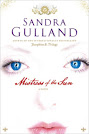
My Canadian and U.S. publishers have each come up with "a look" for my books. Here is the new look of the Canadian paperbacks:


These are elegant, beautiful covers, and the striking design will be good for sales, no doubt, but I find it a bit uncomfortable. Personally, I'd like my books to look more like the type of books I read myself — abstract and literary (read: "small market") — but I'm also uncomfortable mentioning this. I'm lucky to have "a market," and supremely lucky to have publishers who wish to invest in new covers. However, it's an emotional issue, an intensely personal one. Some authors go along, and others scream and shout. Many simply don't have the energy or time — energy and time better spent writing. In any case, at a certain point, going along is the only option ... and likely the wise one, too. Besides, these new covers are growing on me.

(P.S. The last, the rust gown, is my own.)

Tuesday, December 23, 2008

Ergonomics

. .
Put any two writers over 40 years of age together, and eventually the subject will turn to issues of ergonomics: neck, back, wrist pain. A friend took on literary jury duty because she needed a break from the computer. Another friend's son, a musician, had to take a course in university on how to protect his body from tendonitis and other crippling ailments. Such courses should be mandatory for writers and artists as well. It's hard to be creative if you're in pain.

Over the years I've used a variety of wrist supports for working at the computer. When I'm in full-writing mode, and putting in long hours, I set a timer to go off every hour, and place it at a distance from my station so that I have to get up to turn it off. I also have an exercise routine I try to do each time.

I don't often work at a desk — preferring to be reclined on a daybed or couch with my laptop on my lap and my wireless mouse set on a book by my side — but when I do, I make sure that my monitor is at a comfortable eye-level, and that a keyboard and mouse is close to my lap. I also use a document support (shown at right) so that the book or papers I am working from are directly in front of me and I don't have to crane my neck. A good chair is important too: the one I have in Mexico is fully adjustable, but it's not as good as the chair I use in Canada, and I feel the difference. I've a box in my storage closet full of shoulder, neck and wrist supports I've resorted to over the years.

Ultimately, I think the key will be to cut down on typing. A friend is sending out scans of hand-written text to be typed. Although I've begun to explore dictation, I've yet to become comfortable with it. I need to push myself in this direction — a New Year's Resolution.

Monday, December 22, 2008

Apology for the Woman Writing

. .
I'm reading quite a bit of biographical fiction right now, I notice — that is, fiction based on a real person's life.

I've just finished reading Apology for the Woman Writing by Jenny Diski. It's a historical novel based on the life of Marie de Gournay, a 16th century writer and the editor (and protector of) Michel de Montaigne's Essays. She's a strange woman and this is something of a strange novel. Diski is a fine writer, and there were many passages I loved, in particular Marie's intoxication with books, and with the work of Montaigne in particular.

Because Marie is a writer, there is much about writing in this novel. I particularly liked:
"What writer is not emotionally unbalanced by the publication of a new book?" (page 94)
True!

As always, what interests me is that fuzzy line between fact and fiction. The author, in her Author's Note, states:
"What shall we call this one? I suppose 'historical novel'. It doesn't much matter to me, except that I understand that the designation brings questions to the mind of the reader. About what is true and what is made up. Well, it's all made up, of course, but some of it is true — at any rate verifiable by means of other texts." [page 278]
Diski includes a full bibliography for further study, as well as a fascinating account of the protective measures the French took in order for a historian to photograph Montaigne's much-written-over pages. (The pages could not be exposed to any light whatsoever, for example.) Sometimes, in the novel, the narrative voice felt like a historical telling, veering toward the fact end of the fiction/fact scale.

As with any biographical novel, what's of interest — to me — is what is left out as well as what is included. There were parts of Marie's life I would have wanted the author to go — her contact with the Court is overlooked, for example.

Diski is a polished, literary writer, and this novel is always beautifully controlled — but I was not always enthralled by it.

Friday, December 19, 2008

Putting the Prod in Productivity

This summary is not available. Please click here to view the post.
image