Notes on the Writing Life

Notes on the Writing Life

Notes on the Writing Life

Sunday, November 29, 2009

Thoughts from an inch-sized heart

.
.
Maybe it's travel fatigue, or maybe it's my advancing age  . . .  or perhaps it's a malaise many writers are dealing with now (and indeed, most everyone): the sense that things were more happening before. The sense that the peak of success is now in the past. 

Wandering in and out of airport bookstores, knowing my books will not be there, telling myself not to even bother looking (and then glancing), and then wandering out, trying not to feel disappointment, admonishing myself for even thinking it possible.


Why do I even put myself though this? Because, in truth, I long to be that best-seller on the exclusive airport bookstore shelves and I feel, now, that my time is past, my chance at the gold ring.


But what kind of goal is that? The truth is that once I'm back at work again, once I'm engaged with the challenge of crafting a story, I won't give this a thought. The only goal that matters is to write.


On the ride home from the airport, through the beautiful Mexican towns, the dark desert hills, I listened to a podcast "Writers on Writing" interview of Louis Alterto Urrea. I love this author – love his and his wife's tweets on Twitter (@Urrealism) — and consider his novel The Hummingbird's Daughter one of the best historical fiction novels of all time. The interviewer concluded the talk by asking for his advice to writers.
"What I try to always bring across to the students is that they should surrender to the process of it. There is an ancient Chinese writing text called Wen Fu, and Wen Fu actually means "Writing Fu" — as in Kung Fu.  . . .  I am just trying to give them the sense that you are actually doing this writing not to be famous, not to be rich, or even to get groupies — as lovely as that might be — but to practice. You're doing a spiritual and physical practice in the world which will effect your response to this place we are living in."
Exactly.


Wen Fu was written around 300 A.D. Read it: it's beautiful:
Writing is in itself a joy,
Yet saints and sages have long since held it in awe.


For it is being, created from a void;
It is sound rung out of profound silence.
In a sheet of paper is contained the infinite,
And, evolved from an inch-sized heart, an endless panorama.
I love that: an inch-sized heart. 


*****
Website: http://www.sandragulland.com/
Blog: http://sandragulland.blogspot.com/
Facebook: http://tinyurl.com/3xzbgv
Twitter: http://twitter.com/Sandra_Gulland


Sunday, November 22, 2009

More on Mantel

.
.
My blog posts here get automatically posted to my Facebook home page (but not, BTW, to my "fan" page, as I would like, for reasons I've yet to sort out). Typically, on Facebook, there can evolve quite a discussion, which is what happened to my post a week ago Friday, "Weeping over History." Margaret Donsbach, Katherine Mary Govier and I got into quite an interesting discussion about the POV Mantel used in her brilliant novel, Wolf Hall. Govier has now written an excellent review of that novel for the Canadian National Post, "Why I love Hilary Mantel's Wolf Hall," in which she mentions some of what was discussed.

Meanwhile, I'm still under the spell of that brilliant novel. I'll be adding it to my Great Historical Novels lists. Few can compare.

Wednesday, November 18, 2009

On giving readings

.
.
Since arriving in San Miguel de Allende — in addition to catching up with friends and getting resettled — I prepared for a talk/reading.

I had planned to give the same reading I had given in Toronto in the spring, but realized that I really needed to revise it, make it current.

Of course this meant endless revisions and print-outs in addition to talking it out, timing it, and then, ultimately, practicing it in front of a mirror.

As a rule of thumb, I try to talk it through three times on the day of the event, the last one as close to the event as possible. Consequently, my voice was hoarse!

I like very much my new system of printing out the talk -- every word, including the selections from the book -- on 8.5 x 11 paper. I print it out in big, bold type that is easy to read, giving each sentence its own paragraph. I make sure to dog-ear the pages so that they are easy to turn. I use an elegant black binder to read from.

The talk went exceptionally well — so many people! The one thing I learned from it, however, is to make sure that the mike is working well for the audience. Some mikes you talk into — others you talk over. This was a talk-over kind, and sometimes — on a "t" sound, for example — I later learned that it spit the sound out at the audience. (I've seen one author who travels with her own mike, and I can understand why.)

The second reader of the evening — Barbara Levine, author of the amazing book Finding Frida Kahlo — had trouble with the low lighting. It was hard for her to see the text of her book. It occurred to me that a clip-on night-reader might be a handy thing to have on hand.

(Photo: the jardin at night in San Miguel de Allende. This is such a beautiful, vibrant and peaceful town, it pains me that visitors have been frightened away by the press north of the border.)


**********
Website: http://www.sandragulland.com/
Blog: http://sandragulland.blogspot.com/
Facebook: http://tinyurl.com/3xzbgv
Twitter: http://twitter.com/Sandra_Gulland

Friday, November 6, 2009

Weeping over history

.
.
I highly recommend this wonderful article by Hilary Mantel, on researching Wolf Hall. I admire this writer more and more. (I had something to say about her writing in my previous post.)

"How It Must Have Been" is an insightful review of Wolf Hall by Stephen Greenblatt in the New York Review of Books. He has a lot of interesting things to say about Cromwell and the nature of historical fiction.

Greenblatt asks: What is historical fiction? His definition is more narrow than I would have it, focusing on known characters and events:
At issue then is not merely the setting in an era different from the present of the novelist, the interest in significant historical events, and the representation of identifiable, documented historical actors, though all of these are important in establishing the parameters of the form.
The emphasis's in the quote are my own: for me, historical fiction does not have to touch on "significant" events or people. For me, historical fiction need only take me back in time, and Greenblatt expresses this quality well:
Historical novels have a further characteristic. They generate a sense in the reader best summed up in exclamations like "Yes, this is the way it must have been"; "This is how they must have sounded"; "This is what it must have felt like."
And further: "The historical novel then is always an act of conjuring." (As is true of all fiction.)
The historical novel ... offers the dream of full access, access to what went on behind closed doors, off the record, in private, when no one was listening or recording.
Greenblatt and other reviewers have noted Mantel's unique point-of-view in this novel.
Mantel contrives a telling effect by often referring to Cromwell as "he" without further identification, so that in many sentences the reader must figure out where, in a welter of "he's" and "him's," Cromwell is
Here is an example of the sometimes disorientating use of "he":
"Master Cromwell," he says lightly, "either my calculations are wrong, or the universe is not as we think it."
He says, "Why are comets bad signs?..."
The first speaker is the king's astronomer, and normally, the second "he" would refer back to him. Not in this novel. The second he — "He says" — is Cromwell speaking ... always Cromwell. It's effective, but it takes a little getting used to.

I have a theory about this, a hunch. I suspect it possible that the novel was first written in the first person voice and then changed to the close third. There are a few instances of the first person voice remaining. For example:
Very well. I dry my tears, those tears from All Hallows day. I sit with the cardinal, by the fire at Esher in a room with a smoking chimney. (page 162, Canadian edition)
This passage stands out. It is a rare use of the first person voice. This passage would normally have read: Very well. He dries his tears, those tears from All Hallows day. He sits with the cardinal, by the fire at Esher in a room with a smoking chimney. 

But as I said: just a hunch.

I'm in the middle of the novel now, and I'm having a little difficulty with the transition. Wolsey, wonderful Wolsey, has died, and Cromwell now serves King Henry VIII. There isn't the same emotional connection. Cromwell has lost his bearings, and so have I. I'm confident, however, that we will make it through.


*****
Image above: portrait of Thomas Cromwell by Hans Holbein the Younger, 1532-3.

Saturday, October 31, 2009

In transit: the world's edge

. .
.
On Halloween we hit the road, in transit for several days, heading south. I've chosen Wolf Hall by Hilary Mantel (winner of the Booker prize) for my travel book, and I'm well pleased with my choice.

Before I say something about the novel, I'd like to say something about the production. This is the Canadian HarperCollins edition, and it's gorgeous. The cover is textured and lush — I prefer it to both the U.K. and U.S. editions. It has French flaps, a lovely flexible binding, rough-cut pages. Sumptuous — as befits this story.

This is a very absorbing novel, and quite interesting from a craft perspective, as well. It's written in a very close third person point of view (sometimes slipping into first, which can be a bit curious). It's also written in the present tense, which I usually find annoying, but Mantel is a master and it succeeds beautifully. I love how the story skips along without very much explanation, leaving me curious. The details are spare, fresh, stunning.

This introduction to the Duke of Norfolk is simply brilliant:
The duke is now approaching sixty years old, but concedes nothing to the calendar. Flint-faced and keen-eyed, he is lean as a gnawed bone and as cold as an axe head; his joints seem knitted together of supple chain links, and indeed he rattles a little as he moves, for his clothes conceal relics: in tiny jewelled cases he has shavings of skin and snippets of hair, and set into medallions he wears splinters of martyrs' bones.
The dialogue is straightforward, without historic flourishes. Overall, one feels very present in a time and place. This is historical fiction at its best.

Here's a lovely Halloween passage:
Halloween: the world's edge seeps and bleeds. This is the time when the tally-keepers of Purgatory, its clerks and gaolers, listen in to the living, who are praying for the dead.
Thomas Cromwell, the main character, has recently lost a wife and two daughters to the plague.
All Hallows Day: grief comes in waves. Now it threatens to capsize him. He doesn't believe that the dead come back; but that doesn't stop him from feeling the brush of their fingertips, wing-tips, against his shoulder.
All Hallows Day is November 1st. We will arrive in San Miguel de Allende, Mexico, on the 2nd: El Día de los Muertos, the Day of the Dead. It's a beautiful tradition — not grim at all — honoring those who are no longer with us. I'll be thinking of many loved ones, but especially of my mother, who shared a passion for reading and who would have loved this novel.

Friday, October 30, 2009

Why we write

.
.
I've mentioned Lauren B. Davis's wonderful blog on writing here before. Her post today — From this broken hill... — is especially moving. The video clip she includes of a performance of Leonard Cohen's "If it be your will" could be every writer's anthem.

Thursday, October 29, 2009

French edition cover news, and ... and ... !

.
. .
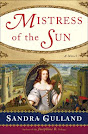
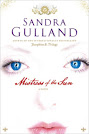
As readers of this blog know, I've been distressed over the cover of my French edition, La maîtress du soleil, which shows my blonde French character with jet black hair.

Now, after several sallies back and forth through my agent, the publisher has agreed to give the novel a new cover next spring, when it will be reissued: a heroine with blonde hair, as well as a more literary design. I'm relieved!

I'm also in the final signing stage for a film contract for a mini-series for the Josephine B. Trilogy (this has been in the works for some time), and on the verge of signing an option for a feature film of Mistress of the Sun. Sing ye!

As well, I've had an offer to translate all my books — both the Trilogy and Mistress of the Sun — into Turkish. Yay!

Now, back to packing ... !

Saturday, October 24, 2009

A question to internationally-published authors

.
.
What can be done to avoid bad covers? What do you do?

I'm still in shock from the arrival, yesterday, of a box of the French edition of my novel, Mistress of the Sun. My heroine, Petite (based on the real-life and blonde Lousie de La Vallière), is portrayed as a woman with jet black hair.

Forget all the historical inaccuracies: that her head is uncovered and her hair loose over her shoulders; that she's wearing what appears to be a ball gown on horseback. Forget that the ugly horse looks half-dead. Forget the fact that the cover screams: This is not a novel to be taken seriously! And that it seems to be aimed at young adults.

Forget the pages and the footnotes added.

Forget all that and just concentrate on her heroine's glaring black hair!

What can one do? (In the contract I was given approval of the cover, but this was overlooked.)

Here are some thoughts for the future:
1) Ask to see the publisher's catalogue before agreeing to sell the foreign rights.

2) Get some understanding of how this publisher "sees" my book, how they intend to position it.

3) Make a personal connection with the editor who will be seeing it though.

4) Provide a brief crib-sheet (in basic English) to the art department on possible approaches to a cover, including a basic description of the main character.

5) Ask when the cover will be ready. Remind them that you are to see it.

In short, get involved.
Not that there's ever time! Does one just sign, let it go and pray for the best? This is not my first bad experience, but it's a dilly.

Thursday, October 22, 2009

Post-finishing doubts

.
.
Now that I have finished the first draft of The Next Novel, I'm awash with doubts. I don't think I've gotten to the heart of the story.

What about ... ?


And shouldn't she have ... ?


Etc. etc. etc.

I shouldn't actually question this: of course I haven't gotten to the heart of it!

I've read two excellent on-line accounts recently by authors who went through painfully long revision processes. The first is Junot Díaz's account of writing The Brief Wondrous Life of Oscar Wao. He struggled with this novel for five years, then gave up ... gave up writing entirely. Then ...
"One night in August, unable to sleep, sickened that I was giving up, but even more frightened by the thought of having to return to the writing, I dug out the manuscript. I figured if I could find one good thing in the pages I would go back to it. Just one good thing. Like flipping a coin, I'd let the pages decide. Spent the whole night reading everything I had written, and guess what? It was still terrible."
And then five more years of revisions ... to overnight success.

The second is a wonderful blog entry by writer Gail Carson Levine on finding the right point-of-view for a story she was writing on Snow White. Three hundred pages from the POV of a dwarf. Scratch. Three hundred more from the POV of the prince. Scratch. Three hundred in omniscient. Scratch. And finally: success, from the POV of Snow White in her coma.
"The point is that POV can be hard to figure out and may not be possible to decide on in advance. You may have to try telling your story one way and another (and another and another) until you find out. There may be no shortcut for a particular book."
Point taken.

Saturday, October 17, 2009

The End Zone

.
.
I remember reading in Kenneth Atchity's fine book, A Writer's Time, that if you're wondering if you're coming to the end of a writing project, you aren't. That approaching the end is so all-consuming, there can be no doubt.

Somehow, I always forget this, and then bam, there I am, in the wind-tunnel, waking at 3:00 in the night, and heading for the computer. Typing fifteen hours at a stretch. And then, after days and days of this, somewhat stunned, I look at a paragraph and think: this is the end.

I stagger away from the computer, take a few deep breaths. I come back: is it? Yes.

I go have a nap. I rise, and look at the clutter that has arisen around me, the nest of my obsession. I have a bath, blog, breathe. I feel just a little bit lost, but I'll recover, no doubt: 125,490 words in 16 weeks, nearly 8000 words a week.

Well. That's a bit too intense, I think, looking back. I'm not sure I would set this pace again. But it's done, for now, and I'm pleased.

Monday, October 12, 2009

All of the Above

.
.
I do love Margaret Atwood interviews. She is invariably entertaining. For this one today on the L.A. Times blog:
Interviewer: Your book "The Handmaid's Tale" has become a seminal feminist work taught in universities all over.

Atwood: You know you've really made it when people start dressing up like that on Halloween.
I'm in post-Thanksgiving-dinner recovery: bloated and tired. The dishes are almost done, the furniture almost all back in place. My husband is simmering the turkey carcass for stock. A bit of left-over pumpkin pie with whipped cream was perhaps not exactly what I needed ... but impossible to resist.

I'm on my last two chapters (which may expand to three or four). I didn't expect too much of myself this holiday weekend, but I did manage to write each morning. And now, with the coast clear, I could dive back in, but I don't feel ready. I had hoped to be finished by this weekend, and although that didn't happen, I do feel that I can finish over the coming two weeks ... weeks which will get progressively busier as we prepare to move to Mexico for the winter months.

So — for today: research, catalogue books, read Atwood's The Year of the Flood, nap?

Answer: all of the above, or rather ...
To PO’THER. v.a. To make a blustering ineffectual effort.
He that loves reading and writing, yet finds certain seasons
wherein those things have no relish, only pothers and wearies
himself to no purpose. Locke.

Tuesday, October 6, 2009

Burning-at-the-stake scenes aren't easy

.
.
I'm getting through some big, tough scenes as I near the end of this first draft. Galloping toward the finish is gripping in the same way as when reading a novel. This draft will no doubt be a mess when I read it through -- it will need major surgery -- but overall, I'm pleased. I think I will have something to work with.

In my off-time, I check Twitter, the blogs I follow, Facebook. I just read a fascinating on-line conversation Karen Essex posted to Facebook, a conversation between Karen (author of, among other novels, Stealing Athena) and Andrew Davidson (author of The Gargoyle). There's a lot in this conversation about the writing process, and, most interestingly, about experiences of talking with (dead) historical characters: read — or listen — to it here.
I especially liked this quote from Essex:
So the challenge in writing historically based fiction is to take what really happened and without sacrificing history, and without just making things up, or ill-using history or historical characters, you have to figure out how to tell a story with a narrative out of a life that didn’t really unfold as one.
No truer words ... .

Thursday, October 1, 2009

The teleconference was fun...and you can listen to it here

.
.
The Cathy Marie Buchanan's teleconference, the culmination of her blog tour for The Day the Falls Stood Still, was lots of fun. A number of wonderful book bloggers were present, plus, of course, Cathy and I (briefly), and master of ceremonies, Diane.

You can listen to the conversation here.

Now that I can see how it works, I can see a lot of potential for this type of life author meet (without the airfare).

Tuesday, September 29, 2009

How does a teleconference/virtual reading/party-line party actually work?

.
. .
How does a teleconference/virtual reading/party-line party actually work? I'm going to find out tomorrow (Wednesday), and you can too. Everyone is invited!

It's an on-line chat VA Diane Saarienen has set up for Cathy Buchanan, author of the historical novel
The Day the Falls Stood Still. (And no, she's not the young lady in the photo.)

The virtual meet is the
culmination of her blog tour, and a number of the wonderful book bloggers who hosted her will be on-line. And don't worry, it won't be chaos: Diane has it all well in hand. (How, I don't know!)

This novel has, as my husband would put it, hit the ball way out of the park. It was selected to be "tagged" in the U.S. by Barnes & Noble: a huge honor! A recent National Post review
named it one of the best WWI novels of all time.
.

The virtual meet is scheduled for this Wednesday, September 30, at 3 p.m. Eastern Standard Time — what I think of as N.Y. and Toronto time. Call 1-718-290-9983. (Long distance rates will apply.) You will be asked for your conference ID code, which is 100925#. Don't forget the # key at the end.

For more information: http://bit.ly/Gxlo6


"See" you there!

Sunday, September 27, 2009

2000 words in a day (and night)

. .
.
Spurred on by the possibility that I might not be typing out the sacred words "The End" before we head south at the end of October, I've been writing over 2000 words a day. And I have to say: that takes (me) all day, and most of the evening, as well. That's eating on the run, dressing on the run, relaxing on the run.

But I did it: 2 chapters in 2 days. (My chapters are shorter than most.) I hope to finish another chapter tomorrow. My husband is away, and I'm taking advantage of the solitude. I begin to think I can do it, finish before the commotion of transition.

Saturday, September 26, 2009

Margaret Atwood: superwriter!

.
.
On Wednesday, in a large auditorium in Kingston, Ontario, I saw Margaret Atwood's The Year of the Flood performance. Wow! Each city on this (twenty? thirty?) multi-city international tour puts together it's own dramatization of the script. I can't imagine any city doing a more beautiful job than Kingston. (The article in the U.K. Guardian was less than enthusiastic about the London event, alas.)

In Kingston, there was a choir of about twenty, three musicians, three actors: all in wonderful costumes. The choral arrangement of the hymns in the book was spectacular.

Ms. Atwood has hit the ball out of the park, yet again. She's 70, performing at a different city every night. Kingston was half-way through the tour. She visited organic gardens on arrival in Kingston. After the hour-long performance, she signed books for about an hour, then went to both the cast party and the Kingston WritersFest reception. (I'm told: I was far too tired to stay up that late.) Then, a TV interview the next morning, and off she went on a train for the next pit-stop. I'd like to know how she does it!

*****
I've been enjoying Atwood's blog while on tour: here.

Friday, September 25, 2009

Book trailer goes viral

.
.
I'm both moved and inspired by novelist Kelly Corrigan's home-made book promotion trailer: it made me weep. Gone "viral," it's had 4.5 million viewers so far — and rising, no doubt. Watch it: I think you will see why. Kelly's words pull at the heart in key ways. She expresses herself so movingly, so poetically, the video made me interested in checking out her novel, The Middle Place.

Thursday, September 24, 2009

Make her struggle: the key to building a sympathetic character

.
.
As spunky as my main character is, she's too often the passive observer, the angel lifting her skirts out of the muck. I need to activate her.

I note the three words printed in big type and pinned to my wall: WANT -- OBSTACLE -- ACTION. On every page, in every scene. (I've been slipping on this — I've work to do!)

I liked this essay on developing character by Alicia Rasley: "Sympathy without Saintliness." Here's a quote:
So forget about perfection. Forget about loading this poor guy down with a miserable past. Just give the protagonist trouble now, and make it a struggle-- and the reader can't help but sympathize.

We sympathize more with characters who have to WORK to be good, and we see the effort involved.

Wednesday, September 23, 2009

Margaret Atwood on developing characters

.
.

From the New York Times interview with Margaret Atwood, Back to the Scary Future and the Best-Seller List:
Ms. Atwood, writing in longhand, creates a tree of characters and charts that pinpoint their birthdays, and even casts their horoscopes. She sees in astrology a device to get people to talk about themselves. “You wouldn’t want your character to have the wrong horoscope any more than you would want them to have the wrong name,” Ms. Atwood said mischievously.
I have cast my characters' horoscopes in the past (using Astrodienst). I think I need to do that now, for the book I am writing. The characters are too undefined yet. I'm still exploring them, but I think Atwood is right, that astrology is a good tool for opening up a dialogue with them.


*****
Photo by Damon Winter for The New York Times: this is one of my favorite portraits of Margaret Atwood. I love the gloomy rock background, the sense that her concrete worlds are hefted into place by her weightless imagination.

Tuesday, September 22, 2009

Zelda reviews F. Scott: how not to be married

.
.
In March of 1922, Zelda Fitzgerald published, in The New York Tribune, a cheeky and rather damning review of her husband's newly published novel, The Beautiful and the Damned.

Here is a taste:

"The other things I didn’t like in the book — I mean the unimportant things — were the literary references and the attempt to convey a profound air of erudition. It reminds me in its more soggy moments of the essays I used to get up in school at the last minute by looking up strange names in the Encyclopaedia Britannica."

And that's just a bit. You can read more of the review on Gary Dexter's wonderful blog, "How Books Got Their Titles."

Zelda had become pregnant early in the year, and had had an abortion that March: it would not have been a good month to be invited to the Fitzgeralds' to dine.

They were a vibrant, talented, beautiful couple, no doubt, but so self-destructive, the enfants terribles of the Jazz Age. One wonders how they managed to carry on.

*****
I regret to say that my sprint didn't turn out to be so far-reaching. I miscalculated! I wrote just over 1500 words both yesterday and today. A mucky patch.

Monday, September 21, 2009

I love Inkygirl!

.
.

Noel Coward quote

Yes, a beautiful day today! This is one of the many delightful cartoons for writers by Torontonian writer/artist Debbie Ridpath Ohi.

Inkygirl.com (Daily Diversions for Writers)
is Debbie's daily blog. She is also the driving force (if not the force) behind the wonderful on-line community, SheWrites.com.

If you'd like a little humor in your writing day, stop by Debbie's blog.

*****
I'm in a sprint: over 2500 words today.

Thursday, September 17, 2009

Hurling toward the finish

.
.
I worked yesterday from 5:00 in the morning until 2:00, taking short breaks to eat. This morning I woke at 3:30 and got up at 4:00. It's almost 6:00 now and I've just read through and lightly edited yesterday's pages: ouch! A first draft can be so sketchy.

I remind myself that I have to be careful right now not to get sick. It's easy to do when I'm pushing myself so hard to finish. "End time" is intense — and I'm not even really there yet. I've 3 1/2 weeks yet to go.

Tuesday, September 15, 2009

Stuff, confusion and timelessness

.
.
My apologies ... I posted something here (about the king swimming with his mother) that was intended for my 17th century research blog. No doubt you were puzzled!

And no doubt, too, you can relate to that feeling of not having enough time, of being pressed, of being overwhelmed by To Do's.

Which is why I especially liked this quote from William Faulkner on the opening page of Susan Minot's amazing (amazing!) novel Evening:
I give it to you not that you may remember time, but that you might forget it now and then for a moment and not spend all your breath trying to conquer it.
At the same time, going through stuff, I came upon a postcard of a painting I've long cherished. I can't find the image on the Net: imagine a Paul Klee-like mosaic of pastel tiles. The painting, by William T. Wiley, is titled: "I Wish I Could Have Known Earlier That You Have All the Time You'll Ever Need Right Up to the Day You Die."

I love the painting, but I'm nuts about the title. For decades I had that postcard — which was sent to me by a relative in 1971 (!) — pinned above my desk, and every time I looked at it, I thought of those words. I've retrieved it from my pile of stuff: it's back up on the wall.

*****
Page 323: mild panic over finishing before the Canadian Thanksgiving weekend (October 9), but a good day, nonetheless. I'm increasing my daily word count and putting in longer hours. It's important, I think, to bring the momentum of immersion through to the end ... if I can.
(So much for my thoughts on timelessness.)

P.S. The post on the King has been deleted.

Monday, September 14, 2009

Vonnegut's video on how to write

.
.
This is a wonderful video on how to write a short story, but it applies to a novel as well. I should watch this every morning, before writing.

Sunday, September 13, 2009

The Strange Habits of Writers

.
.
This is an amusing quote from a Diane Ackerman NYT article on the strange habits of some writers: here. (Courtesy of Richard Vague's blog, Delancyplace.) I'm not so sure about the coffin.

*****
Page 310, but seriously falling behind schedule.
image