Notes on the Writing Life

Notes on the Writing Life

Notes on the Writing Life

Wednesday, December 31, 2008

Happy New Year!

. .
Last year was a "charged" year, for me. Having a book come out, jumping into the world of Net promo, going on an extensive tour as well as a trip to Europe: whew.

We are heading off for three weeks on the coast now, so I have to give some thought to what I will be needing there. Books, books, books, but mainly: my computer. There will be final manuscript to approve of the anthology I'm part of, further thoughts on my outline — especially dreamstorming — questions to answer from a film-maker proposing a documentary. No doubt, too, there will be paperback copy to approve, etc. etc. etc. A writer's work goes on, regardless.

I love the regenerative impulse of the New Year. I've made resolutions (too many, I'll need to be more realistic). One of the resolutions, of course, is to get better organized, both in life and on computer. Right now, I'm trying to sort out how to better keep track of my research notes. I use, mainly, NoteBook, which I've mentioned before (and love) — but it has some limitations. For example, if I want to insert a visual from the Net, I have to copy it to my desktop and then insert it into the appropriate place in the Notebook. That's a bit slow, and one big disadvantage is that it doesn't carry with it information about where that clipping came from.

I should note that if I used Safari instead of FireFox, I could clip from the Net to Notebook directly, and that the clip would carry the URL source information with it — but then I'd still have to move that clip to its appropriate spot in my extensive outline (time-consuming). But more importantly, Safari drives me crazy!

I've discovered that the same problem exists when clipping to DevonThink. It's a FireFox problem, but I'm unwilling to move back to Safari because of it. For now.

I've explored Zotero, a web-based database designed by historians for historians, but quickly discovered that it didn't "communicate" with all websites. This limitation was too limiting for me.

And so I was interested when son Chet told me about Evernote, a free FireFox add-on (which works with both Mac and PC I should note). With Evernote, it's easy to clip to a database that exists on my computer as well as on the web (nice). The URL source comes along with the clip (good). It's easy to search (excellent). My only complaint, so far, is that you can't nest files — but with good use of tags that may not be necessary. For now, I'm trying it out. I prefer having all my information in one place, one database, but that simply may not be possible. Nous verrons ...


A snapshop of my Evernote database — so far.

Sunday, December 28, 2008

A wonderful blog on book cover design

. .
Through The Readerville Journal, I've learned of several wonderful blogs on design. Two of these have become a regular inspiration: BibliOdssey and On Familiar Things. A new one is ...By Henry Sene Yee Design. What I love about this blog is that Henry Sene Yee goes through the process of coming up with a good book cover design. For example, here are a few of the sketches he made ...


... to come up with this wonderful cover:


One of the things I'm learning from this blog is the importance of communicating the spirit of a novel to the designer. One assumes that a designer will read the book. I suspect that Henry Sene Yee does, but I doubt very much that that is usually the case. (It's a question of time, no doubt — not indifference.)

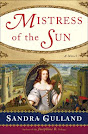
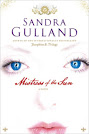
My Canadian and U.S. publishers have each come up with "a look" for my books. Here is the new look of the Canadian paperbacks:


These are elegant, beautiful covers, and the striking design will be good for sales, no doubt, but I find it a bit uncomfortable. Personally, I'd like my books to look more like the type of books I read myself — abstract and literary (read: "small market") — but I'm also uncomfortable mentioning this. I'm lucky to have "a market," and supremely lucky to have publishers who wish to invest in new covers. However, it's an emotional issue, an intensely personal one. Some authors go along, and others scream and shout. Many simply don't have the energy or time — energy and time better spent writing. In any case, at a certain point, going along is the only option ... and likely the wise one, too. Besides, these new covers are growing on me.

(P.S. The last, the rust gown, is my own.)

Tuesday, December 23, 2008

Ergonomics

. .
Put any two writers over 40 years of age together, and eventually the subject will turn to issues of ergonomics: neck, back, wrist pain. A friend took on literary jury duty because she needed a break from the computer. Another friend's son, a musician, had to take a course in university on how to protect his body from tendonitis and other crippling ailments. Such courses should be mandatory for writers and artists as well. It's hard to be creative if you're in pain.

Over the years I've used a variety of wrist supports for working at the computer. When I'm in full-writing mode, and putting in long hours, I set a timer to go off every hour, and place it at a distance from my station so that I have to get up to turn it off. I also have an exercise routine I try to do each time.

I don't often work at a desk — preferring to be reclined on a daybed or couch with my laptop on my lap and my wireless mouse set on a book by my side — but when I do, I make sure that my monitor is at a comfortable eye-level, and that a keyboard and mouse is close to my lap. I also use a document support (shown at right) so that the book or papers I am working from are directly in front of me and I don't have to crane my neck. A good chair is important too: the one I have in Mexico is fully adjustable, but it's not as good as the chair I use in Canada, and I feel the difference. I've a box in my storage closet full of shoulder, neck and wrist supports I've resorted to over the years.

Ultimately, I think the key will be to cut down on typing. A friend is sending out scans of hand-written text to be typed. Although I've begun to explore dictation, I've yet to become comfortable with it. I need to push myself in this direction — a New Year's Resolution.

Monday, December 22, 2008

Apology for the Woman Writing

. .
I'm reading quite a bit of biographical fiction right now, I notice — that is, fiction based on a real person's life.

I've just finished reading Apology for the Woman Writing by Jenny Diski. It's a historical novel based on the life of Marie de Gournay, a 16th century writer and the editor (and protector of) Michel de Montaigne's Essays. She's a strange woman and this is something of a strange novel. Diski is a fine writer, and there were many passages I loved, in particular Marie's intoxication with books, and with the work of Montaigne in particular.

Because Marie is a writer, there is much about writing in this novel. I particularly liked:
"What writer is not emotionally unbalanced by the publication of a new book?" (page 94)
True!

As always, what interests me is that fuzzy line between fact and fiction. The author, in her Author's Note, states:
"What shall we call this one? I suppose 'historical novel'. It doesn't much matter to me, except that I understand that the designation brings questions to the mind of the reader. About what is true and what is made up. Well, it's all made up, of course, but some of it is true — at any rate verifiable by means of other texts." [page 278]
Diski includes a full bibliography for further study, as well as a fascinating account of the protective measures the French took in order for a historian to photograph Montaigne's much-written-over pages. (The pages could not be exposed to any light whatsoever, for example.) Sometimes, in the novel, the narrative voice felt like a historical telling, veering toward the fact end of the fiction/fact scale.

As with any biographical novel, what's of interest — to me — is what is left out as well as what is included. There were parts of Marie's life I would have wanted the author to go — her contact with the Court is overlooked, for example.

Diski is a polished, literary writer, and this novel is always beautifully controlled — but I was not always enthralled by it.

Friday, December 19, 2008

Putting the Prod in Productivity

This summary is not available. Please click here to view the post.

Wednesday, December 17, 2008

Class act

.
.
I subscribe to a wonderful blog by author Catherine Delors. Today she interviewed Kris Waldherr, the author of Doomed Queens. Catherine's blog is always beautifully illustrated, and she included a number of illustrations from what immediately struck me as an absolutely irresistible book. Click! I ordered the book, and then checked out Kris's website, which is also irresistible. I subscribed to her newsletter, was immediately signed up, receiving a nice letter from Marina Rossetti — "virtual assistant." (Ah, a VA: Believe me, this caught my eye.) This author/illustrator is doing all the right things: great book, great website, newsletter, blog tour. Hats off.

Tuesday, December 16, 2008

Plot deadline met!

.
.
Meeting a deadline is a wonderful feeling. Yesterday I sent the second draft of the plot of The Next Novel to Dan Smetanka, a wonderful editor who works free lance in L.A., and who worked with me on Mistress of the Sun.

So now? Now I face the clutter of my desk, my unorganized To Do lists, mail to answer, my unwrapped and even un-purchased Christmas presents, a house to decorate, etc.

But even all this feels like a holiday, now that I've put the puzzle of crafting a novel out of the chaos of the 17th century behind me for a bit. Not that it won't continue to be on my mind: one of the things I'll do today is select the next research book to dive into.

I've never worked with an outline so systematically before. It's over 20 pages long, and basically it's a list of major characters, themes, and the story itself, unfolding in scenes. It was creating the scene-units that made a big difference, from generalizing a story, to actually seeing the workings of it, scene by scene. The scene descriptions are bare bones. For example:

SCENE: The Court continues on north, toward Paris. Claude's father, ill, insists his acting troupe follow. "But how will you eat?" Claude: We will manage.

SCENE: Claude and her brothers beg for coins. She coaches her brothers on how to act injured.
How much of this will make it into The Next Novel? My guess is that a great deal will change. But the purpose of this draft-in-outline-form is to explore what might be possible, given the historical record. (During this process, I spent a lot of time research, as noted on my research blog.)

I read an interesting blog, yesterday, an interview with Davina, a NaNoWriMo participant. She expressed very well the challenge of telling a story that is based on historical fact:
One of my major difficulties I found was incorporating the research while sticking to the story I wanted to write. As I did more reading and research I realized that I would have to tweak events and timelines to get an effective story. There was also an expanding cast of people who needed to be incorporated. The story quickly became more complex than I originally thought it would, to be honest.

I did feel bad about stretching the truth in some respects to suit my story. For instance, Minette didn’t actually die of poison as in the novel. There is strictly no proof that Athenais was involved in Satanic rituals. Angelique de Fontages wasn’t poisoned, she died of a miscarriage. And the events of the story happened over a long period of times : nearly twenty years! But I had to make the decision to alter events as I saw fit to make a compelling story that I would want to tell.

Some of the events that happened according to the research were a bit OTT and I seriously wondered about toning it down as I thought no one is going to believe that in a story.

I'm in the same state. Right now, I'm trying to hold tightly to the historical record, but there is at least one development that I'm tempted to change for the sake of the story. We shall see.

Tuesday, December 9, 2008

Scary discoveries!

.
.
Research always gets the blood running. I've just discovered that the "love powders" Athénaïs was getting from the witch Voisin contained Spanish Fly.

Well! "Love" powders indeed.

I have always assumed that "love powders" were some innocuous superstitious ritual. The use of Spanish Fly, however, is a much more serious business. It is known to be deadly and seriously damaging to health.

I just posted about this to my research blog. Now, back to the plot.

Saturday, December 6, 2008

Winnie-the-Pooh

.
.
Two friends from up north have emailed me to say that they heard me interviewed on the CBC last Saturday. This wasn't a real interview, but "Proustian" questions posed to a number of writers. What I'm curious to know is if they used the question: "Who is your favourite literary character?" Because my answer was — ta da! — Winnie the Pooh.

And really, who doesn't love Winnie?

I'm heavy into research again. Before I construct a plot around a Black Mass, I have to decide if it likely happened — and if so, when ... and where. This first entailed re-visiting the best book on the subject, and then, of course (because I have to see for myself), wading into the archives of the Bastille to view to trial accounts first-hand. These archives are now downloadable and on my computer: the Net is so amazing. What it means is that I can read the word-for-word transcripts of trials that took place in 1680.

But it's ugly stuff — certainly not a Winnie-the-Pooh world — and all the accounts differ. What a cast of characters, though, charlatans in every shape and size. I'm with Winnie on this: puzzled as all get-out.

Wednesday, December 3, 2008

German edition

.
.
I was pleased to learn this morning (through a Yahoo group!) the title of the German edition of Mistress of the Sun: Die Sonne des Königs, which I'm told translates as Sun of the King, a title I like. When I googled that title I got 46 hits — all showing the novel available for pre-order. At last I found what I was seeking: an image of the cover, which I rather like. (Although with one concern: the image of the King, from what I can tell — it doesn't enlarge well — might be from a portrait of him as an old man. I hope not.)

In the process, I discovered a simply hideous cover of Joséphine. (I wonder which of the Trilogy that title would be.) In general, the translated editions have been gorgeous, but this one? Not!

And so: to work. Today I've a "guest blog" post to pull together, as well as on-going work on the plot of The Next Novel. It's the usual push-pull between fact and fiction. I develop a storyline, and then discover a fact that unravels it completely, sending me back to the drawing board. It's always a puzzle to work out a story within a framework of fact — but it's a puzzle I enjoy.

Monday, December 1, 2008

Award book covers

.

The editor of The Book Design Review has chosen the best book covers (in his view) of 2008. Many have a similar, muscular look: not necessarily attractive, but eye- and, most significantly, mind-catching. I voted for Milk, although there were others I was tempted by.

Sunday, November 30, 2008

Bravo to NaNoWriMo participants!

.
.

. .

November, to those of you who don't know, is National Novel Writing Month, and at the end of this day thousands of writers all over the world will put down their weary heads. I love to think of so much collective (and frantic) writing energy, and one of these years I just might do it myself.

Saturday, November 29, 2008

The Black Hole of Research

.
.
I needed to get the wheels going once again on my concept-outline of The Next Novel. In no time at all I had fallen, like Alice in Wonderland, into what I think of as The Black Hole of Research. I emerged at 1:30, eyes-crossed, brain-numb, having forgotten to eat, much less even move.

1652: young Athénaïs is at her family chateau in Lussac and the Court is near-by in Poitiers. All I wanted to know is what Lussac was like, and what her family chateau looked like (and if it still existed). As well I wanted to know where the Court would likely have been housed while in Poitiers. In all this day, I didn't find out very much about Lussac, and I didn't even get to Poitiers.

As for the family chateau — there is a museum of prehistory that claims to be housed there (or what's left of it): so I got that far. But no images. Perhaps the most sparky bit of information I got in all this is that her family's motto was "Ante mare undae" — "Spirit surpasses matter." That's a sweet little detail.

On getting the facts right

.
.
Hilary Mantel's article in the Guardian on finishing a historical novel and getting the facts right is delightful. Just a taste:
"There's a certain kind of reader (they pop up at readings and festivals) who worries about the ethics of historical fiction, feels vaguely guilty about reading it, and would like the author to make it clear just which bits are made up, perhaps by printing them in red ink. Some fine authors hardly care about accuracy. I heard Penelope Fitzgerald say that she did her research after a book, not before. Didn't she get angry letters, asked a shocked member of the audience? Oh yes, she said, smiling. They tell me about the birds in the trees, she said; in no way could the hero, in such a place, in such a year, have seen or heard a collared dove! She had a certain way of smiling, which suggested a mind above ornithology, an imagination licensed for its own flights."

Friday, November 28, 2008

Fact and Fiction revisited

.
.
I've just finished reading Atonement by McEwan: what a masterful novel. I immediately searched the Net for discussions about it. It's a novel that's holds its grip. Now what will I read? Everything seems pale by comparison.

It is, technically, a historical novel. I recalled the plagarism scandal: McEwan had apparently too-closely borrowed from a non-fiction account. Here, for example, is from Lucilla Andrews's 1977 memoir, No Time for Romance:

"Bit sort of tight. Could you loosen it?" ... Then as I did not think it would do any damage to loosen the gauze bows, I let go of his hand, stood up, undid the first and, as the sterile towel beneath slid off and jerked aside the towel above, very nearly fainted on his bed. The right half of his face and some of his head was missing. I had consciously to fight down waves of nausea and swallow bile, wait until my hands stopped shaking and dry them on my back before I could retie the bow... [After he dies in her arms, a Sister says to her] "Go and wash that blood off your face and neck, at once, girl! It'll upset the patients."

And this from McEwan, in Atonement:

"These bandages are so tight. Will you loosen them for me a little?" She stood and peered down at his head. The gauze bows were tied for easy release ... She was not intending to remove the gauze, but as she loosened it, the heavy sterile towel beneath it slid away, taking a part of the bloodied dressing with it. The side of Luc's head was missing ... She caught the towel before it slipped to the floor, and she held it while she waited for her nausea to pass ... fixed the gauze and retied the bows ... The Sister straightened Briony's collar. "There's a good girl. Now go and wash the blood from your face. We don't want the other patients upset."

I remember the outrage over this and other "borrowed" passages. McEwan is beyond brilliant, but I think he could have integrated his research more, made it his own. I did feel that the war sections, although overwhelmingly powerful, were just a bit too research-thick. He is at his strongest, I think, when his focus is tight, when his characters are face-to-face.

I'm not sure, frankly. I'm still under the spell of this amazing novel.

------------

Now, two days later, I'm still puzzling over this novel; that's a wonderful feeling, when characters take up residence. I like the puzzles it leaves. I long for people to talk to about it. It would be an excellent selection for a book club, because there is so much to discuss.

Insofar as the plagarism accusations, I think there is a strong case to be made "for the defense." Writers are by nature magpies, stealing shiney things to make their nest. We are sparked by ideas, and throw them into the stew-pot of the novel. Had that nurse and patient story been told to me by a friend, I would certainly have used it. I gather my materials everywhere I go.

So is it so very different when the inspirational story is in written form? It's touchy. I do think one needs to be more careful. What I do: I break up an account into bits, use parts here and there. I make sure to put quoted sections in quotes in my notes, so that I know to reword it. Even so, the source underpinnings of a particular scene might be evident to someone who knows the material well.

The Life of Pi was inspired by another work of fiction. There is a scene in Geraldine Brook's prize-winning novel March I know I've read elsewhere — I just can't recall where. Novelists are blessed to find accounts that give them the true-life detail they need, and are apt to consume such accounts hungrily.

Thursday, November 27, 2008

A Romantic Tragedy

.
.
Happy Thanksgiving to all my U.S. friends and readers. As Canadians who have already celebrated the day with abundance aplenty, we nearly forgot. A stranger on the street here in San Miguel greeted me with "Happy Turkey Day!" as I set out for the post office. It's a sunny, warm day and everyone is smiling.

I've been at work today on the biographical essay for an anthology. I think it's coming along (I'm on draft 5), but I'm hoping to have my friend and memoir-writer Beverley Donofrio have a look at it before I send it off.

I also started an essay on Bone Magic and 17th century horsemanship — possibly to be used in the "P.S." back section of the Canadian paperback edition of Mistress of the Sun, and a shortened version for Wonders and Marvels, a 17th century research blog I'm a big fan of. I'm not sure yet. I've begun by dumping everything that comes to mind into a Word file. Tomorrow I'll print it out and see what I have.

"Bone Magic" was the working title for Mistress of the Sun, and in searching through my files for information on the ritual, I came upon an early draft subtitled:

A Romantic Tragedy with Several Changes of Scene

I still love that.

I don't write romances, but I think it might be fair to say that I do write romantic tragedies. I don't think that's a popular genre, however. Tant pis!

Wednesday, November 26, 2008

And yet another award ...

.
.
From The Daily Beast:
The news of the Bad Sex in Fiction awards has already made the rounds, but this news just caught our attention: The winner is London Mayor Boris Johnson’s sister. Rachel Johnson beat heavyweights like John Updike and Paul Coehlo and said she was honored to win the prize. The winning passage from her novel Shire Hell compares a man’s “light fingers” to “moths in a lampshade” and his tongue to “a cat lapping up a dish of cream so as not to miss a single drop.” In light of Boris’s own tendency to go overboard with metaphor (see his column in yesterday’s Telegraph for an example), let us hope for sex’s sake that he does not follow his sister’s lead.

Lost and found

.
.
Opium Magazine is holding a 500-word memoir contest. To judge from last year's winner, they're looking for edge, so don't be shy. Go for it! And if you win, and you heard about it here, be sure to let me know.

Some time ago I lamented the loss of my "translation" (in-progress) of a 17th century horsemanship manual. At last, I've found it (!), tucked onto a travel hard drive in San Miguel. Back up, back up, back up ... ! I don't know if I will do anything more with this work, but it sickened me to think of the loving hours I'd spend on it.

Monday, November 24, 2008

Luis Urrea's blog

.
.
Luis Urrea — author of a simply brilliant historical novel, The Hummingbird's Daughter — writes a wonderful blog. I especially loved his newest entry: here.

As for me: I'm working on an essay for an anthology. It's autobiographical, a departure for me, and I'm enjoying the process. Memory Lane: both sweet and sad.

Friday, November 21, 2008

Frittering time

.
.
I fritter away time with the best of them, but quite a bit of this fritter has truly to do with writing-related work that has nothing to do with actual writing. I detest the job of filing away tax-related receipts, yet it must be done. Today I also had a contract to read, sign and send off; an email to send my editor; Sandra Gulland Inc. tax payment request to scan and send to my accountant; a tax return to mail off to my Canadian bank; a number of emails from readers to answer.

Once all this is done — today, surely! — I will need to get to the essay due for an anthology ... and, most importantly, the on-going research for and outlining of The Next Novel.

Of course, I will do anything to avoid some of this tedious office work, and so instead I ordered a book on-line, fooled around on the Net, revised my To Do lists, and blogged about it all here.

Thursday, November 20, 2008

Every protagonist needs ...

.
.
Stephanie Cowell offers this quote from Donald Maass:
"Every protagonist needs a tortuous need, a consuming fear, an aching regret, a visible dream, a passionate longing, an exquisite lust, an inner lack, a fatal weakness, an irresistible plan, a noble idea, an underlying hope… "

Wednesday, November 19, 2008

Donald Maass podcast

.
.
I know I've mentioned before how I love to listen to Barbara DeMarco-Barrett's Writers on Writing podcasts when I'm doing the dishes, or sitting in an airport, or driving long distances. During this last long bout of travel (the last for a bit, I pray!), I enjoyed a number, but one in particular stood out for me: an interview with NY literary agent Donald Maass. I've read Donald Maass' book Writing the Breakout Novel -- and I wish I had it here with me now in my office in Mexico, because there are a number of interesting things he has to say in it.

Before writing the book, Maass made a systematic study of the novels that made the NYT bestseller list, wishing to identify what it was about a novel that made it outstandingly popular. I'm not attempting to be a Danielle Steels or Stephenie Meyer, but I do appreciate insights into what makes a story compulsively addictive. I like when a book has me deeply hooked: I love it ... and that's what I'm after.

Two things stood out in this particular interview for me:

One, that a compelling main character should be deeply conflicted right from the start: he or she must want two things that cannot co-exist.

The other thing he had to say that gave me thought was not so much about writing as about promotion: his belief that promotion and publicity isn't what sells a book — that what sells a book is the book itself. I'd like to believe that, but I'm not convinced. I don't think it's an accident that the Josephine B. Trilogy sold very well in the countries that invested a great deal in promotion (and conversely).

Monday, November 17, 2008

Hard truths

.
.
I've had a week of travel and "author" type meetings. This is the other side of the writing coin: meetings with agent, editors, booksellers. It's always a mix of stressful and wonderful. In Canada, rather too many of the hardcover edition of Mistress of the Sun were sent back to the publisher — this is the inevitable and dreaded undertow of book sales. The exhilarating thrill of a book's publication — the bestseller lists, the glowing reviews — are then followed by this wave of books being returned to the publisher, unsold.

My darlings, unwanted? My publisher explained that they would be pulped. Pulp is not a pleasant word, but it's better, in my view, than "remainder."

The question of blame inevitably arises — at least in my mind. Did the publisher over-estimate? Was my novel not good enough? Was the packaging not right? The economy? There is no way to determine cause. My U.S. publisher told me that one of their books was on the New York Times best-seller list and yet only sold 4000 books. "Canadian numbers," I told her, but in fact, low for even Canada. It's shocking.

Monday, November 10, 2008

Letter to an aspiring writer

.
.
I got an email today from a young woman who passionately wishes to be a writer. Here was my advice to her:
I urge you to follow your dream. Everyone feels insecure about writing, even the greatest.

I advise you to read books on writing. It's also important to read — constantly — for pleasure: this should be the writing you aspire to, and by reading, you develop an "inner ear."

I also advise you to write every day, even if for only for 15-30 minutes. Novels can be written in this way. Writing never really pays, and it's best not to put that burden on it. Find a way, rather, to work it into your normal life.

But whatever you do, persevere. Understand that there is an important difference between being a writer, and being published. You can be a writer now. It often takes decades to be published. Do it for the love of it.

Friday, November 7, 2008

Once upon a time

.
.
This video shows that we are born story-tellers.

And then ... .

And then ... .

And then ... !
image